‘Rethinking oral feedback practice in EFL’ by Junita Duwi Purwandari and Arum Perwitasari, PhD

Imagine your student(s) is/are doing a speaking task, a dialogue with peers or an individual presentation, and you spotted a mistake in her/his utterance. What would you do?

  • Interrupt and correct the mistake immediately
  • Take notes of the mistake, tell and correct it later or
  • Take notes, ask students about what they think of their performance and if they realize they have made a mistake.

We believe teachers have their own approach in terms of giving oral feedback to students. As EFL teachers, we realize that making mistakes especially in speaking a foreign language is completely normal. Nobody’s perfect, so neither are our students. We believe that it is our aim to help students speak English fluently and accurately. To achieve this aim, we have dedicated a significant amount of time giving feedback to our students. Whether we realize it or not, our tendency is to correct the mistakes or errors that occur in our students’ speech. This is what we know as corrective feedback and we believe that doing it can help students increase their confidence and improve their English speaking skills. Therefore, the most likely answers to the previous question are options a and b.

Giving feedback to students

EFL literature somehow has some role in guiding our conceptions of feedback and there is absolutely nothing wrong with upholding such conceptions. The majority of studies have found corrective feedback facilitative to language learning. For years, researchers have used this framework to try to understand their classroom feedback trends, trying to figure out which type(s) of corrective feedback is the most effective to facilitate student language development. However, the results are not conclusive which is unsurprising because the effectiveness of feedback is very much contextual which means that it depends on various aspects to be effective such as the classroom culture, learners’ preferences and school curriculum.

But have you ever wondered if your correction is really effective in terms of supporting your students’ English language learning? The thing with our current practice of oral feedback is we are trapped inside a practice where correcting students’ errors is seen as our responsibility as teachers. This results in our students relying on us to feed them with information, correct their mistakes/errors and judge their performance. Students do not have an understanding and awareness of the importance of taking responsibility over their own learning. If this practice keeps going on, we are not helping them to be independent and self-regulated learners. Hattie and Timperley (2007) have stated feedback is one of the most powerful tools to improve student learning. However, not all feedback can result in improvement. If feedback is to be helpful in supporting learning, it needs to trigger student thinking so they can generate feedback from within themselves.

Strategies for teachers on giving feedback

So how can we as EFL teachers help our students become self-regulating through feedback? We need to reconsider our role and the students’ role in the feedback process. If we still dominate and control the feedback process, then students are far away from being involved. Involving students means giving them as many opportunities as possible to evaluate their own performance or work. Here are some strategies that potentially provide more opportunities for students to exercise their skills of self-regulation:

Ask what the students feel or think about their work or their performance. Whatever their answer might be, the teacher should respond with interest in what the students are saying and keep the conversation or dialogue running.

Invite students to evaluate their performance by asking them to highlight their strengths and areas that need further improvements.

Guide students to determine the most suitable strategy(ies) they can use to improve their performance. An important thing to note is that we need to remember there is no ‘one strategy fits all’, so it is better if we do not dictate students into doing what we think is best for them.

After sometime, review the strategy(ies) together with the students and have a conversation about it. At this point students should be able to understand if and why their strategies work or not.

Bear in mind that implementing changes to our current practice can take time. However, it is worth trying if it can result in improving our students’ long term learning.

Reference:

Hattie, J., & Timperley, H. (2007). The Power of Feedback. 77(1), 81–112. https://doi.org/10.3102/003465430298487


About Junita Duwi Purwandari

Junita Duwi Purwandari is an experienced EFL teacher. She earned her Master’s degree in Applied Linguistics and TESOL from Newcastle University, UK and is currently pursuing her PhD in Education at The University of Auckland, New Zealand. Her research focuses on feedback and learning in the EFL context.

About Arum Perwitasari, PhD

Arum Perwitasari, PhD is an educator, linguist, and researcher. She is a member of Executive Committee on Publication at IATEFL and currently works as an EMEA Institutional Relations Specialist at ETS Global Amsterdam, the Netherlands. Together with Junita, she cofounded and started off as a content creator @Teaching Online with AJ, a YouTube channel to teach and learn English.


Contribute to the blog

If you are a member of IATEFL and would like to contribute to the blog, we’d love to hear from you at [email protected]. We’re looking for stories from our members, news about projects you’ve been involved in, and anything else you think those connected to English language teaching would be interested in reading. We look forward to hearing from you! If you’re not a member, why not join us?

See VIEWS Guidelines and Ideas

‘7 Questions for Katalin Egri Ku-Mesu’

Vicky :  First of all, I’d like to welcome you, Katalin. It is a joy to interview you and to have worked with you! For the people who might not know you, this is a great opportunity to introduce them to the new Editor-in-Chief of Professional and Academic English, the journal of the IATEFL ESPSIG. Can you share some insights about the journal? 

Katalin: The journal was established 27 years ago as the newsletter of the ESPSIG, with the first issue published in January 1994. Over the years, the newsletter began to incorporate articles and book reviews and took on a more journal-like character. For a period, it was sponsored by Garnet Education, but that partnership ended in 2016, and then the journal was edited by Andy Gillett and the late Mark Krzanowski. When I joined in March 2020, I worked with Mark and Andy on the June 2020 issue as an ‘apprentice’. Following the publication of this issue, I fully assumed the role of Editor-in-Chief. The December 2020 issue was a collaboration with ELTA, the English Language Teachers’ Association Serbia and had two wonderful, dedicated guest editors: Milena Tanasijević, my colleague on the ESPSIG committee, and you, Vicky. It was a pleasure to work with both of you. 

Earlier this year we started exploring a possible collaboration with Express Publishing, which we are very excited about. 

We have also recruited an editorial board to bring the submission reviewing process closer to industry standards. 

Vicky: Τhank you for your kind words, Katalin! How does it feel to be at the wheel of such an iconic journal and to be a non-native speaker?

Katalin: I think we are all aware of the issues surrounding the native-non-native debate and the discriminatory practices many non-native English speakers are subjected to not only in English language teaching, but also in other sectors in many parts of the world. We are also aware that there are other factors such as the colour of one’s skin that give rise to discrimination, a complex issue to be addressed here sufficiently. My co-author and co-presenter, Patricia Lorena Bustos Gonzalez and I are giving a talk for the ESPSIG later this year on some of these issues in ELT from a decolonial perspective, which we hope will throw light on where we stand in this debate. Here it suffices to say that although it has not been an easy path to follow, I have never allowed myself to be defined by what I am not. I may be a non-native speaker of English, but that does not say anything about my qualifications, knowledge, experience and qualities as a professional. I have nearly four decades of experience in English language teaching and the broader field of applied linguistics, with substantial experience at scholarly journals as peer reviewer, editor and senior editor. That is what I bring to the ESPSIG journal, not my non-nativeness. I do not feel inadequate in any way. In fact, I believe that being multilingual and having a multicultural personal and professional background gives me an advantage when working with an international editorial board. 

Vicky: I cannot agree more. What are the challenges and possible obstacles to overcome in this new role?

Katalin: I think the biggest challenge is to manage the changes that I have envisioned for the journal.  For a considerable time, the journal was managed in a particular way, and I am departing from that way. I have great support from the IATEFL Head Office as well as from colleagues on the ESPSIG committee, so I am in a good position to overcome the obstacles.

Vicky: As a new Editor-in-Chief, what is more important to you: improving readability or pursuing specific authors for this publication?

Katalin: I would like the journal to be attractive to both established scholars and unpublished authors. This inevitably means that the quality of the published articles has to be high. The role of the newly established editorial board is to ensure this high quality. Experienced authors may need little or no assistance, while authors who submit their articles for the first time are likely to benefit from guidance. The intention is to provide developmental editing for new authors to help them hone their authorial skills. In addition to nurturing talent, I would like to be able to bring at least some of the ‘big names’ to our readers, too.

Vicky: Are there any research areas which you would like to publish more articles on?

Katalin: My impression is that many of the articles published in the journal tend to be on EAP or on ESP in tertiary education. I would like to encourage colleagues working in professional, occupational and vocational language contexts to consider sharing their practice, knowledge and experience with the ESP in Professional and Academic English.

Vicky: Can you share with us your beliefs on applying new technology in your editing job? Is it one of your priorities or not?  And, if so, in what ways?

Katalin: Peer reviewing and copy editing can be done with simple tools such as Word, which we are using now. I would like to keep it that way for different reasons. First, it is easy to use. Second, to facilitate layout editing, it is better to have as little formatting in the original as possible. Finally, mastering the industry standard Adobe InDesign desktop publishing software points beyond what one would take on as a volunteer – we are volunteers. The December 2020 journal issue was edited in Word. However, we hope that our partnership with Express Publishing will see layout editing done professionally by the publisher. 

Vicky: Tell us about your plans for the Journal. What is your highest aspiration regarding its future?

Katalin: In my application for the role of Editor-in-Chief of Professional and Academic English, I said that I would seek to have the journal indexed in order to increase its reach and the impact of the scholarship it publishes. That is my highest aspiration for the journal. 


About Katalin Egri Ku-Mesu

With nearly four decades’ experience, Katalin is a specialist in English language teaching, teacher training and education, and language teaching management, with additional research interests in World Englishes, intercultural communication, cross-cultural pragmatics, sociolinguistics and cultural text-analysis. She holds an MA in English Language and Literature with Teaching Qualification, an MA in Russian Language and Literature with Teaching Qualification, an MSc in Applied Linguistics, a PhD in Applied Linguistics and a Doctor Philosophiae in American Literature, together with the RSA Diploma in Teaching English to Speakers of Other Languages, the International Diploma in Language Teaching Management, and a Postgraduate Degree in International Marketing. She is Associate Tutor at the University of Leicester and External Examiner in EAP at the University of St Andrews and Xi’an Jiaotong Liverpool University.  


Contribute to the blog

If you are a member of IATEFL and would like to contribute to the blog, we’d love to hear from you at [email protected]. We’re looking for stories from our members, news about projects you’ve been involved in, and anything else you think those connected to English language teaching would be interested in reading. We look forward to hearing from you! If you’re not a member, why not join us?

See VIEWS Guidelines and Ideas

‘And now what? Will online learning replace the College campus?’ by Vicky Papageorgiou

As the 2021 Fall semester is approaching and we start contemplating whether the pandemic will allow us to go back to face to face teaching, force us to compromise with blended learning or will eventually lead us back to online learning, a lot of HE (higher education) colleagues express their concern that this mode of instruction will dominate higher education institutions in the foreseeable future. Most of them seem to approach the relationship between online and classroom learning as a conflict (Watermeyer et al., 2021), and fear our over-reliance on online learning in fact is heralding the demise of traditional, campus-based education. However, while online learning is a powerful and practical tool that has actually supported higher education gloriously in these unprecedent times, it cannot replace classroom instruction on a traditional campus. It does, nevertheless, demand and deserve a dominant place in higher education because it is a powerful tool.

Let us consider, first, the positive aspects of online learning in the COVID era (and not only). Universities and Colleges were enabled to continue to provide their courses to thousands of students remotely. Consider, for example, the number of International students that could not travel from their home country to any destination and who, without the option of emergency online teaching, would have to completely change their plans during the COVID era. Instead, students were not forced to defer their studies and the HE institutions did not collapse financially because Universities made themselves ‘…..more readily available to those people who will want to enrol’ (Bolton, 2021). In fact, besides the initial hesitations, fears and lack of proper organisation resulting from the unexpected new conditions, a lot seem to agree that no massive disruptions were observed, as Professor Babones admits (Bothwell, 2020). Not negligible is also the fact that while the first semester of the COVID age found perhaps the Universities unprepared, the following year the adjustment seemed to be easier although still experimenting to a certain level with new technologies and techniques (Govindarajan, 2020)that would provide the best options to confront the difficulties arising from digital teaching (ensuring student attendance and engagement, the use of variety of online tools and techniques, building an active digital community, training University staff etc.). Revolutionising higher education globally, as it can now be offered to any student in the world (whether located in a remote place temporarily or permanently), seems to be of pivotal important in the post-COVID teaching in higher education

Interestingly enough, universities might be considered by some to have embraced online teaching because they can cram a lot of students in a Zoom room with one professor and call it education, implying that they can make a lot of money inexpensively.  The truth is by far different.  Online teaching, although initially compared to a face to face lecture in massive lecture halls with the attendance of hundreds of students simultaneously, and being highly dependent on the passive use of Ppt slides and presentations/lectures, it is actually more offered for developing critical thinking skills, discussions and problem solving as well as project work (Lynney, 2019). These require mainlya lot of group work and the use of breakout rooms. During these activities, monitoring students’ discussions with the aid of google docs, jamboards, etc. is of great importance because it ensures the involvement of the tutor, guidance and error correction. Therefore, it is a matter of utilising powerful technological tools and demanding that students examine problems from multiple angles, evaluate sources, analyse information and write their conclusions coherently. Good online learning is superior to most lecture hall learning because good online learning is active and most lecture hall learning is passive.

University, nevertheless, is not only about learning and attending classes. It is also about the holistic experience of life on campus, about sociability and adaptability (Herman, 2020). It is true, for example, that the face to face interaction cannot be easily replicated. Bonding is definitely easier on campus because students are given the chance to engage, discuss and even argue together. Tutors develop a relationship with students more naturally and effortlessly when face to face. Students make lifelong friends easier, they meet people from diverse parts of the world and communicate better with them when in the same environment. The same happens with tutors who liaise better with other colleagues in this way. Understanding different kinds of people, cultures and even different contexts is significantly more advantaged when forging face-to face bonds. Perhaps, the same thing cannot be argued regarding forming relationships online.

What is more, life on campus teaches students independence. As they move away from their comfort zone – their home and family, accountability for actions is required.  Generally speaking,  online learning requires great self-discipline and self-motivation. In other words, one must be able to motivate themselves to complete required assignments, as well as reading. Several soft skills must, therefore, be cultivated such as time management and regulating time efficiently. Someone who struggles with keeping pace will subsequently be better in a more traditional setting. 

As discussed above, the future is not so black and white anymore – one can easily discern the grey in between. Much ink has already been spilled on the topic and it seems still premature to predict a post-pandemic future as the virus continues to ravage vulnerable populations. Some cautious observations can be attempted about some changing practices of educators which might contribute to a post-pandemic pedagogy. Although, educators and students are anxious to return to in-campus teaching, we seem to be moving towards a hybrid model of learning –online and offline. At some point, it is certain that in-campus teaching will make a comeback. What this whole experience, no matter how suddenly and violently we were drawn to it, has already taught us is that the wealth of options available online have claimed an important place in higher education and they will form an integral part of it in the future.

References

Bothwell, E. (2020). Coronavirus could be ‘make or break’ for universities’ finances. Times Higher Education.[online]. Available at:  https://www.timeshighereducation.com/news/coronavirus-could-be-make-or-break-universities-finances

Bolton, P. & Hubble, S. (2021).Coronavirus : Financial impact on higher education. U.K. Parliament.Fi[online]. Available at : nancialhttps://commonslibrary.parliament.uk/research-briefings/cbp-8954/

Govindarajan, V. and Srivastava, A. (2020). What the Shift to Virtual Learning Could Mean for the Future of Higher Ed. Harvard Business review.[online]. Available at :https://hbr.org/2020/03/what-the-shift-to-virtual-learning-could-mean-for-the-future-of-higher-ed

Herman, P. (June 10, 2020). Online Learning Is Not the Future. Inside higher Ed.[online]. Available at :  https://www.insidehighered.com/digital-learning/views/2020/06/10/online-learning-not-future-higher-education-opinion

Lunney, M., Frederickson, K., Spark, A., Mcduffie, G. (2019).  Facilitating critical thinking through online courses. Journal of Asynchronous Learning Networks, Volume 12: Issue 3-4 .DOI:10.24059/olj.v12i3-4.1686

Watermeyer, R., Crick, T., Knight, C. et al. (2021). COVID-19 and digital disruption in UK universities: afflictions and affordances of emergency online migration. High Education 81, 623–641 https://doi.org/10.1007/s10734-020-00561-y


About Vicky Papageorgiou

Vicky Papageorgiou is an ESL/EAP Lecturer with over 25 years of experience with mainly adult learners. She studied in Greece, Hungary, Italy, Cyprus and the UK.  Her fields of interest are ESL and Art, EdTech and MOOCs, creativity and Inquiry Based learning, use of video. She strives for a democratic education that gives the opportunity for critical thinking and continuous questioning through the use of art, images, film and video. She often publishes articles in International newsletters and Journals and is also a conference presenter. She is a co-editor at ELTA Serbia Publications and also a member of the IATEFL Publications Executive Committee. She currently lives and works in the UK.


‘The importance of intersectionality in educational equity for all’ by Despina Evgeni

Intersectionality is a term that I came across quite recently and totally by chance as part of my present studies on Social Anthropology and my commitment to ensure educational equity and social justice in my English language classroom. It is a term coined by Kimberle Crenshaw (1989) which refers to the interaction between race and sex (especially to black women) and which was extended by Patricia Hills Collins (2019) to include gender and social status.

There is no doubt that the educational framework of inclusion which has been widely implemented in schools in the past few years is a familiar concept to most. However, it is also a widely debated issue since national standards are different and its definition varies from country to country. Therefore, not in all contexts does inclusive education mean the equal participation of all students in the education system (UNESCO 2005). In Greece, for example,  inclusive education is perceived as concerning mainly children with learning disabilities, children with ADHD syndrome or children with autism spectrum disorder, who attend regular classes but are also pulled out from class by the special education teacher for additional help. Inclusive education, when defined and implemented appropriately, is not limited to children with SEN but should also include other target groups such as linguistic, religious and ethnic minorities, refugee children, children affected by poverty, etc.

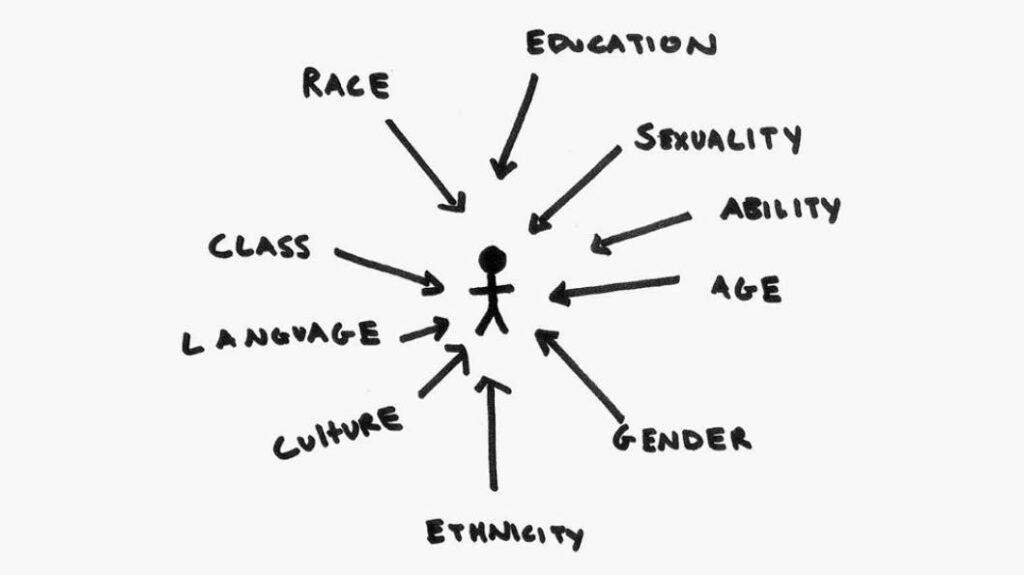
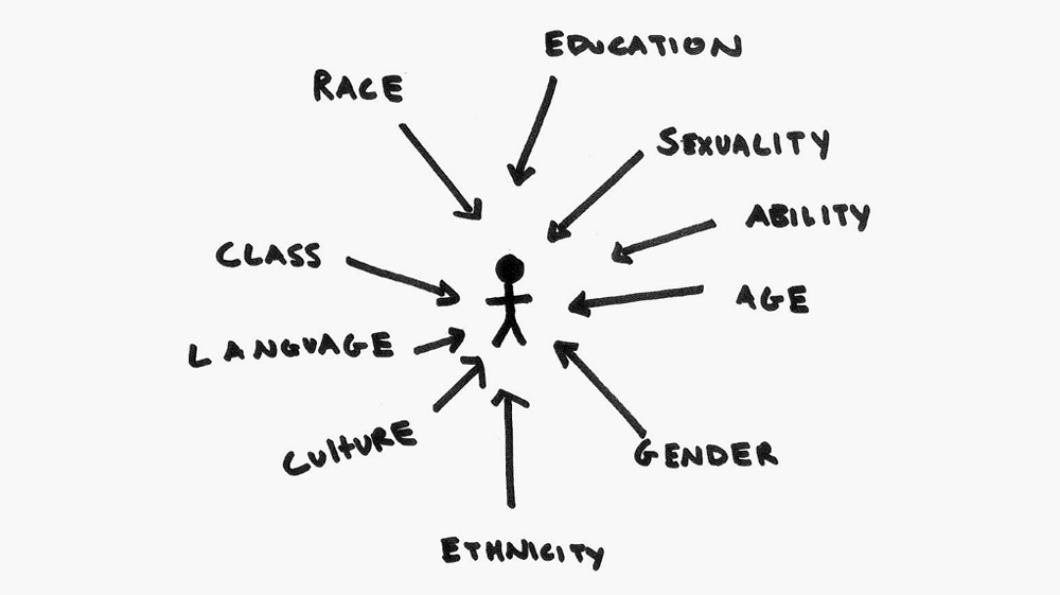
This enlarged focus on all children is important as is also  the realization that  students do not come to school with a unique solid identity but have a lot of different identities and group memberships with which they identify and through which they understand the world around them. Let us consider the different identities each person carries regarding their profession, gender, sexual orientation, religion, ethnicity, race, social status, educational background and so much more. All these identities determine how everyday life is experienced and they are inextricably linked to the exertion of power and the privileges that people are afforded or not. 

Figure 1: Our different identities

Let us also consider students that belong to non-dominant groups and communities, how they are marginalized and how they have to deal with multiple systems of oppression. A child with SEN can be found to have another identity marker (racial minority, low-income family) that may marginalize him/her even further than their  disability. These “simultaneous intersections” (García and Ortiz 2013) between language, gender, ethnicity, class, race, (dis)ability have to be identified and taken into consideration when teachers  plan their  lessons and design  materials.


Figure 2: The intersection onion (https://link.springer.com/article/10.1007/s11125-020-09461-6/figures/1)

Consequently, what is really being suggested here is that the theory of intersectionality should run through  lessons and materials especially in English language classes.  which are, generally speaking, very open-minded, acceptive of difference and innovative by nature. This theory needs equity-oriented teachers who are ready to make a step forward and go beyond creating supportive and inclusive environments, while being ready to re-examine and adjust practices to honour and include the multiple identities of their students.

Thus, experiential learning and activities that promote reflection are very important for  students to realize their different identities and their effect on the different aspects of their life including their school life. The following activity, for example, can be used with secondary education students with a dual aim: self-reflection and realization from the part of the students and a deeper understanding the teachers can  have of  their own students.

Experiential activity: The star of privileges 


Figure 3: The star of privileges

Steps to follow

Draw a star with the axes as shown in figure 3

Draw a dot on each axe. This dot represents our experience regarding the specific identity: the closer we are to the centre the more discrimination we have experienced, the closer we are to the edge the less discrimination we have experienced (Figure 4).


Figure 4: The dots on the different axes

Connect the dots (Figure 5)


Figure 5: Connecting the dots

Colour the space between: this is the space of our privileges (figure 6) 


Figure 6: The space of our privileges 

It is important to point out that this is a totally personal exercise based on our own experiences, there is no right or wrong answer and it is not necessary to show our answers to the rest of the class.

Possible follow-up questions:

How did this activity make you feel?

Which axes hadn’t you thought of before?

What do you think when you see other students’ stars with larger or smaller spaces of privileges?

The knowledge gathered from the above activity is precious material when designing lessons and implementing practices. It will give us the guidelines to include the points of view, experiences, voices and perspectives that are often underrepresented in curricula and this is a first step for educational equity. 

To conclude, it is important to encourage teachers to reflect on the theory of intersectionality and its application in the English language classroom. making more accountable decisions for the students, offering them the inclusive, equitable education they deserve can help us make a difference.

REFERENCES

  • Bešić, E. (2020) Intersectionality: A pathway towards inclusive education?. Prospects 49, 111–122. Available at: https://doi.org/10.1007/s11125-020-09461-6 (Accessed: 10 March 2021)
  • Skeleton, S. (n.d.). Understanding intersectionality is critical to advancing educational equity for all. Swift education center. Available at : https://swiftschools.org/talk/understanding-intersectionality-critical-advancing-educational-equity-all  (Accessed: 10 March 2021)
  • TED (2016). Kimberle Crenshaw: The urgency of intersectionality. Available at: https://www.ted.com/talks/kimberle_crenshaw_the_urgency_of_intersectionality  (Accessed: 20 March 2021)
  • Service Civil international (2019). Free to be you and me. Available at: https://sci.ngo/resource/free-to-be-you-and-me/

About Despina Evgeni

Despina Evgeni holds a M.Ed in teaching English as an international language from EAP (Hellenic Open University) and she is currently studying Social Anthropology in Panteion University, Athens, Greece. She has 28 years’ experience teaching English at elementary and secondary public schools as well as private language institutions. Her main interest is making her classrooms a place where all students can thrive.


‘Teachers affect inclusion’ by Mercedes Pérez Berbain

At one of Pilgrims’ online café gatherings, where teachers from all over meet to share views on education we were invited to choose  a quotation which resonated with us and share our views with the teachers present. This is the quotation I chose: 

Teachers affecting eternity is a lot to say and a teacher or two may feel uncomfortable with this idea. Yet, teachers have always been thought of as key players in learners’ education. Ginnot (1972) wrote about teachers having the power to make a child’s life joyous or miserable, responsible for crises being escalated or deescalated, children humanised or dehumanised according to how they responded. It can be disheartening to view learners in such a powerless light and teachers in such a powerful one. Hattie (2003) found out that the major source of impact in students’ learning is what teachers know, do and care about. Given that, it may be worth reviewing our role.

Aware that their role is pivotal, teachers have endeavoured to humanise, empower and enable through their teaching. Underhill (1999) pointed out some of the aspects involved in teaching to humanise, such as the teachers’ presence, their movements, the quality of their attention, and the degree of openness they showed. Effective teaching and leadership skills (Kouses & Posner, 2012; Kyriacou, 2014) state the importance of building teams with learners, parents and colleagues, setting shared goals, setting up congruent learning environments, and fostering interaction. Over the last few years teachers have learnt what it takes to teach more effectively.

Inclusive education

Yet, no teaching can be called effective unless all learners are on board, unless there is equity. No teaching can be called effective unless it is inclusive. Inclusion entails viewing the education of all learners as having equal importance (Stadler-Heer, 2019) regardless of race, ethnicity, age, gender, sexual orientation, ability, religion, socio-economic background and any other aspect which may cause segregation. Inclusion as a principle runs through policies, leadership, curriculums, teaching, organisation, resources and assessment (Ainscow, 2020; UNESCO, 2017). As the piece of sculpture displayed in a street in Arcachon, a seaside resort in southwest France, artfully shows, inclusion honours and harnesses diversity to create possibility.

An inclusive pedagogical approach

How do we create possibility, how can all learners participate without any marginalisation? Aware that diversity per se does not guarantee inclusion, since within diversity there may live the oppressed and the oppressor (Banegas et al., 2021), I approach this question eager to find out contextualised ways of working with diversity rather than a one-size-fits-all set of strategies. In English language teaching (ELT) there seem to be very few examples of inclusive pedagogy understood as an everybody approach, away from planning for most learners and thinking of “something else” for some others (Black-Hawkins, 2017). 

Attempting to affect eternity does sound like too much, but might encourage us think together about how to strengthen our inclusive practices for the benefit of all learners (Black-Hawkins et al., 2021), enhancing their identities and diverse ways of approaching learning to ensure quality education for all in search of social justice (UN, 2016).

References

  • Ainscow, M. (2020). Promoting inclusion and equity in education: lessons from international experiences. Nordic Journal of Studies in Educational Policy, 6(1), 7-16.
  • Banegas, D., Beacon, G., & Pérez Berbain, M. (Eds.) (2021). International Perspectives on Diversity in ELT. Palgrave.
  • Black-Hawkins, K. (2017). Understanding inclusive pedagogy: Learning with and from teachers, In V. Plows, & B. Whitburn (Eds.), Inclusive Education: Making Sense of Everyday Practice (pp. 13-30). Sense Publishers.
  • Black-Hawkins, K., Maguire, L., & Kershner, R. (2021) Developing inclusive classroom communities: what matters to children?, Education 3-13. DOI: 10.1080/03004279.2021.1873398
  • Ginott, H. G. (1972). Teacher and child: A book for parents and teachers. Macmillan.
  • Hattie, J.A.C. (2003, October). Teachers make a difference: What is the research evidence? Paper presented at the Building Teacher Quality Research Conference, Melbourne. http://research.acer.edu.au/research_conference_2003/4/
  • Kouzes, J., & Posner, B. (2012). The Leadership Challenge. Jossey-Bass.
  • Kyriacou, C. (2014). Effective Teaching in Schools. OUP.
  • Stadler-Heer, S. (2019). Inclusion. ELT Journal, 73(2), 219-222.
  • UN (2016). Goal 4: Ensure inclusive and quality education for all and promote lifelong learning. Retrieved from https://goo.gl/fZ5kEZ
  • Underhill, A. (1999). Facilitation in language learning. In J. Arnold (Ed). Affect in Language Learning, (pp. 125 -141). CUP.
  • UNESCO (2017). A guide for ensuring inclusion and equity in education. UNESCO.


About Mercedes

Mercedes Pérez Berbain is teacher educator and researcher; former lecturer at I.S.P. J. V. González and I.E.S. J. R. Fernández Schools of Education in Buenos Aires. She holds an MA in Education with Distinction from Oxford Brookes University, UK and a degree in Education and ICT from The Ministry of Education in Argentina. She has been training teachers both in Argentina and in the UK for more than 20 years. She is an OUP, ESSARP (Arg) and Pilgrims (UK) trainer. She has written teaching materials for Pearson and OUP, and is interested in inclusion, leadership and young learners.


Contribute to the blog

If you are a member of IATEFL and would like to contribute to the blog, we’d love to hear from you at [email protected]. We’re looking for stories from our members, news about projects you’ve been involved in, and anything else you think those connected to English language teaching would be interested in reading. We look forward to hearing from you! If you’re not a member, why not join us? Click here to see our Blog Guidelines and Ideas.

‘6 questions for Gabriel Diaz Maggioli, President of IATEFL’

Vicky : First of all, I would like to thank you for agreeing to give this interview and I would also like to welcome you!

Thank you for the opportunity!

Vicky : Can you talk to us about your working life routine? Can you tell us what you are doing currently?

I work as academic advisor in the Institute of Education at Universidad ORT, the largest private university in Uruguay. There, I am in charge of developing resources and activities to support the professional development of faculty university wide. I also work in the National Teacher Education College where I am tenured professor of TESOL Methods and teach two courses a week. I also have an active publication and research schedule.

Vicky : We would like to know about the challenges faced in the past year with the ‘new normality’ from your IATEFL position. Can you talk to us about the steps taken to support this gigantic association through these difficult times?

It is no secret that all non-profit or volunteer organizations are struggling because of the situation we are experiencing. Fortunately, IATEFL’s Board of Trustees are a team with a lot of experience and knowledge of the Association. So, with the unyielding support of Head Office staff, we were able to make the right decisions to secure the viability of the association and to minimize risks. We were also able to run out first ever virtual international conference which we received wonderful feedback about. Of course we are not “out of the woods” yet, and challenges remain in managing to support our members and helping the association to recover.

Besides focusing on the conference, both the Board of Trustees and Head Office have been working hard to secure we fulfil our mission of connecting and supporting the professional development of English language teachers. We have been meeting regularly to focus on opportunities to develop initiatives. Of course, that Special Interest Groups (SIGs) have been instrumental in helping us fulfil our mission. They do not only represent the wealth of knowledge and experience of the profession, but also carry out their volunteering efforts in an admirable way.

Vicky : ‘Virtual events came of age in 2020, but the future is hybrid’. Considering this statement, how has CPD changed and how  much more will it change also?

Looking at this situation in perspective, I do not feel that we have been engaged in true CPD. What we have been doing so far is mostly adapting to an emergency situation and trying to sustain educational provisions. Truly impactful CPD needs to fulfil a series of requirements. What I feel we have all been doing is come together as a professional community to share resources that help us solve problems of practice. Also, given that no one is certain of how long this emergency situation will last, it is hard to say we are making a move towards any definite model of delivery for educational provisions. The future may very well be hybrid, but it could also be fully virtual. One thing that remains certain is that many of the myths about the benefits of Technology-mediated instruction have been dispelled and that there is no turning back from teachers using technology widely in the classroom.

Vicky : Will COVID change EFL teaching forever? And how so?

I see a new era in EFL where technology is more ubiquitous. Learner autonomy certainly will make this presence necessary. What worries me is that, if and when we go back to the face-to-face synchronous type of lessons, our profession may revert to more traditional practices given issues of inequality experienced during the pandemic. In many parts of the world technology is not ubiquitous and access to education has been difficult. In those situations, traditional modes of delivery of information, emphasizing transmission-oriented approaches have become frequent and there is a possibility that some aspects of those traditions may be transferred to the classroom in the future. Hence, I feel that now, more than ever, we need to build networks to support colleagues working in these difficult circumstances and our Association is the ideal catalyst for that support network.

Vicky : It seems that supporting the continuation of EFL teaching and learning during the COVID-19 Pandemic has been definitely easier for the Western and more developed countries. Considering this, how easy do you believe it is to create a post-COVID EdTech strategy with leaving no one behind?

I guess this is a challenge that we have been unable to resolve. In fact, unequal access has been a long-standing fallacy in the profession. Access alone is not enough; quality is also fundamental. Providing unequal access or access to low quality education are equally as bad. And while it is true that more developed countries have been given more affordances, a lot has to be said for the efforts of teachers in not so well-developed countries. I think we will have an idea of the reality we have been inhabiting once more research data becomes available. I feel that, at least in the area of the world where I live, the creativity of teachers to reach and teach their learners besides contextual hurdles is really admirable. What we need is to socialize that knowledge gained from experience so that it may resonate with teachers in similar realities and thus truly make an impact.

Vicky : Before I let you go, I cannot resist to ask you one last question about Freire. According to him, There’s no such thing as neutral education. Education either functions as an instrument to bring about conformity or freedom. In times like these, does Freire sound truly utopian or is he more relevant today than ever?

To me, Freire’s work and ideas are timeless. Even if you do not come from or advocate for a critical perspective as an educator, Freire’s philosophy of education stresses justice, fairness, equality and the empowerment of all individuals alike. These are all crucial values to uphold for anyone involved in education. And if the current reality has taught us anything, it is that only true dialog, where teachers and learners learn – together – to name the new realities they inhabit, can we discover what success in learning is about.


Gabriel Diaz Maggioli


Contribute to the blog

If you are a member of IATEFL and would like to contribute to the blog, we’d love to hear from you at [email protected]. We’re looking for stories from our members, news about projects you’ve been involved in, and anything else you think those connected to English language teaching would be interested in reading. We look forward to hearing from you! If you’re not a member, why not join us?

See VIEWS Guidelines and Ideas

‘How my professional life changed after winning an IATEFL scholarship’ by Vicky Saumell

Back in 2009, I was starting to feel restless as a teacher and, following the advice of a friend and colleague, who said I should be doing more than teaching, I decided to send a proposal to speak at a conference. That same year I had become aware of IATEFL through Twitter, and I decided to send an application for the Latin American Scholarship. I was hesitant at first because I thought there would be lots of applicants and what were the chances I would get it? 

“Someone must get it…What if it’s me?” I told myself.

So, I took great care in writing and rewriting my application and sent it. Then came the waiting… And finally, one day I received an email saying I was the winner. The winner!!!! Me!!! And so, I would be attending IATEFL Harrogate 2010.

April 2010 came and I arrived in Harrogate on my own. I think I only knew two people who were attending…However, it was the time of the Twitter mania and I had been very active there and had connected to many people who were attending but had never met face to face before. As I settled down in my B&B room the day before the event started, I checked my phone and saw that a few of my Twitter mates were already at a pub near the conference venue. I went down, asked where that pub was and headed there. To my surprise, as soon as I got in, a now close friend saw me and shouted “Vicky Saumell!”, and that was it! I joined the table with teachers from the UK, Turkey and US and felt like I had known them all along!

Vicky Saumell in front of the Harrogate 2010 conference venue

The rest is history. I have been attending IATEFL ever since, I only missed Brighton 2011. But it has not been just attending, it has meant creating professional connections and forging friendships. In 2013, I offered my collaboration to the Learning Technologies SIG committee and became a volunteer as Community Manager, I then shifted to Treasurer and I am now LTSIG Coordinator, in my last term of service. I also served in the Publications Executive Committee from 2015 to 2020. 

IATEFL has allowed me to grow so much in my profession! In all these positions I have developed new skills, learnt how to truly work collaboratively in teams, and worked with incredible people. I have made friends that have made me feel at home in many places outside my own home.

But it was not just me. I have witnessed many cases of scholarship winners who then saw their careers lift off. A recurrent pathway after winning a scholarship has been to get more involved with IATEFL and then become a volunteer for one of IATEFL’s SIG committees. The common thread among them all is the initial feeling that they had few chances of winning a scholarship, but they applied anyway.

So don’t delay! It’s IATEFL scholarship applications season and who knows what the future holds? For me, it all started with applying for an IATEFL scholarship!


About  Vicky Saumell

Vicky Saumell is a teacher, trainer, materials writer and presenter. She currently teaches at primary and secondary level schools in Buenos Aires. She is also a freelance author and has worked as a writer and trainer for Pearson, CUP, Macmillan and Santillana. She is the Coordinator for IATEFL Learning Technologies SIG. She has a professional website at www.vickysaumell.com.


Contribute to the blog

If you are a member of IATEFL and would like to contribute to the blog, we’d love to hear from you at [email protected]. We’re looking for stories from our members, news about projects you’ve been involved in, and anything else you think those connected to English language teaching would be interested in reading. We look forward to hearing from you! If you’re not a member, why not join us?

See VIEWS Guidelines and Ideas

‘Getting the most out of CPD Events’ by Farid Bashiri

Continuing professional development or CPD comes in a variety of forms: conferences, workshops, learning groups, etc., and with all the great online opportunities booming around these days, you might have at least experienced a few of them in your teaching career, so far.    

Whether you would like to enhance your practical skills in the field, stay up-to-date with the current affairs or simply add to your CV, there are numerous benefits associated with CPDs, but the question is are we taking what we are supposed to take out of them? Why is it that many of us teachers take course after course, workshop after workshop with no significant change in our actual pedagogical skills? Today, I’m making a few suggestions on how to make the most of any CPD event, whether online or face-to-face, to produce long-lasting effects.

I have organised these suggestions into specific actions you can do before, during, and after each CPD event to maximise your learning experience.

Before the event   

The insight: OK. You have chosen to commit your time and probably your money to a specific CPD event in the hope of satisfying your ever-increasing appetite for learning. Great, but it is absolutely essential to bear in mind that the process of self-improvement begins not on the day of the event, but long before that?. The more curiosity and research you put before the event, the better learning time you will experience during and after the event. Act proactively.

Actions: Here’s a list of actions you can take before any CPD event:    

Get to know the people; organisers, presenters, etc.

Make a request to serve as a volunteer. This is a not only a great way to get to know the insiders behind the event but also a chance to see the mechanics of its organisation in case you are interested in setting up one in the future.

Get in touch with participants who wish to attend the same event and look for possible networking opportunities. You might also want to share with each other some of the information you have found interesting when attending different sessions. 

Check the event calendar for sessions timing and see which ones you wish to join. This saves you a lot of time looking or scrolling up and down the schedule during the event.

Do some research about the topic and prepare a couple of possible questions you might be able to ask the presenter. Having a little background knowledge can truly enhance your CPD experience.

During the event

The insight: True professionals do not passively consume the information. They know that CPDs are great places to maximise their engagement with the field. There’s nothing wrong with listening to the presenter and absorbing information, but as educators we all recognise the power and the role of active involvement to install the learning blocks in mind. Deeper understanding is the gift of getting yourself engaged with the content.

Actions: Here’s a list of concrete actions you can take while attending a CPD:

Make notes. Utilise the power of writing to make things more memorable for you. Write down a couple of things you learned as takeaways and think of the concepts you would like to do more research on.

Approach the speaker, either at the event (if onsite) or through email and social media (if available online). Do not be afraid. Ask questions, request materials and resources for further reading.

Start genuine networking in any possible form. This is your greatest chance to build a strong, professional relationship that can do you a lot of good. Don’t just pass on information about yourself. Engage in some meaningful conversation. You can always start by reflecting on the presentation you have attended.

After the event    

The insight: This is the time when you might feel overwhelmed with loads of information you have received. But the real work starts here where a well-engineered plan can lead you to your desired achievement. 

Actions: Here are some post-event activities you can do to make your learning experience even greater:

First of all, make sure you thank the organisers. Remember, it is’s often not a piece of cake to get things done for a typical CPD event. Receiving more acknowledgments will encourage them to keep going and organise more events. Do not forget that most of them welcome constructive feedback, as well.

Follow up on the people you have met. Talk about your experience on social media or in your teaching community and help spread the word.

Find a close friend and teach them something you have found interesting. Remember, the teacher learns the best. You can also do this in a study group where the participants are eager to discuss current issues.

Start reflecting on every single session and on the whole CPD experience. This might not be possible only after the event is over but typical reflective questions you can ask include:

How do I generally feel about my experience?

What have I learnt and how is it going to help me, my students and my colleagues?

Is there anything I need to learn more about? Which areas could I do for more research on?

Am I going to contribute to the event in the future? If yes, how?

All in all, attending CPD events is not just about learning the content. Use the time wisely. Make connections and have fun. Be smart, take your experience further and learn more about communication / presentation skills and professional conduct. I love this Stephen Covey’s quote: “The key is not spending time, but investing it.”


About Farid Bashiri

Farid Bashiri is a Trinity College London DipTESOL graduate, and a teacher trainer certified by the British Council. He has completed his MA courses in TEFL and holds a BA in English literature. He’s been in ELT for more than 15 years and has presented at a number of prestigious conferences and ELT events. His main areas of interest include teacher education, educational technology and learner coaching. 


Contribute to the blog

If you are a member of IATEFL and would like to contribute to the blog, we’d love to hear from you at [email protected]. We’re looking for stories from our members, news about projects you’ve been involved in, and anything else you think those connected to English language teaching would be interested in reading. We look forward to hearing from you! If you’re not a member, why not join us?
See VIEWS Guidelines and Ideas

‘Dial-up to Broadband: Changes in my ELT world’ by Syke Annamma Kumaran

Hope you all remember Jon Burton’s invitation in his article “30 years in English language teaching” to share the memories of the greatest changes in our professional life and Mojca Belak’s response in her blogpost entitled “The greatest changes in my professional life”. The inspiration behind this article is the blogpost by Mojca.

When I started my teaching career in a college in Kerala, India in 2002 chalks and blackboards were giving way to markers and white boards. The huge cassette recorder and cd player in the department of English had a tremendous role in providing a Bachelors in Functional English. The teachers were allowed to use it when their turn come once in a couple of days. I was handling the history of English literature and Phonetics and this machine had a major function in the language lab. I played the cassettes and CDs by the British Council in order to teach them the sounds. It was really hard to teach the sounds and accent in connected speech as we had only little practical experience with English speaking people at that time. But I tried my level best and recorded students’ responses  on a cassette and played them back in the same period for peer review.

I remember, we got a dial-up internet connection in the same year with a speed of 10kbps. An internet connection was a dream of all teachers and students of the college. With that connection, it took nearly 10 to 15 minutes to get the meaning of an unfamiliar English idiom, but we still all eagerly waited in front of the computer. In two or three years the speed of the internet was increased to 100kbps. Gradually we could make audio calls to teachers in different countries over Yahoo Messenger and Skype.  Later, I quit the job of a college lecturer and joined a Government school as a high school teacher. High school was the best place for me! It was really a novel thing to get connected with English speakers online. The students were eagerly waiting for someone online in my period. Gradually my position has changed from a traditional language teacher to a facilitator who could connect the class with the world. By 2010, internet has got a higher speed and we began to conduct webinars. It was not easy to run a webinar in those days as we had to give training to the participants and presenters. Stephen Herder and Barbara Hoskins Sakamoto of International Teacher Development Institute (iTDi) helped me in this regard. Super speed broad band connections are helping the whole ELT world to get connected, but still sometimes the act of conducting webinars was (being) criticized. The parents were anxious about online classes because of the problems like mobile phone addiction and screen addiction. I can say my students have also changed in two decades. They seem to be more independent and confident in using English.

COVID-19 has changed everything. Now no one is blaming the teachers for using Whatsapp or Zoom/Google Meet for the entire teaching learning process. There’s no problem with screen addiction. We gave all lessons through television in the academic year 2020-2021. Classes are available on YouTube too. The students and parents are free to contact the teacher via social media or over phone and ALL are waiting for the new ‘covid-less’ world.


About Syke Annamma Kumaran

Syke Annamma Kumaran, a Committee Member of IATEFL (MemCom) is a teacher, writer and a presenter. He is a Fulbright alumnus (Claremont Graduate University, California) and currently works as a High School Teacher at Govt. H.S.S. Chorode, Kerala. He has given talks across the globe and received IATEFL Ray Tongue Scholarship in 2016. Furthermore, he is a Mentor for the International Teacher Development Institute (iTDi). He has been teaching English for over 19 years in schools and colleges in India and the U.S.


Contribute to the blog

If you are a member of IATEFL and would like to contribute to the blog, we’d love to hear from you at [email protected] or [email protected]. We’re looking for stories from our members, news about projects you’ve been involved in, and anything else you think those connected to English language teaching would be interested in reading. We look forward to hearing from you! If you’re not a member, why not join us?
See VIEWS Guidelines and Ideas

‘Online language teaching vs Emergency remote language teaching’ by Milena Tanasijević

Having prepared and delivered online language courses for more than 10 years, one would assume that I would know what needed to be done when, in the Spring of 2020,  an email from the management arrived  overnight announcing  ‘we move to online from Friday’! . It is one thing to plan, prepare and implement language courses online from scratch and another to organise everything in a short period of time. It took a week for the entire institution to regroup – from management, administration, teachers to – students. It was immediate, necessary, shocking, urgent, stressful. Emotions which do not lead to comfortable feelings of knowing what you are doing and how to proceed. After that initial week, I started getting messages from colleagues from my PLN (Personal Learning Network) – now what? Can you please share advice? It was only then that I realized that I was in a somewhat better position – having had experience of online language teaching before. I certainly hadn’t felt that way. Why? Because – online language teaching has little in common with emergency remote language teaching. Let us consider some of the differences below. 

Preparation time

The key to a successful online course (not only a language course) is preparation, as in time for: preparation, reflection, writing, setting up course materials, getting familiar with the  platform, evaluation of course materials, rewriting them. Time for basically everything which usually involves the teaching process. Granted, some institutions allow ample time for preparation, some work with limited time frames. Still – there is time.  Teachers work for hours on end during this stage, much more than when preparing for a face to face course. This stage is crucial. If done correctly, it has a profound impact on the teacher’s confidence which is one of the most valued emotions among us. It is the feeling of knowing  what needs to be done, even if you are seeing the elearning platform for the first time, even if you have never worked with students online before, you have had time to check everything and see how you stand, what you need to check again, reread and so on.

What happened in spring 2020 was everything but that. For the most part, colleagues who have had some experience with learning technologies were helping out colleagues who had less experience. All of them were completely taken by surprise and put under a lot of pressure to navigate around areas with many  more questions than answers. So, the shock and pressure was followed , inevitably, with a lot of stress. The advantage of extended preparation time was not an option any more  and that seems to be the key difference.

Time to reflect upon teachers’ choices

When planning an online language course, the preparation time is used for reflecting and making choices. Here are some issues that need to be analyzed:

-Teaching methods – which teaching methods would work (at all), which would work if amended, which would work best?  That would largely depend on the tools you have to work with, which again implies that you need to be familiar with the elearning environment, check and evaluate.

– Learning strategies – Which learning strategies can be employed and how to introduce students to them. I believe that one of the teachers’ roles is to teach students how to learn, especially if they need to learn online. Nothing is a given. Students can be quite unfamiliar with the experience of having to learn online and we need to be fully aware of that.

– Factors of success – Which factors that contribute to successful language learning can I honestly take into account? I might want to include all of them in the equation, but time-frames and challenges of e-tools and platforms might not allow some.

– Input – is there enough/too much input? Is this input comprehensible enough to all students ?  How can I make it more comprehensible, if necessary? Do I add keywords with explanations, footnotes, images?

– Instructions – Are the instructions clear enough? Would students be able to understand immediately what they need to do and how to do it?

– Motivation – Is this motivating for students?Motivation is always important, however, motivation to study online is one of the most crucial  factors. Studies and experience show that one of the key challenges in online education is high drop-out rates connected to lack of persistence.

– Reactions to specific tasks – Would students feel awkward when working on this task? This would obviously depend on the age of the learners, but still – anxiety, fear, possibility of embarrassment definitely do not bring a positive atmosphere which is an important factor in language acquisition. Luckily, there are slim chances for such emotions to appear in online learning circumstances. Students have  time to prepare and reflect before doing anything.

Once again, emergency remote language learning did not allow for any of this to happen.

Expectations

Teachers are expected to know their job, to facilitate learning, to communicate with parents, to get their message across. And they are able to do that, of course, in their classrooms, where they are in their own territory. However, teachers are faced with a new working environment in which they are pressed for time to complete tasks and administrative duties. Many would therefore ask ourselves what students and parents will think of us if we are confused or unsure.Yes, teachers generally feel confident but in the circumstances of urgent course migration – I believe that this was one cause of stress which was not necessary. Students are understanding, parents as well. I believe  society as a whole has understood that the shift was enormous and their expectations were not that we needed to be perfect. The blame for things possibly going wrong was not placed on the teachers themselves. It was possibly addressed at the school administration authorities or similar. So, not us.

Now that we have all become more confident and have adapted to the new circumstances, the key issue would be to get rid of that feeling of stress which is present in all segments of our lives. Teachers’ well-being should become the focus of attention within our PLNs.


About Milena Tanasijević

Milena Tanasijević has been working in the field of ELT for more than 20 years. She has been a teacher, teacher trainer, researcher and course developer. For the past 13 years, in her role as an English Language Lecturer at Belgrade Metropolitan University, she has been developing and implementing General English and ESP blended and online language courses. Along with the challenges that teaching online brings, she has discovered that there are numerous perspectives to be further explored. She is about to finish her doctoral dissertation at Belgrade University on the topic of pedagogical aspects of teaching English by distance at higher education.


Contribute to the blog

If you are a member of IATEFL and would like to contribute to the blog, we’d love to hear from you at [email protected] or [email protected]. We’re looking for stories from our members, news about projects you’ve been involved in, and anything else you think those connected to English language teaching would be interested in reading. We look forward to hearing from you! If you’re not a member, why not join us?

See VIEWS Guidelines and Ideas