‘What next?’ by Aleksandra Popovski

Living in the current surreal reality has taken a great toll on everyone and teachers are no exception. After a year in this situation now is the time to look back and reflect on some lessons learnt.

Your physical and mental health is your priority.

Being online is exhausting both mentally and physically. Teachers are vulnerable just like everyone else. They are not superheroes with special superpowers. They need time to rest, spend time with family, reflect on their work to be better at what they do. It is of utmost importance to find time for things that bring joy, peace and happiness. This can be anything, from taking long walks to cooking or binging on Netflix. I also don’t think teachers have been completely honest about how the virtual teaching world makes them feel. I don’t like it. Some of my friends hate it. Some love it. Either way, the virtual teaching world is exhausting, energy-draining, mentally and physically demanding. So many teachers have to teach more than 8 hours a day just to provide for their families or keep their businesses afloat. This is exactly why teachers need to focus on themselves.   

Ask for help.

Teachers forget that they sometimes need help and that they need to ask for help. If you are not feeling well today, ask for a substitute. If you feel too tired to prepare a lesson, ask a colleague to help you out. If your laundry hasn’t been done or your house hasn’t been cleaned, ask your family to help you out. I had COVID-19. I couldn’t leave the house for 5 weeks. I needed help getting out of bed, getting dressed, walking. I didn’t care about work or the house and I was very clear about that. I did not feel well and I asked for help. If someone asks you ‘Are you OK?’ tell them the truth. Not being OK is OK. Accept your weaknesses.

You can learn anything with time and effort.

Looking back and making a list of all the new things learnt since March 2020 can be beneficial. I am certain there are at least 5 new things you have learnt this past year about technology, online teaching/learning, digital pedagogy, flipped classroom, Zoom, Skype, Microsoft Teams, etc. There are also new things you have learnt about your family and students too. Some students are not comfortable with being on camera. Some love being on camera. Some don’t have a quiet place for their online classes. Some don’t have a computer or an internet connection. Knowing our students’ context is extremely important in deciding what direction to take in teaching, what new skills or tools should be learnt, what kind of emotional support might the students need.

Your PLN (Professional Learning Network) is more important than ever.

Just think about how many professional development events you have attended in the last 12 months or so. What have you learnt from them? How many colleagues, FB friends/teachers have you turned to for advice? How much support have you received from your national teachers’ association? Have you joined a professional association at all? If not, you definitely should. Professional associations have shown great adaptability and provided free professional development events that improved our content knowledge, but also connected us with teachers from around the world. That is the power of a PLN – connecting professionals across the globe.

No one knows what the future holds for us. Will the wave of love and support for the teaching profession continue? Will we be able to keep our jobs although we are both physically and mentally exhausted? Will we want to go back to what we had before COVID-19? I don’t know.

One thing I know for certain is that we will never be the same.  


About Aleksandra Popovski

Aleksandra Popovski holds an MA from the University of Chichester, UK.  She is a teacher and teacher trainer with over 20 years of teaching experience. She is an invited speaker at national and international conferences. Aleksandra is also Coordinator of IATEFL MaWSIG and President of ELTAM MK, N. Macedonia.


Contribute to the blog

If you are a member of IATEFL and would like to contribute to the blog, we’d love to hear from you at [email protected] or [email protected]. We’re looking for stories from our members, news about projects you’ve been involved in, and anything else you think those connected to English language teaching would be interested in reading. We look forward to hearing from you! If you’re not a member, why not join us?

See VIEWS Guidelines and Ideas

A Lockdown Musical (ELT) Story: collaboration in a time of Covid

Last year, at about this time, when the world started going into ‘lockdowns’, one of our Publications Committee members, Rakesh Bhanot, began to encourage friends and colleagues to write about how they were dealing with their professional English languyage teaching (ELT) duties during the covid pandemic. We had a flurry of activity, and blog posts began to appear (from all parts of the world) on a weekly basis. Unfortunately, Rakesh had to resign from the Pubs Committee a few months later for personal reasons. Recently, Syke, curator of IATEFL’s blog, noticed that epithets such as ‘songwriter’ and ‘lyricist’ began to appear before Rakesh’s name on some social media posts.  So, he decided to investigate, and to interview Rakesh.

Syke:  Rakesh, please tell us what you have been doing since last summer?

Rakesh:  As we both live in the northern hemisphere, I take it you mean last June/July? Well, since I retired from fulltime teaching ‘a long time ago’, I have continued to do some voluntary teaching/training, as well as taking part in some online ELT conferences.

Syke:  Yes, but I have noticed, however, that you are beginning to be described a ‘lyricist’; even a ‘song-writer’. How has this come about?

Rakesh:  This incredible (for me at least) phenomenon is very new, and I still find it embarrassing when someone refers to me as a ‘writer’ – let alone the two terms you just mentioned. Incidentally, I don’t write songs. I just write the lyrics.

Syke:  So, tell us what happened?

Rakesh:  When we had our first lockdown in the UK, like everyone else, I looked around to see what I could do during my free time. I decided to join an online folk club called Lockdown Folk (LF) run twice a week by one Jeremy Harmer. All readers of this blog will know Jeremy, and many of you will also know that, as well as being a prolific author of ELT course books, Mr Harmer is a talented musician and singer-songwriter extraordinaire!

Syke:  Yes, but how did you end up writing lyrics for the songs?

Rakesh:  One evening during the online session, Jeremy (who is a wonderful and eccentric host) said, “so, what are you going to sing, Rakesh”? My nervous, but honest, reply was, “I don’t sing, and I can’t play any instruments. However, if you like, I would be happy to read you a short poem”. Jeremy accepted my offer, and I proceeded to recite my modest ditty written many moons ago. I failed to attend the next LF online meeting but later learnt that SIX of the regular singers from LF had used/adapted the words of my poem to create/compose 6 entirely different songs!

Syke:  Surely, that is not enough to deserve the title of a songwriter; or was it?

Rakesh:  During subsequent meetings, I was invited to recite more of my poems from yesteryear, and several singers adapted some of these and turned them into songs. One member of LF in particular, Pauline Vallance from Scotland, has now collaborated with me to write more than 40 original songs (most available online) since last summer.

Syke: So, I guess that means you are a proper lyricist?

Rakesh:  It’s more of a hobby, and I still don’t think of myself as a ‘lyricist’. Yet, here I am holding a CD in my hands where it says “all lyrics by Rakesh Bhanot”!

Syke:  Tell me more about this CD.

Rakesh:  Somehow, in spite of various lockdown restrictions, Pauline, the singer/musician, managed to record 10 of our songs (mostly based on old poems of mine) and have them printed/duplicated. The CD was released on 8 March via the usual online platforms for music. It is called Blue Leaves which is one of the songs. Given our current lockdown situation, we had an online launch on 21 March where we all raised a glass or two to celebrate this (international) lockdown collaboration. This would not have happened without the pandemic, and, of course, Jeremy Harmer’s amazing LF initiative. You can see a recording of the ‘launch concert’ on Facebook Live here. Incidentally, 21 March is International Downs Syndrome Day, and it was fitting that the cover of the CD is an image of a painting by my younger brother, Neelum, who has Downs.

Syke:  So, what’s next?

Rakesh:  First, people can access the songs via these links on Apple, on Amazon, and on Spotify. Second, if any teachers want copies of the lyrics, they can write to me at [email protected]. Thirdly, I would be happy to share some ideas about using poems/songs in ELT. Finally, you can find more about Pauline and her special (comical) contribution to the world of entertainment on her website: www.paulinevallance.co.uk

Syke:  Tell us more about the ‘comical contribution to entertainment’, please.

Rakesh:  About a year ago, Pauline started recording well-known songs to the tune of other songs. This is based on a radio comedy programme whereby comedians are invited “to sing one song to the tune of another”, and the results can be hilarious. So far, Pauline has recorded 150 of these (more than anyone else in the world), and they can all be viewed on https://youtube.com/user/paulinevallance. They can make very interesting English lessons because they force you to listen to the lyrics of famous songs in a different light.

Syke:  Any plans to record more CDs?

Rakesh:  Well, we have enough material for several more. Perhaps when the second or third CD comes out, I will begin to feel comfortable with the title of lyricist (!), but, for the moment, I am happy to be called a former teacher/trainer of English. During the online launch of the CD, some ELT colleagues started referring to me as ‘Rakesh, the bard’! Perhaps they meant ‘barred’?

Syke:  Thank you, Rakesh, and good luck with your new hobby.


About Rakesh

Rakesh Bhanot started teaching English in Spain in 1972, and since then he has been involved in various aspects of ELT (trainer, examiner, author, journal editor, inspector, book reviewer et al) in many parts of the world. He is the Founder Editor of Language Issues – the journal of the National Association for the Teaching of English and other Community Languages to Adults (NATECLA) in the UK. Rakesh likes cooking and writing poetry. During the Covid lockdown period, he has collaborated with several musicians to turn his poems into songs. The CD Blue Leaves is a collaboration with the Scottish singer, Pauline Vallance.

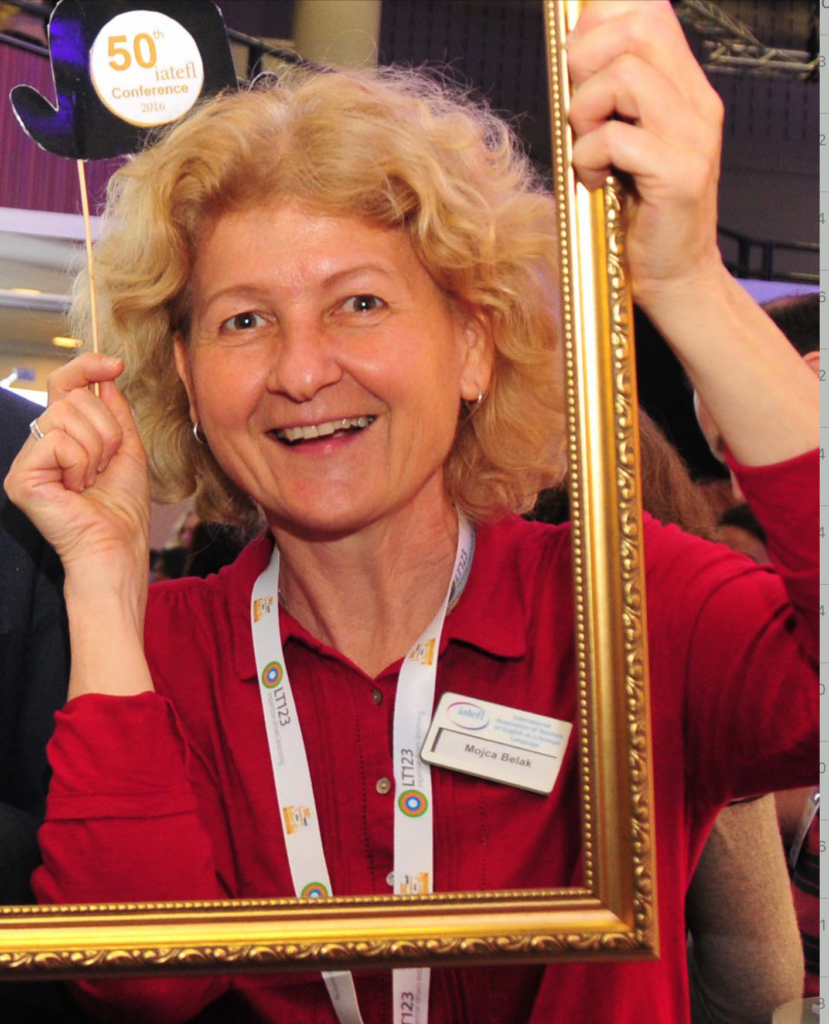
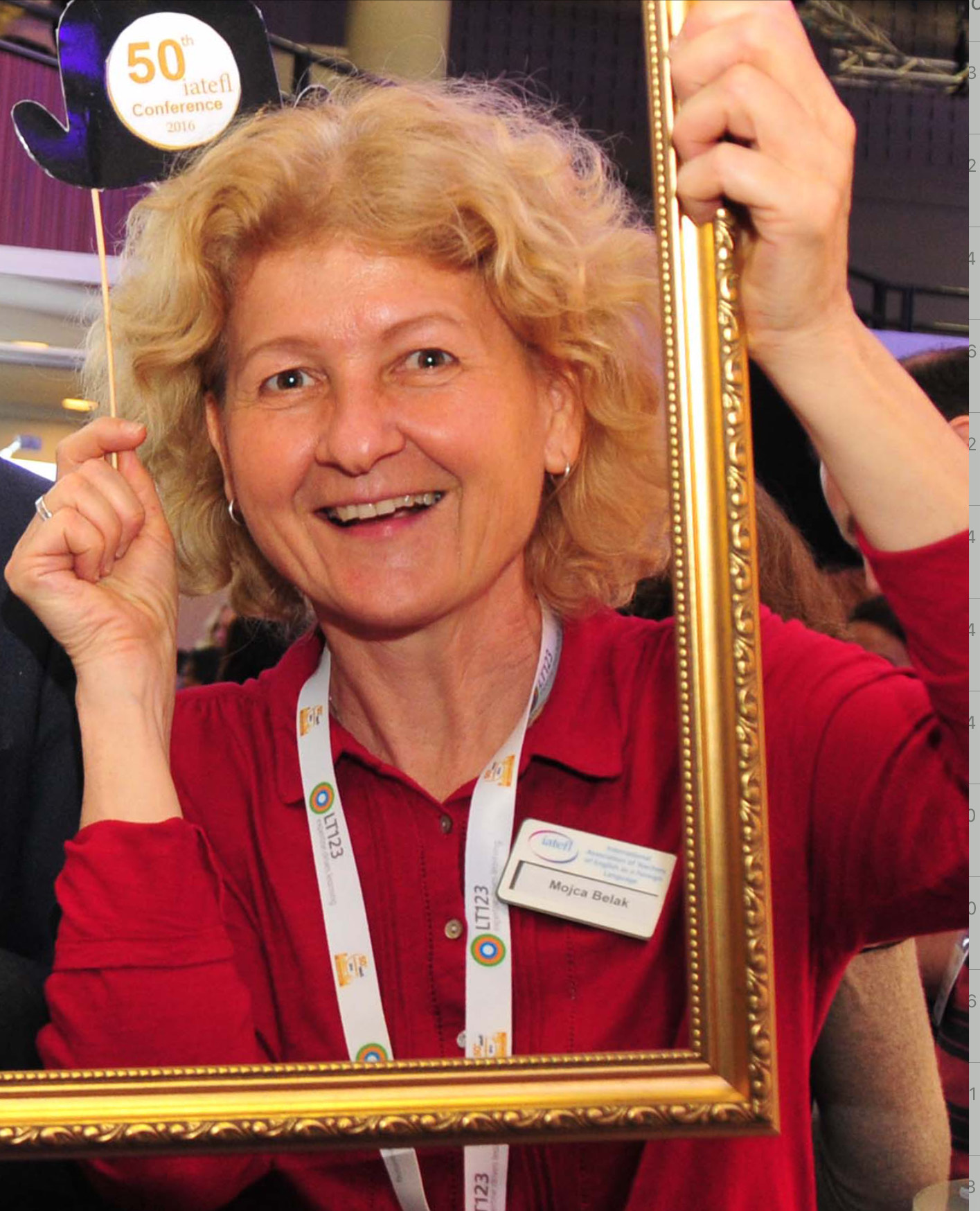
‘The greatest changes in my professional life’ by Mojca Belak

In his article “30 years in English language teaching” Jon Burton invited the readers of IATEFL Views to share our memories of the greatest changes in our professional lives. Here are some of mine:

One of the most useful practical tips I got as a young teacher was that if you break a new piece of chalk in half, it doesn’t make that awful scratching sound on the board. I remembered it for life, but now I don’t need that trick any longer. Whiteboards that have replaced green/black boards are less messy, and at the end of a class I am now no longer covered in white powder. The uncomfortable feeling of holding a wet sponge to clean the board is also a thing of the past, as is the smell of a freshly wiped board. However, my handwriting was never very legible, and it looked better when I used chalk because I wrote more slowly than I do now with whiteboard markers.

In the first half of my career, a lesson about various monolingual dictionaries always required careful preparation, and by this I don’t mean the lesson plan. My classroom used to be in the basement and my office on the third floor. Getting to and from the classroom was never a problem, I hurried up and down the stairs with a spring in my step, but when I used dictionaries, it meant carrying them to class myself. It meant juggling five bulky books, in addition to the cassette recorder that was always my companion. No wonder I never carried a handbag – my rucksack was so much more useful at times like that.

I still have the first edition of the Collins COBUILD dictionary. It’s falling apart now, but I wouldn’t part with it even though I no longer use it. It’s true that it’s less time-consuming to find a word or phrase online but turning those thin dictionary pages was a special treat. Also, the Collins COBUILD dictionary spoke to me because of its entries explained in complete sentences. For the first week or so after I bought it, it was my favourite bedtime reading. It also had another feature that was quite revolutionary in the late eighties – it used they as a singular gender-neutral pronoun. I liked that, both because I heard they used that way by native speakers of English, and because it made many traditional grammarians jump. 

Apart from dictionaries, newspapers also brought a very kinaesthetic touch to my teaching. I could only rarely bring to class two different British newspapers published on the same day to compare. The British Council was subscribed to various quality newspapers, but in order to get tabloids, I had to rely on the help of friends who travelled to the UK. As students leafed through the various papers in pairs or groups, there was a lot of rustling, opening and folding of papers and, by the end of the session, inky fingers.

It wasn’t just British tabloids that were hard to come by on a regular basis in 1990s Slovenia, this was also true of all listening materials. Apart from what came with course books, a teacher could usually get recordings only as freebies at conferences or simply use songs in English. There was another little detail about using those in class: if I wanted to teach something from them, I had to write down the lyrics myself. That meant that I had to listen to the song over and over again, struggling over the parts that were unclear.

Films and videos used to be another challenge. There was a special procedure if I wanted to use them in class: I had to reserve a TV /video trolley first, and if everything worked out, the maintenance man had wheeled it to the desired classroom just before class. Sometimes the TV trolley didn’t find its way to the right classroom, and that meant that I was left without the video support and had to improvise.

The deepest professional change that happened to me over the years, however, was the shift in my attitude towards my English. When I started writing, I used to ask a native speaker to edit every article “to make sure it was all right.” I gave that up in the early years of ELF, English as a Lingua Franca. I guess I realised that the time had come to publish my writing in my English, the language I have learned over the years.

And finally, my students also changed during this time. It’s no surprise that they did; when I started working at the University of Ljubljana, the young people I taught were less than ten years younger than me, while now I’m older than their parents. As I got older while they have always been between 19 and 23, my view of them and my attitude towards them changed. I evolved from almost being “one of them” to their “school mother”. Some of them may already see me as a granny, but this is a view of myself that I don’t want to think about just yet.

Apart from my relationship with students having evolved, there have also been some changes in their attitudes that reflect broader shifts in society. Two decades ago, a text on Quentin Crisp only received comments about how hard it must be to be different, whereas now, if such a topic is discussed, LGBTQ students often take the lead and address these issues openly by talking about their own experiences.

Over the past three decades, my teaching has become less kinaesthetic, and in this respect less comfortable for me and for the learners who like to experience learning through the senses of touch and smell. It has also transformed in parts because of the changes in me and in society, but in its core it has remained what it has always been for me: that good old dance of give and take.


About Mojca Belak 

Mojca Belak is a long-standing IATEFL member, Chair of IATEFL Membership Committee and one of the three members of the IATEFL Blog team. She teaches English at the University of Ljubljana in Slovenia. She is also a teacher trainer at Pilgrims, specialising in creativity in language teaching. She likes trees, mountains and running.


Contribute to the blog

If you are a member of IATEFL and would like to contribute to the blog, we’d love to hear from you at [email protected] or [email protected]. We’re looking for stories from our members, news about projects you’ve been involved in, and anything else you think those connected to English language teaching would be interested in reading. We look forward to hearing from you! If you’re not a member, why not join us?

See VIEWS Guidelines and Ideas

‘Why I’m not giving up teaching’ by Jade Blue

There’s so much I love about teaching English. There are few things that make me happier than spending my days in a room full of interesting people, talking about life and culture and learning, exploring language and language use, experimenting with different learning approaches and techniques, and being creative in designing lesson content and activities.

In October 2019 I took a six-month sabbatical from the school where I work as a teacher and teacher trainer, to travel around Europe in a van with my partner. I had already been doing some freelance work for ELT publishers for a couple of years – authoring articles and research papers; developing training materials; developing learning frameworks – so with the luxury of more time outside the classroom and being able to work remotely, I focused on generating more of this writing and consultancy work. I love it, as it provides me with the essential brain-food that I need to feel alive. I’m a teacher, unquestionably, but I don’t just teach. I think and talk and write about teaching and learning, I play, create, explore, research, discover, learn.

Our time on the road was exceptional. The changing scenery, diverse range of people we met, and cultural stimuli were inspiring, and dealing with the basics of living – collecting firewood, finding water, calling on friendly locals to help us jump start the van when we broke down – were invigorating. And in amongst it all – parking in the woods or on the beach, lighting the wood burner, and setting up the table in the van so I could work on fascinating and engaging consultancy projects. And then, in early 2020, the Coronavirus pandemic hit Europe.

I had been scheduled to return to the UK for a month in April to deliver teacher training courses at my school, but suddenly all bets were off. My partner and I drove back to the UK days before the first lockdown, and like everyone, have been navigating our way through the pandemic and its complexities ever since. We’re currently in Lockdown 3.0, and I haven’t been back in the classroom.

I’m fortunate in that my sabbatical from school had allowed me to further develop my relationships with publishers, and for the past year I’ve been focusing more on consultancy work – which I’m very passionate about and wouldn’t want to give up. But I feel likewise about teaching and teacher training. I know plenty of authors and consultants who have made the move from teaching to writing and not been in the classroom for many years, but for me the two realms are intrinsically linked. My teaching and teacher- training work informs my writing, and in turn, what I learn through consultancy informs my classroom practices. Working with publishers is rewarding too. I’ve often found that things I’ve been doing subconsciously in my classrooms for years are suddenly validated by new research or start to become established practices, and writing and developing materials allows me to draw on my classroom experiences and be creative.

What I miss about teaching most of all is the relationships: the relationship between theory and practice; the relationships with and between the people in the classroom; and the relationships in the teacher’s room. While the consultancy work is gratifying in so many ways, face to face dialogues are rare. I often find myself wanting to meet in a room with a group of ELT practitioners to brainstorm and refine ideas on sticky notes with different colour pens. The teacher’s room at school provides the luxury of a group of interested and interesting people with whom we can engage in ELT conversations – in passing or in depth.

On a wider scale, I also believe very strongly in developing and strengthening the relationships between teachers and publishers. Teachers are there in the room, they’re on the ground. More than anyone, they have first-hand experience of what’s happening in the classroom, how learners respond to the content and underlying pedagogy in ELT materials, and the usability of course books and resource books. But teachers rarely have the time or resources to develop enough of their own materials to meet their learners’ needs, and ‘the further away the author is from the learners, the less effective the material is likely to be (Jolly & Bolitho, 2011). The process of materials development, therefore, necessitates a dialogue between writers and teachers. For me, it is this crossover between being both a teacher and a writer/researcher that I find so rewarding. The relationship is reciprocal.

How much time needs to go by without teaching for one to no longer be able to call themselves a teacher? For now, I’m happy doing authoring and research work, and during such unsettling times as the Coronavirus pandemic presents us with, am fortunate to be able to do so. But I’m not giving up teaching. When circumstances allow, I’ll be straight back in the face to face classroom, exploring language and ideas with interesting people, and cultivating the relationship between my teaching and my writing.

References:

Jolly, D. and Bolitho, R. (2011) A framework for materials writing. In Tomlinson, B. (ed.) 1998a. Materials Development in Language Teaching. Cambridge: Cambridge University Press.

For teachers looking to go into materials writing:

IATEFL MaWSIG (Materials Writing Special Interest Group) offers tips and guidance on materials writing, and advertises writing opportunities in its members’ only Facebook group.

ELT writers connect have published a free ebook: A No-Nonsense Guide to Writing Materials

ELT Teacher 2 Writer publishes a range of ebooks and paperbacks that develop ELT materials-writing skills.


About Jade Blue

Jade Blue is an English language teacher, trainer, and materials developer. Her primary research interests focus on learner-generated visuals in ELT, learner autonomy, and integrating life skills into classroom practice. She has presented at various conferences including IATEFL and as a Keynote speaker at The Image Conference. Jade’s consultancy work for publishers includes authoring of articles, research and teacher guides, development of academic content for teacher training sessions, and ELT reference and coursebook content.


Contribute to the blog

If you are a member of IATEFL and would like to contribute to the blog, we’d love to hear from you at [email protected]. We’re looking for stories from our members, news about projects you’ve been involved in, and anything else you think those connected to English language teaching would be interested in reading. We look forward to hearing from you! If you’re not a member, why not join us?

See VIEWS Guidelines and Ideas

’30 years in English language teaching’ by Jon Burton

2021 marks thirty years since I first became involved in English language teaching. It’s been a good opportunity to look back over that time, what’s changed for the better, what I miss, why I came into this profession, and why I’ve stayed.

As a young undergraduate my first contact with English language teaching was by way of a summer job teaching and helping run social activities at an English language school predominantly designed for teenagers on short courses, getting their first taste of an English-speaking country and using the language skills they had developed back home at school. I found it to be an exciting experience, and one which I loved. Perhaps the thing I valued most was seeing young people from around the world enjoying each other’s company, sharing experiences, helping each other and getting along. This rubbed off on me, and I found myself very interested in finding out more about my students’ different countries and cultures too.

Many experiences followed: furthering my teaching experience, living and teaching abroad, furthering my teaching (and later EFL management) qualifications, developing lesson materials, working in different institutions, becoming involved in areas of academic management, quality assurance, online learning, marketing and school management. Through all of this my driving passion and my motivations have always been in helping people to communicate effectively in a language non-native to them, in learning and discovering about other cultures myself, in seeing learners achieve their goals, and also in seeing people from different backgrounds, nationalities and contexts working, studying, socialising and communicating together. This aspect is so important, not just for our own profession, but also for humanity as a whole.

So, what changes have I noticed over the last 30 years? In short, lots, and most for the better I would say, although I’d like to stress that not all teachers and learners have experienced some, or indeed any, of the changes mentioned below. There’s still much to do to improve equality of opportunity.

The blackboard or whiteboard and the trusty cassette recorder, with its invaluable counter, have been added to in many teaching settings, firstly by videos and CDs, then by smartboards, DVDs, CD-ROMs and then online learning. Where the essential skills for a teacher included the ability to use a photocopier, and clear a paper blockage from one, there is now also a need for advanced IT skills for teaching, lesson preparation, academic administration and communication.

Teaching and learning materials and resources have also been on a similar journey. Whilst I look back with fondness at the materials I first started using, I can see how far things have developed in supporting both students and teachers. It’s been good to see an increase in variety, a focus on extended and autonomous learning, regional appropriacy, and now the current push for greater and true inclusivity is a battle which must be fought and won.

The world also seems to have become a lot smaller. When I first started teaching, and in particular travelling and working abroad, it could feel very isolating. There was no email, no internet, no Facebook and being part of a teaching community of practice was dependent on the postal system. These days everything is one touch of a smart phone away. That’s not to say that this is entirely a good thing. I loved that feeling of adventure and discovery which came from being in a new and different location and culture, without easy access to the familiarity of home.

During the last 30 years I have also seen our profession face any number of challenges and existential threats, although none as dramatic as the current impact of COVID-19. The pandemic has inflicted an awful toll on English language teaching. We have seen students unable to undertake courses, or stranded away from home, institutions facing closure, and teachers losing their jobs. It’s been horrific. I’m very proud of the role IATEFL has played in running such a large number of training events, some of which were free of charge to the wider English language teaching community, during these testing times as well as making additional resources available, and providing the means for teachers and managers to communicate and share information and their challenges at such a critical time. And let’s not forget, this has been done largely by volunteers, all facing challenges from COVID themselves.

Perhaps my greatest journey during my career has been in moving from a teachers’ room in a smallish language school on the Kent coast in the UK, to working for an international association which brings together a global community of English language teaching professionals all enthusiastically sharing ideas and challenges, exchanging stories and experiences, and working together for the benefit of their learners and themselves in order to take the profession forward. Actually, thinking about it, that doesn’t seem such a long step from what was going on in that first staff room, so perhaps things haven’t changed so much after all.

What have been the greatest changes you’ve seen over your professional journey so far?


About Jon

Jon is based in Kent in the United Kingdom, and is Chief Executive of IATEFL. He has 30 years’ experience in English language teaching as a teacher, trainer, materials writer, quality inspector, academic manager, language school and further education college principal.


Contribute to the blog

If you are a member of IATEFL and would like to contribute to the blog, we’d love to hear from you at [email protected] or [email protected]. We’re looking for stories from our members, news about projects you’ve been involved in, and anything else you think those connected to English language teaching would be interested in reading. We look forward to hearing from you! If you’re not a member, why not join us?

See VIEWS Guidelines and Ideas

‘Clouds and sunshine: surviving a challenging year’ by Grace Alchini

The pandemic has undoubtedly been the protagonist of this strange year for most (if not all) of us. It has shaken our lives in many different ways. It has been a period of difficulties, challenges and losses, but there have also been opportunities for learning, growth and appreciation of the great simple things that make part of our lives.

The COVID-19 pandemic has spread all over the world bringing about tremendous consequences at different levels. Education has been no exception, teachers have had to shift to online classes overnight when many of them were not ready to do it as they were not exactly tech-savvy and they lacked training in digital pedagogy. At the same time, not every student has had the means to follow the new model, and there has been a worrying increase in the dropout rate.

However, not everything has been negative and it is possible to find the proverbial silver lining in every cloud even in these circumstances. Many teachers have had the chance to save commuting time (and money and stress as well) and spend it doing what was more necessary at the given moment: relishing moments with the family, exercising, eating more healthily, or simply enjoying the comfort of their homes just to give a few examples. We have not been able to meet people living geographically close to us, but most of the courses, seminars, conferences, shows and even prospective clients were suddenly just a click away. That enabled access to people and events we had never imagined before. Also, regarding the attitude of many of us, there has been a deeper appreciation of nature and gratitude for the simple things of life which are now felt so important.

This does not mean to be an exhaustive description of the situation in 2020. It is mainly an enumeration of some of the things that most of us have lived through in this period, after I had several conversations with people from different corners of the world. Everybody has surely found their own pros and cons in their experience of this challenging year. Personally, I have lived a rollercoaster of emotions, the result of things that worked and did not work, and situations that made me feel either hopeful or discouraged. There was the disappointment of in-company projects that did not materialize, but also the discovery of a market of young professionals interested in improving their English skills independently. No trips nor coffees with friends, but instead the warmth of my home and the support of my family, and above all, the time to get to know myself better. On the other hand, a significantly reduced income, which nevertheless gave me the possibility of learning to make do with just what I truly need. No chance to go to conferences abroad, but I could present at many more events than in previous years, reaching places I never thought I would ever give a talk in. I could also run workshops with participants from other countries, and take a course usually delivered in another continent, both experiences made available to me thanks to online learning. In spite of uncertainty and fear, I discovered my ability to go through these turbulent times with flexibility and resilience.

And what about being an IATEFL member and volunteer in this period? Let me just say that it has been the most heartening experience. I have been a member for 4 years and part of BESIG’s online team for more than 3, but I never felt as supported as I have this year. I had time to reflect and realise how much I have learnt from colleagues from all over the world since I joined, and I have particularly valued the efforts made by the SIGs I follow in this period to help teachers face the challenges that the shift to virtual learning has posed, especially the webinars offered by the LTSIG. The greatest gift, however, has been the feeling of belonging to a community (and a family). Being a freelancer, these times of isolation would have been unbearable to me had I not been part of my BESIG team. Apart from the pleasure of working with like-minded colleagues in a virtual environment where, in spite of the distance, we feel close to each other and truly connected, I have felt energized by the proactive, creative and thoughtful participation of my teammates, a group of committed and caring people. The big revelation was the preparation of the annual BESIG conference, online for the first time as a huge event lasting 3 days and featuring more than 80 sessions and breakout rooms to network. As extra help was needed to host and moderate so many sessions, there was a call for volunteers which had an amazing response. More than 20 colleagues generously offered not only their time and commitment but also their friendship and good humour. Without them, the conference would not have been as successful as it was. How couldn’t I feel grateful for belonging to such a fantastic community?

Crisis, hope, lockdown, gratitude, fear, home… the list goes on, a mix of words to descrite 2020. Each of us has their own set of words, some are the same and some are different, because we are not in the same boat, though we are facing the same storm. Let’s hope in the new year we can sail in calmer waters and that we do not forget the lessons learnt in unforgettable 2020.


About Grace Alchini 


Grace Alchini is a freelance teacher of English, business communication and ESP trainer based in Puebla, Mexico. She has over 35 years’ experience teaching at universities and providing in-company services. She has been a frequent speaker at conferences over the last 8 years. She is a member of IATEFL BESIG’s online team. She can be reached at  [email protected]


Contribute to the blog

If you are a member of IATEFL and would like to contribute to the blog, we’d love to hear from you at [email protected] or [email protected]. We’re looking for stories from our members, news about projects you’ve been involved in, and anything else you think those connected to English language teaching would be interested in reading. We look forward to hearing from you! If you’re not a member, why not join us?

See VIEWS Guidelines and Ideas

‘You don’t have to be a long-established member of IATEFL to contribute’ by Adam Malster

I have only been a member of IATEFL since November of this year, but I have been encouraged to write this blog post by my colleague Gerhard Erasmus to show that you do not have to be a long-established member of the IATEFL community, or an expert in any area, to contribute to the discussion.

While I am only a recent member of IATEFL, I am not new to teaching. My journey started quite a while ago and has led me to a place I never really expected to be, but I guess that many lives and careers start out that way.

I began my teaching career in 1995 with a CELTA in my home city of Nottingham in the UK. This quickly led to a very brief contract as a teacher in a language school in the Czech Republic. The Czech Republic in 1996 was great, but I am not sure I could necessarily say the same for the quality of my teaching at the time.

After the Czech Republic, I returned to Nottingham and did a PGCE. This was when I really started to realise what it meant to be a professional and that teaching was the career for me. Between 2000 and 2002 I worked as an English teacher in a secondary school in the UK. Nevertheless, I still had a hankering for travel and so when a chance came up to work in Taiwan, I grabbed it.

In Taiwan I worked for a few schools before landing at the British Council as a part-time teacher in 2007. Throughout my career in Taiwan, I have tried to be as versatile as possible and have taken on all kinds of classes, from young children, to teens and Adults, Business classes, IELTS, ESP, you name it. This is something I advise my younger colleagues to try and do too, not least because it is interesting (you might find out you really like something that you initially did not think you would) but being versatile means, you are more employable. Being able to get work has always been important, but perhaps never quite so important as in the COVID-19 world. While I have specialised a little recently with focusing on Adult teaching, I do think that ethos of versatility has carried over and helped this year with many of our courses going online in some way. I have been really impressed by how my colleagues in Taiwan and other British Council teachers have seized the opportunity to teach online to help people continue their learning and also develop their own teaching skills.

It has taken me quite a few years to get around to joining IATEFL, so the question is, why now? I have joined mostly because I am looking to join a community which is going to help me to develop other teachers. Over the past few years, teacher development has become a big part of what I do every day (as well as being Senior Teacher, I am also a teacher trainer) and so I am often in the need of discussions and resources to help me do this the best I can. Even before teacher development became a more formal part of my work though, as I became more experienced, I could feel it becoming something I was naturally inclined to do as I helped less experienced colleagues. I have often reflected on how much help and advice I have received in the past and have striven to be able to help others as well.

A big part of my work now is developing our Business English courses. That is why I have joined BeSIG to help me develop and support our teachers. One contrast I am aware of with our Business English teachers to other types of Adult teachers is that because they are often busy in different locations around Taipei, it can be quite difficult for them to share good practice and develop a team ethos. BeSIG has already been helpful over the past month or so by making me aware of teaching strategies we can discuss and employ together in an online group so we can increase the quality of what we offer to our students while also increasing interest for our teachers.

I am enthusiastic about getting more involved and sharing ideas with the community. At the moment I am engaged in Action Research on student motivation and autonomy. It is so easy for Adults to give up on their learning journey and it is my mission to keep people engaged, moving forward, and increasing the quality of their lives. I will certainly be looking to see how IATEFL can help me with this research and I will be looking to contribute when I have completed it.


About Adam

Adam Malster is an academic manager and teacher trainer. He has been living in Taiwan since 2002 where he has been working at the British Council since 2007. His interest is student autonomy. In his free time, Adam plays guitar and struggles with Mandarin Chinese.


Contribute to the blog

If you are a member of IATEFL and would like to contribute to the blog, we’d love to hear from you at [email protected]. We’re looking for stories from our members, news about projects you’ve been involved in, and anything else you think those connected to English language teaching would be interested in reading. We look forward to hearing from you! If you’re not a member, why not join us?

See our article on blog guidelines and ideas

‘Micro-teaching Marathon in Nepal’ by Gopal Prasad Bashyal

The context

As the lockdown continues at the COVID-19 pandemic, the Nepalese teachers have been taking part in learning pedagogical and digital skills in various webinars and trainings organised by various institutions and organisations. Among them, Nepal English Language Teachers’ Association (NELTA), Nepal National Teachers’ Association (NNTA) and Society of Technology Friendly Teachers (STFT) have regular programmes in different branches. The number of teachers who had attended the trainings focused on the digital skills continued increasing. It’s realised that the skills needed to be strengthened to facilitate the curricular contents in the classrooms. Then the NNTA made a decision to start micro-teaching programmes under the banner of NNTA Micro-teaching Marathon, 2020 (the Micro-teaching). The main aim of this programme is to prepare teachers for ICT embedded teaching.

The research on impacts of micro-teaching programme

I volunteered research on the impacts of the Micro-teaching programme. I administered the survey questionnaires to the participants, presenters and commentators; interviewed the active participants and organisers; and also derived data while observing the programmes as a member of Pedagogical Bureau (PB). There was a panel discussion on micro-teaching and the findings of the research were presented as the major content for discussion. The discussion proved that this was qualitative research and worth publishing.

Micro-teaching modified version

The NNTA modified the skill focus of micro-teaching and emphasised the mixed model of curricular content, pedagogical procedures and digital skills embedded in the 15 minute long micro-teaching which is followed by commentator’s feedback for 10 minutes.  There are three micro-teaching presentations by teachers from different schools on different subjects.

The interested teachers show their interest in presenting micro-teaching and engage in rehearsals at the district level first. Then they present the improved lesson among the PB members. Thus the teacher-presenter is engaged in several practices for improvement. The commentators are university professors, government officials, senior head teachers and teachers who have specialised knowledge of the subject matter, pedagogy and technology.

Professional and pedagogical behaviour

The teachers are corrected for lesson planning, entering behaviour, and activities for introducing contents, practising and assessing learning. For example, the teacher enters greeting students and introducing herself. She presents the objectives and activities briefly. Then there are usually pictures or video or chanting to introduce the topic. Generally there are explanation, elicitation, demonstration, experimentation and exploration activities for better comprehension of the contents. The survey shows that 68.6 percent find the implementation of student-centred teaching satisfactory. Some qualities noticed in the micro-teaching programme are entering behaviour, engaging students, questioning for eliciting ideas as well as consciously using introduction, practice and evaluation stages of micro-teaching. Similarly, some professional skills like questioning, active listening, effective communication, prompt responding, receiving responses positively, designing various activities, addressing students’ queries and speaking politely are often observed.

Digital skills

Laxman Sharma, the President, NNTA, claims,

The current time and situation demands teachers to become techno-smart and many teachers are using this lockdown period to prepare them to achieve this goal of teaching with new technology. The number of teachers who learnt various digital skills before and during lockdown period increased and some sort of skill acquisition was observed. We wanted to utilize those learnt skills to facilitate the curricular contents and pedagogical practices. We are using online platform to transfer digital skills of teachers to the micro-teaching lesson presentations and hoping that this experimentation will certainly teach further required skills and make the actual classroom teaching embedding ICT easier.

Rita, who regularly attends online micro-teaching sessions and has also presented a lesson and observed a lesson as commentator, finds the marathon really beneficial as her confidence level built up higher after experimentation of pedagogical and digital skills and feels self-contented with updating skills and teaching even at this critical situation.

Keshav, the chief of Pedagogical Bureau, presenter and commentator, has been reported to say that the teachers who used to be unable to make powerpoint slides or word files or excel files on the laptop or the mobile phone are now making them and presenting them through both digital gadgets.

All the respondents of the survey have said that they learnt various digital, pedagogical and professional skills and built up confidence. They listed the learning points of the marathon programme as embedding digital skills in classroom teaching, designing slides well, plan and present well staged lessons, select and design relevant teaching materials, different classroom activities, balancing pedagogy and technology, and effective questioning etc.

Conclusion

Due to several micro-teaching practices, the teachers’ confidence level is increased. It has been taken as confidence booster. It’s been useful to prepare and demonstrate mini lessons including curricular contents, subject wise pedagogy and methodology and application of digital tools properly. Moreover, the experience of micro-teaching presentation has enabled teachers for better online classroom management, like monitoring chats, operating whiteboard, annotation and responding reactions. Some other digital skills learnt in the Micro-teaching are Geo-board, Jam-board, techtonote and graphics as related to mathematical problems. It is really interesting to monitor hundreds of chat responses during the lesson. They provide huge feedback and insights for further improvement. The instant feedback of the commentator along with chat responses during and after the presentation is notable for presenters. In two months 135 micro-teaching presentations have been observed and the other districts are waiting for hosting the programme too.  

The programme has helped teachers develop lesson planning, presentation, and online classroom management skills. It’s a safe space for experimenting pedagogical and digital skills for the effective delivery of curricular contents in both the online and the face-to-face classroom settings.   


About Gopal Prasad Bashyal 

Mr Gopal Prasad Bashyal is a trainer at Education Training Centre, Palpa. He also serves as on-call trainer to the British Council Nepal. He has a Masters in Education (English) from Tribhuvan University,Nepal. Mr Gopal Prasad Bashyal has authored Optional English series (Grade 1-5), Teaching English to Beginners, ELT Handbook and The Recollections. He has presented papers at many international conferences in Nepal and abroad.He is the Senior Vice President of NELTA Province No.5.


Contribute to the blog

If you are a member of IATEFL and would like to contribute to the blog, we’d love to hear from you at [email protected] or [email protected]. We’re looking for stories from our members, news about projects you’ve been involved in, and anything else you think those connected to English language teaching would be interested in reading. We look forward to hearing from you! If you’re not a member, why not join us?

See VIEWS Guidelines and Ideas

‘Empathetic understanding of resistance to achieve a new normal’ by Amal Farhat

School leaders often face resistance when introducing a new approach to be adapted by teachers. This was evident when schools had to abruptly shift to online teaching due to the involuntary closure of schools due to the COVID-19 lockdown. While administrators were pushing for the shift to online teaching, many teachers, who are instrumental for this shift, resisted it. The stand of either side is justified since each perceives the shift from a different perspective.

Administrators need to lead their institutions. In their attempts to keep up with change, maintain the existence of their institutions, and perform the duty they were delegated by parents of educating the younger generation, they might act as a driving force to cause change to occur. This is necessary but might be countered by an opposing force from the teachers. At a first glance, teachers might be perceived negatively for not wanting the change to occur, but with careful study, their attitudes are justified and need to be dealt with and understood with extreme patience and tolerance. A sudden adoption of a new approach by the school is likely to drift teachers from their comfort zone, and that can cause them stress and anxiety. The feeling of failure at trying something new is enough to cause resistance to it.  All this can be due to lack of knowledge and skills and abilities in what the school is proposing.

Change should be planned well for proper implementation. First, school leaders need to differentiate between resistance that is caused by the individual’s indifference and resistance that is caused by anxiety and fear of failure. To deal with the latter, educational leaders must approach the issue empathetically. Empathizing with teachers means understanding their points of views, their problems, experiences, feelings, and above all the stories they have. Those stories can be understood when conversing with teachers. Conversing empathetically, rather than interviewing them to elicit answers to questions, is what helps teachers reveal stories about their experiences and how those experiences impacted their feelings and understandings. Such conversations will allow you to know that the teacher feels uneasy when giving a lesson via a video conferencing tool and how the mother of one of her students interfered in the lesson unexpectedly and wouldn’t stop giving answers to the questions asked to the class. During such conversations, you know that a teacher has problems giving lessons early in the morning because that is the time her toddler wakes up and wants his mommy beside him or else, he throws a tantrum. Such conversations will let you know that the teacher feels uneasy during a live lesson because he can’t stop the students from annotating on the screen which disrupts the class and they all fall into laughter. These stories give the school leader much insight on the struggles of teachers, and that is when the driving force of the administration and the resisting force of the teachers unite into one force pushing into one direction: adoption, implementation, and change.

Making informed decisions requires that the administration and other school leaders understand the reasons behind resistance (or acceptance) of change. Once understood, they can be evaluated and rated to understand which can be influenced and which cannot. Then it becomes easy to devise a strategy to enhance the points of strength and weaken the points of resistance. In the case of integrating technology to teach online, as the case is now that schools had to close down, the strategy might include a training agenda to equip teachers with the skills they need, creating coaching groups to support and mentor those who need assistance, providing resources for online teaching, creating support groups for sharing stories of successes and disappointments, and providing the necessary infrastructure for online teaching as internet and devices.

Change is a process of unfreezing a certain situation. It is only natural to experience resistance during this process. But this resistance is not necessarily out of ill-intentions but may be due to lack of skills, abilities, and other necessary requirements. Discerning these needs makes it easier to make informed decisions and devise plans of action that would achieve optimal results. Once new behaviors are adopted, implemented, and sustained, the school culture will be functioning with a new normal. That is change.


About Amal Farhat, PhD


Amal Farhat is currently an educational supervisor at Rawafid School in Lebanon, an educational counselor at the Lebanese Ministry of Education and Higher Education and an assistant professor at the Lebanese International University. Farhat aims at creating professional learning communities in the institutions she works at. She adopts the concept of transforming the whole school into a community of learners. Such communities require purposeful relationships among all the stakeholders where they interact for the fulfilment of a common vision. Farhat has presented papers at many national and international conferences.


Contribute to the blog

If you are a member of IATEFL and would like to contribute to the blog, we’d love to hear from you at [email protected] or [email protected]. We’re looking for stories from our members, news about projects you’ve been involved in, and anything else you think those connected to English language teaching would be interested in reading. We look forward to hearing from you! If you’re not a member, why not join us?

See VIEWS Guidelines and Ideas

‘Critical thinking for an intercultural English education’ by Metin Esen

If you are a teacher of English, you have might have found yourself saying, “British people are polite people, and they will say ‘sorry’ no matter what”. Or the coursebook was presenting a unit about house visits, and along with what was written on the book, you had to say, “People from the Middle Eastern cultures are quite hospitable and enjoy having guests.” Maybe you have started a whole-call discussion on the negative impacts of the COVID-19 outbreak, and one of the students made an unfortunate remark like, “It’s all because of Chinese people and their unusual dietary habits!” And if you are teaching / have thought in a monolingual class with one or two foreign students, you might have observed that the foreign student(s) had to remain silent in group activities most of the time owing to the fiery discussions and brainstorming carried out in the majority’s mother tongue.

All these cases are related to the matter of culture, the integration and teaching of which is one of the most challenging tasks for effective language teaching. When we hear the word ‘culture’, it is common that we immediately visualise different countries, their languages, clothes, or cuisines. However, in addition to these ‘large-scale’ cultures, there are also ‘micro-cultures’, and Neuliep (2017, p. 84) “groups of individuals who have much in common with the larger macro-culture yet are bonded by similar experiences, traits, or values.” We move in and out of several micro-cultures even in our daily lives, and each classroom we teach is a micro-culture with its distinctive characteristics, practices, preferences. A great way of making our students aware of their micro-culture and other large-scale cultures around the world is to introduce them to the skill of “Critical Thinking”, a reflective process to provoke thoughts in order to label concepts as true or false. Let’s now step by step exemplify how thinking critically can enable our learners to recognize their own and others’ cultural perspectives and resolve issues stemming from cultural differences.

“Your assumptions are your windows on the world. Scrub them off every once in a while, or the light won’t come in.”  Isaac Asimov

A considerable body of knowledge we possess regarding people, objects, or events are personal or societal assumptions that are shaped by the education we receive, the family we are raised by, the books we read, social media, and several other factors in our life. With the critical thinking ability, our students can come to this realisation and get free of all the assumptions they have towards their own micro-cultures and the rest of the world. They may just see that their perspective towards the outer world is not purely their individual choice but it is constructed with pieces of ideas, feelings, emotions, sensations, contacts, and experiences just as a river delta is formed by the alluvial soil carried by water from the inner fractions of the land. What’s even better, our students can see that assumptions are not stabilised truths, and they can always be changed when proved wrong. As in the case mentioned above, assumptions are what makes our students think that all Chinese people have an insanitary and omnivorous diet, and they are to be blamed for the spawn and spread of the COVID-19 pandemic.

“Do you know what we call opinion in the absence of evidence? We call it prejudice.”  Michael Crichton, State of Fear

As a result of our assumptions, it is always possible for us to make a wrong judgement, behave in an inappropriate way, or treat people unfairly in a moment of intercultural communication, and all these constitute our prejudices. Just like assumptions, prejudices are not based on solid grounds of reality, and most of the time, they have their roots in stereotypes, over-generalised beliefs about a particular individual or a society. Critical thinking can teach our students to leave their prejudices aside and analyse their interaction with someone from another culture objectively through the lens of caution, tolerance, open-mindedness, and fairness. When they start to read, listen, or watch with the guidance of critical thinking, they will understand that not each and every person belonging to a Middle Eastern culture should necessarily be hospitable and like having guests, and this is a stereotypical view of Middle Easterners.

“A weak fact is still greater than a strong opinion.”  Matshona Dhliwayo

The description of a scene and its interpretation are two different things from each other, and while a forest full of trees can be described as green by all eyes, not everyone will interpret it as the incarnation of serenity and peace. Similarly, facts and opinions are distinct concepts, and they play key roles in intercultural communication. Once our students are capable of making this distinction, they will see that opinions about events, objects, or a group of people, no matter how many people share them, may not always be true unless there is solid evidence to support them. British people saying ‘sorry’ no matter what might be the common observation by many, and these observers may regard the British as polite people, but this is still the personal opinion of only a number of people and not a scientific fact.

“If you excessively concentrate on a closed door, you may miss the alternative easy entries!”  Mehmet Murat İldan

One final benefit of critical thinking skill is that it can show language learners different approaches to a situation, and that sticking with only one option regardless of the outcome is a wrong attitude. In the event that they face a cultural challenge, they will not act right away with the first impulse they feel, but they will actively listen, ask for further information if necessary, analyse, evaluate, and then act. If we turn back to the group discussion and the foreign student example, we can see that those students did not analyse the situation critically and concluded that in a group of five people in which four speak the same language, deciding in favour of the majority and getting done with the job seemed the best option. However, the group could have also searched for alternatives such as written communication, a peer-translator, task division, and several others, which are easy to come up with once learners became eager to engage in a critical thinking process.

At the end of the day, all these different competences may sound conceptions; however, critical thinking is a process that can be taught and improved with good practice. As an English teacher, if you are interested in instilling critical thinking in your students and raising awareness in terms of their views of culture, you are most welcome to check the lesson I designed by visiting the materials page on my personal blog www.diaryofatrainer.com. While planning this lesson, I benefited from the Critical Thinking VALUE Rubric created by the Association of American Colleges & Universities. I realised that it is technically possible to use this rubric (or its adaptations) with any project or assignment so that our students can self-assess the quality of their own work through critical thinking. You can do the lesson in your online classes if you are using a platform such as Adobe Connect or Zoom, or you can easily adapt the stages into an in-class reading lesson.

References:

Neuliep, J. W. (2009). Intercultural communication: A contextual approach (4th ed). Thousand Oaks, California: Sage Publications, Inc.
World Learning. (2018). Micro-cultures. In Integrating Critical Thinking Skills into the Exploration of Culture in an EFL Setting [Online course].


About Metin Esen  

Metin Esen is an associate member of IATEFL, registered through TESOL Turkey association to which he contributes as a member of the Events Planning Council. He is an instructor of English and a teacher trainer at Ankara Yıldırım Beyazıt University, School of Foreign languages in Ankara, Turkey. He holds an M.A. in Curriculum and Instruction at Bilkent University, Ankara, and DELTA certificate by Cambridge University. His interests are teaching English as a foreign language, English for academic purposes, professional development, teacher training, advising in language learning, and technology in education.   


Contribute to the blog

If you are a member of IATEFL and would like to contribute to the blog, we’d love to hear from you at [email protected] or [email protected]. We’re looking for stories from our members, news about projects you’ve been involved in, and anything else you think those connected to English language teaching would be interested in reading. We look forward to hearing from you! If you’re not a member, why not join us?

See VIEWS Guidelines and Ideas