An interview with recent webinar presenter Burak Aydın

Following his popular IATEFL Webinar in August, we took the opportunity to interview Burak Aydın further into the subject of his webinar and also his personal work. IATEFL members can view the recording of his webinar, “Reflective Practice Groups: a visionary journey of professional development”, in the Resources section of the IATEFL website.

Can you tell us a bit about yourself and your work?

My name is Burak Aydın. I am based in İzmir, Turkey and work as an instructor of English as a part of the preparatory English program at İzmir Katip Çelebi University. What we do is basically to provide new university students with the necessary language skills for their future academic, social and professional lives through an intensive, one-year-long program. I also work as a teacher trainer, licensed by World Learning, to deliver intensive and extensive SIT TESOL certificate courses. Apart from the course, as a trainer, I also like running projects and delivering various courses and talks for language teachers. I enjoy training teachers as much as teaching students.

Could you explain the role of Reflective Practice Groups (RPGs) in ELT?

In basic terms, RPGs are regular teacher meetings to practice reflective teaching and collaborative learning. I believe RPGs play a huge role in language teachers’ professional growth as a lot of them are completely busy teaching with scarce opportunities to catch up with quality trainings or to reflect on their teaching. By bringing like-minded teachers together regularly and rigorously, RPGs actually help teachers learn from each other through socialization and reflective cycle. Given the shortcomings of one-time PD events in terms of deep insights and proactivity in trying new teaching strategies, RPGs offer a long-lasting effect for better student learning and wellbeing for teachers with its process-oriented, collaborative, reflective and teacher-centred nature.

How do RPGs differ from other teacher gatherings?

I always like discussing this. For one, RPGs are not regular school meetings. Generally, school meetings revolve around concerns about classroom issues in an effort to find quick solutions, which is surely necessary to eliminate the bumps on the road. However, RPGs are all about enhancing students’ learning with the participation of a few teachers dedicated to try new techniques in class. To that end, RPG teachers bring specific data to the table in forms
of journals, recordings, resources, surveys and observational reflections. They continuously reflect on data to create practical ideas to be taken to their future classes. They try them and bring their reflections back to the table for the next meeting. So, there is no “fix-it” approach as in school meetings but rather a process to explore new strategies.

Also, differently from other teacher gatherings, there are ground rules in RPGs set by teachers such as trust, confidentiality, equality, punctuality and so forth. These meetings are facilitated rotationally by the teachers who assume total responsibility for their collaborative learning. Finally, RPGs are not in-service training programs where learning is assessed and guided by pre-planned agendas. RPGs are totally bottom-up where topics and reflections come as emerged through the series of gatherings. In short, RPGs are different from other meetings as RPG teachers hold connected meetings, come together to grow professionally and co-build their agendas. These meetings are developmental, therapeutic and action-oriented.

Is there any limitation for RPGs in enhancing collaborative professional development?

Surely, the first one is “time”. In many studies, including the one I conducted, teachers tend to raise concerns about the challenge of finding the amount of time necessary for the endeavour. To be able to break the ice, get used to the reflective system and start to grow insights, you certainly need some time for RPGs. I see it no fewer than 10 meetings based on my experience and studies I have read. Given that a meeting generally lasts no less than 2 hours, I hear the teachers’ concerns on this one.

Also, another difficulty might be to find like-minded teachers who are open to growth and a leading coach who is capable of initiating and guiding RPGs. These groups are very special, and teachers should have a good history with each other. And, to start an RPG, you certainly need a reflective teacher or trainer who knows how to guide a group through reflective practice by preventing talks going off the track and eliminating distractions on the way. The
rotational facilitation of teachers is actually guided by how strongly the leading coach sets the tone in the very beginning.

I know that you have conducted a research on RPGs. Could you tell us about that?

Yes. It was a part of my MA dissertation, and I conducted it as an instrumental case study with five language instructors. The aim of the study was to see how teachers got engaged in RPGs and the value of the construct in terms of teachers’ professional development. I was the leading coach, and I invited the teachers to the activity. Our RPG ran for 10 meetings, and I was actively involved in the first 2 to help teachers get familiar with reflective practice,
data collection tools and the dos and don’ts of RPGs. After me, from the 3 rd meeting onwards, teachers started to facilitate the discussions rotationally and preferred to talk about motivation, use of L1 and time management. They used surveys, audio recordings, journals and research to bring data for their discussions. In this process, I only collected data and guided them when needed. Based on the results of the study, I found that teachers benefited a lot from the practice in terms of exploring their self, teaching, students and the group itself. There were certain elements leading to these explorations such as “affect” as the driving force, along with “collectivity” and “action-orientation” in interplay. We truly enjoyed being a part of that group. After the study, a couple of teachers from the group consulted me to start their own groups. It was very exciting. I am also involved in online RPGs ever since. That’s a gift that keeps on giving.

About Burak Aydın

Burak Aydın is an instructor of English and a licensed teacher trainer for SIT TESOL Certificate Course. He teaches in a tertiary level preparatory English program and is also involved in mentoring and supervising language teachers. In the field of teacher training, he has been conducting research, facilitating courses and presenting talks and workshops.

Contribute to the blog

If you are a member of IATEFL and would like to contribute to the blog, we’d love to hear from you at [email protected]. We’re looking for stories from our members, news about projects you’ve been involved in, and anything else you think those connected to English language teaching would be interested in reading. We look forward to hearing from you! If you’re not a member, why not join us?

See blog guidelines and ideas

‘Enhancing learner engagement through inquiry-based learning’ by Michelle Worgan

Imagine you teach a class of seven-year-olds. You provide lots of fun activities: songs, stories, crafts and games. The children appear to enjoy your lessons, but whenever you ask them to do some writing, they become quickly frustrated and bored. Picture these same children a few years on, now aged thirteen. Their lessons are no longer filled with fun and games. They have a fantastic command of vocabulary and grammar but they really struggle with speaking. They’re shy, easily embarrassed and find the topic in their course book dull. This often results in a few of the learners becoming distracted and off-task. You struggle to keep them engaged and find ways of making your lessons interesting.

Achieving and maintaining high levels of engagement is one of the challenges many teachers face in the young learner classroom. We try to stay up to date with the interests of our primary and teenage learners but, of course, they change really quickly. And, of course, our learners can see right through our attempts to reach them through trending topics.

The good news is, there is a solution. We can flip the way we teach on its head by embracing a learner-centred approach. No more spending hours searching the web for relevant topics and resources! No more groans when you hand out your latest worksheet!

How?

With inquiry-based learning. Inquiry-based learning (IBL) is an approach where learners investigate a real world topic in order to find answers to a question. Instead of deciding what learners will learn and selecting materials in advance, we can allow learners to explore their own questions about the topic and take their learning in whatever direction they choose. 

An inquiry is centred around the natural curiosity that children have but tend to lose as they grow older. By focussing our lessons on topics that interest our learners and inviting them to explore them through English, we can ensure that the language we teach is relevant to their interests and needs.

How does inquiry-based learning work?

An inquiry revolves around an essential question. This is an overarching question that we will keep coming back to throughout the inquiry and which learners will aim to have answered by the end of the unit. This is typically a fairly broad question which can be explored and answered in multiple ways. An example question for primary and secondary learners could be:

What makes the perfect home?

With our primary learners, we may want to focus on the more obvious elements of homes including parts of the house and furniture. But with older learners, a more suitable focus could be sustainability in the home or the technology of smart homes.

In order to answer the essential question, we need to break it down into smaller sub-topics that learners can explore. These can be based on the learners’ own questions. Before we start the inquiry, it can be helpful to determine what questions will help learners develop their inquiry and what language they will need, in terms of vocabulary and grammar structures.

We can design research activities that help learners answer their questions and practise the target language. We can provide learners with plenty of resources including books, videos and websites. Once learners have enough information and ideas, they then collate this and produce a piece of work that helps them share their answers to the essential question. This could be a presentation, a poster, a video and much more.  

What are the benefits of inquiry-based learning?

It’s relevant and based on learner needs
The language we teach learners is the language they need to carry out their inquiry, so we’re creating a real need and purpose for it. We can see where the gaps are in their knowledge and focus on emergent language that will help learners find out what they want to know.

It’s tailored to learner interests
You can choose inquiry topics that interest learners and invite them to ask questions about what they want to know. They help shape the inquiry with their questions and they are motivated to find the answers. 

It’s collaborative and fosters future skills
Learners work in groups and develop communicative and social skills, as well as teamwork. They also develop critical thinking skills, presentation skills and digital literacy.

It’s autonomous and self-directed
Learners have agency and autonomy. They get to make choices and decisions and direct their own learning, which is a key aspect of engagement. Because learners will be working independently in different stages, this allows you to provide support to those who need it.

It’s inclusive
You can adapt the level of inquiry that different learners and groups do and therefore provide a more flexible way of differentiating. Each group can work on a subtopic or question that is suitable for their level and skills. This flexibility allows you to adapt the complexity of the language and content of the inquiry to ensure it meets the needs of each learner.

Let’s go back to the imaginary classroom from the beginning of this article but now imagine you’re following an inquiry-based approach. The seven-year-olds are happily working on a poster about the perfect home. They’re writing descriptions of each part of the house and drawing pictures to illustrate them. Every day they’re excited to get started on their work. Fast forward six years and now this class is a confident group of learners who work well together and speak English (most of the time!) as they plan what to do in their project. One group wants to find out about how to build a treehouse and another group plans to design a sustainable home using Minecraft™. 

Inquiry-based learning and other learner-centred approaches are the way forward. At the heart are the learners themselves. Inquiry-based learning appeals to children’s inquisitive nature and allows them to learn and use English in real and meaningful ways. 

To find out more about inquiry-based learning, visit Michelle’s website: https://michelleworgan.com 

IATEFL members can access the recording of Michelle’s webinar (and all other webinars) by logging on to the IATEFL website and then clicking here: https://www.www.iatefl.org/resources/inquiry-based-learning-primary-classroom

About Michelle Worgan

Michelle Worgan is a primary materials writer and trainer based in Spain. She works with several international publishers and she also develops and runs her own teacher training courses and resources in inclusive approaches. She is currently Joint Events Coordinator for the IATEFL Young Learners and Teenagers SIG.

Contribute to the blog

If you are a member of IATEFL and would like to contribute to the blog, we’d love to hear from you at [email protected]. We’re looking for stories from our members, news about projects you’ve been involved in, and anything else you think those connected to English language teaching would be interested in reading. We look forward to hearing from you! If you’re not a member, why not join us?

See blog guidelines and ideas

An interview with the past Chair of the Membership Committee Mojca Belak

An intreview with the past Chair of the Membership Committee, Mojca Belak, by Vicki Papageorgiou

Mojca, it has been a pleasure working with you these past few years.

It’s been a pleasure having you on the blog team, Vicky. Because of you, our work is now better organised. And thank you for suggesting this interview.

Can you tell us a bit about yourself and your work?

I teach English phonetics and British Society and Culture at the University of Ljubljana, Slovenia. I started teaching while I was a student, and never stopped. Even when I worked for the BBC World Service as a radio producer, translator and announcer at the beginning of my career, I was also in charge of teaching English via radio. I became an IATEFL member on my 24 th birthday, so it has supported me all my professional life; I can’t imagine teaching or thinking about our profession the way I do now if I wasn’t an IATEFLer.

I also believe that IATEFL members would be interested to know more about the work you have done as Chair of IATEFL Membership Committee these past six years.

In a nutshell, my work and the work of my team were all about gaining new members and keeping the existing ones happy. For the first three years, I was very involved in creating different membership rates depending on where teachers come from. In this, I was greatly supported by Gerhard Erasmus, who has now succeeded me as Chair of MemCom. In the end, membership rates stayed the same mainly because of Covid and the crisis that followed.

In the last three years, I worked a lot on making the IATEFL Webinar selection more inclusive. I also made sure that the webinar programme ran smoothly. I have my dedicated MemCom team (Syke Annamma Kumaran, Maria-Araxi Sachpazian and Božica Šarić Cvjetković) to thank for hosting the webinars and helping with webinar selections.

I was one of the three volunteers who work on this blog – read articles, suggest edits and in the end publish them online. I immensely enjoyed it. It was great to work with you and Syke on this.

I led the New Ambassadors Working Party on the Board of Trustees. We changed the job description and introduced the first four ambassadors in 2022, and two more this year. It is a scheme that will help promote IATEFL in various parts of the world.

I also started a Working Party which is searching for a new IATEFL patron. It is hard to find a person who will succeed David Crystal: we’ve looked and looked for a suitable patron in the last two years but couldn’t find one for several reasons. What I was also heavily involved in was the Free IATEFL Membership Competition last summer. IATEFL received a donation from Rob Howard, an IATEFL volunteer, that covered eight IATEFL individual memberships. MemCom suggested teachers worldwide write a blog article of 1,000 words for Views, and eight lucky winners would become our members for free. We advertised this in social media – the IATEFL Facebook Group alone has 22,500 members – so we expected a lot of contributions. In the end, we only received eleven articles. It’s popular to moan about how expensive the membership fee is, but, unfortunately, when given a chance to become members for free in exchange for a short article, there was not a lot of interest.

What is the biggest challenge you have overcome while you were on the IATEFL Board of Trustees, Mojca?

I can think of three big challenges. The first one is very personal: just days before I was to set off for the Harrogate Conference I had a bicycle accident and fractured my shoulder, so I had to stay at home. I wasn’t in Harrogate to attend my last conference as a trustee and couldn’t part with my fellow trustees the way I wished (We were such a good team.), and I couldn’t meet up with many friends and colleagues. It was hard to cope with all that and stay positive. Luckily I could watch the plenaries online, and I attended the AGM via Zoom.

The greatest challenge that involved the Board of Trustees and IATEFL, in general, was the Covid crisis. Trustees usually meet four times a year, but in 2020 and 2021 we had a long online meeting practically every month. It was very hard, but as a fellow trustee remarked recently, we are the team that will go down in the history of IATEFL as the Board that saved the association.

The third challenge happened a year ago when IATEFL suggested that IATEFL- named Associates change their name. It was something that previous Boards didn’t deal with even though it had been on the agenda for years. It was very challenging because there was lots of emotion and history that the Board of Trustees had to deal with in an effective manner. You can read a little about that in the March-April issue of Voices.

Despite these challenges I feel that what I have learned and experienced from being a trustee outweighs the negatives by far.

Can you share with our readers any exciting plans for the future that you have?

I used to volunteer as a translator of texts by Tony Samara, my spiritual teacher. Recently Tony’s team contacted me again because they need someone to provide spoken translations in Slovenian for Tony’s meditations online. The work will combine translating and working with voice, which as a former radio person I really like. In a way, it is like coming home.

Mojca, thank you for your time.

It was my pleasure.

About Mojca Belak

Mojca Belak is a long-standing IATEFL member and volunteer – she used to be TD SIG newsletter editor and later coordinator as well as a member of Fundraising Committee and Scholarship Working Party. Until recently she was Chair of the Membership Committee and sat on the IATEFL Board of Trustees. She teaches at the University of Ljubljana, Slovenia.

Contribute to the blog

If you are a member of IATEFL and would like to contribute to the blog, we’d love to hear from you at [email protected]. We’re looking for stories from our members, news about projects you’ve been involved in, and anything else you think those connected to English language teaching would be interested in reading. We look forward to hearing from you! If you’re not a member, why not join us?

See blog guidelines and ideas

An interview with IATEFL Chair of the Membership Committee Gerhard Erasmus

An interview with the new IATEFL Chair of the Membership Committee, Gerhard Erasmus, by IATEFL Ambassador Syke Annamma Kumaran:

You are the new Chair of the Membership Committee. Could you tell us about yourself and your area of work?

I am quite excited about being the Chair of the Membership Committee and I hope we can do good things for our members over the next 3 years. I am also looking forward to working with some of the amazing people we have on the Board of Trustees, in our Head Office, as well as on our committee and the other IATEFL committees.

I am currently the Academic and Course Director for Inspired CPD and Inspired Kids. Inspired CPD is a training and consulting company that delivers Trinity-validated and bespoke teacher training, corporate training, management consulting, Chinese lessons and English courses for business professionals. Inspired Kids has English classes, after school classes, and we are also a chess academy. My main duties involve overseeing the day to day running of the companies, the overall strategy, and I teach chess. I am quite enjoying teaching chess and I am hoping I can get a few good chess players together here in Taiwan.

Can you tell us about the overall responsibilities of the IATEFL Membership Committee?

In my opinion, the main responsibilities of the Membership committee are monthly and strategically. Monthly, we run a Facebook group, the IATEFL webinars, and work towards ensuring members have access to their member benefits while also preparing our webinars, available to non-members, in order to meet our charitable objectives as an organisation.

In terms of strategy, we are looking at ways of increasing the member benefits, making sure members are actually aware of what the benefits are, and working towards increasing an overall uptake on member benefits to ensure people really experience the value of being a member of IATEFL.

Can you speak about the IATEFL membership benefits?

I personally think the greatest benefit of IATEFL is the networking opportunities. When I joined IATEFL many years ago I was doing an MA and read an article that I found in the Voices magazine. The author’s email address was in the article, and I emailed them. We still speak to this day and have actually co-authored a few things. Being able to serve on a committee is also a great way to network, meet people in the industry, and become friends with people who can offer advice and insight from a range of different perspectives.

A second important benefit is discounts. There are discounts on events, publications, and sometimes even on courses. Over the years I have built up a substantial library of magazines and books through IATEFL which has come in very handy at times. Publications are another big benefit. Members receive Voices every second month, Conferences Selections once a year, and publications and blogs from SIGs. And actually, being able to join a Special Interest Group (SIG) of your choice is another benefit. You can also join more than one (I have for many years) and for 23GBP extra get access to additional publications, more networking opportunities and a large archive of publications.

Further benefits include a searchable archive of webinars and articles, being able to submit articles to IATEFL Voices and SIG publications, the opportunity to submit proposals to speak at IATEFL events or present webinars and making yourself more visible in the industry.
I feel that members who enjoy being part of IATEFL the most are those that make use of as many of the benefits of being a member as they can. So, the more you use your member benefits, the more you will feel a part of IATEFL!

Tell us about your experience as the coordinator of LAMSIG?

My biggest disappointment as LAMSIG Coordinator (Leadership and Management Special Interest Group Coordinator) is that I only actually got to attend one conference as Coordinator. The first year as Coordinator, we had the conference online. The following year, in Belfast, I was unable to attend due to Covid restrictions in Taiwan, and Harrogate was my last conference as LAMSIG Coordinator.

However, I think the positives far outweigh the negatives (or single negative). We had numerous panel discussions during Covid and beyond, and these were often very well attended. Our scholarship winner in Harrogate delivered a fantastic talk and it was great having Anju Moses there as we didn’t have a scholarship winner the year before in Belfast. This was simply because we couldn’t find an applicant that met all the criteria. So, if you are reading this and you think you can apply for a scholarship, PLEASE DO!

I think being on a committee of a SIG gives you the opportunity to bring new ideas, learn from others, and contribute to the SIG and IATEFL. Currently, the LAMSIG committee is 90% different from what it was when I joined the committee, and by Brighton next year, it will be 100% different. Being on a committee is one of the best networking opportunities available.

What are the challenges you face in your new role?

I think that is a little early to say. I am still coming to grips with all the systems and procedures before deciding what to change, what to keep and how to move forward. There will be a few changes and I feel the most important will be to streamline what Membership Committee members do and how to either share the workload or find ways to generate expertise within the committee. I am leaning towards the latter and as soon as we have a full committee, we will be able to put this in place. A further challenge will be to ensure we improve both member benefits and how members access and take advantage of the benefits, and hopefully that will result in a growth in membership. I have a personal membership target that I would rather not share here, just in case I fail horribly, but it would be great if we can break the 5000 member barrier.

About Gerhard Erasmus

Gerhard is currently the Academic and Course Director of Inspired Kids, a language and after school centre for children, and Inspired CPD, a teacher training, corporate training, and consulting organisation. He is also an Educational Doctorate student focusing on Organizational Leadership. Gerhard has been living in Taiwan for more than two decades. He is married, has three kids, and is a hobby magician.

Contribute to the blog

If you are a member of IATEFL and would like to contribute to the blog, we’d love to hear from you at [email protected]. We’re looking for stories from our members, news about projects you’ve been involved in, and anything else you think those connected to English language teaching would be interested in reading. We look forward to hearing from you! If you’re not a member, why not join us?

See blog guidelines and ideas

Follow-up to webinar “Word (hi)stories: making lessons memorable and engaging” by Jennifer Lowe

On 4th February 2023 I presented the webinar “Word (hi)stories: making lessons memorable and engaging”. More than 200 participants attended from all over the world and I wanted to thank them for the heart-warming emails I received after the webinar. It was based on the talk I gave at IATEFL conference in Belfast in 2022. The main idea at the heart of this webinar is that many of the apparent inconsistencies of the English language that puzzle students, often have a logical or historical explanation. Each variety of English (American English, Australian English, British English…) will have been influenced by different historical events: my webinar focused on British English.

Note: IATEFL members can access the recording of this webinar (and all other webinars) by logging on to the IATEFL website and then clicking here: https://www.www.iatefl.org/resources/word-histories-making-lessons-memorable-and-engaging

This article is follow-up to my webinar, which was recorded for the benefit of those who could not attend live on 4th February. In this article, I will give a brief overview of a few selected topics of the webinar and try and address the interesting questions I was asked at the end of my talk and provide a list of further reading for those who wish to know more about the development of English.

How can the historical development of English lexicon and grammar help students?

Students often ask us why English is so inconsistent in its grammar, pronunciation and spelling, especially students whose native language may have a more predictable pronunciation, in that a given spelling may correspond to a single sound – as in German or Italian, for instance. It is therefore useful to talk them through a little of the history of the development of the English language to show them that many of such apparent inconsistencies can often be explained by looking at the history of English. This does not mean that we need to be experts in the field; sometimes it is sufficient to explain a few historical events and tell the stories that lie behind a few selected words, grammatical constructions, spelling or even pronunciation and intonation.

In order to do so, it is best to start out by providing students with an overview of the languages that contributed to shaping English, and the mechanism that are at play when two languages are in contact for a long time. Two of the main mechanisms worth mentioning are borrowings and calques, and a third – more complex one –is grammaticalization, all of which are briefly described in the next sections.

Lexical Borrowings

 A borrowing (also called loanword), as the name suggests, is a word that was adopted from another language. English has borrowed extensively from many languages, mostly from Germanic languages, French and Latin. 

For example, debt is derived through ME word dette (pronounced /det/, as in French). However, during the Middle Ages, scholars added the letter “b” to show Latin etymology. The letter “b” in “debt”, therefore, was never pronounced in English but the spelling became established. Of course, people continued pronouncing the word as they used to, and this partially explains why there are silent letters in some words to date. The same happened with doubt (from French doute + Latin dubitum), plumber (O.F. plommier + Latin plumbum), subtle (O.F. sotil + Latin subtilis ), and island (German «Eiland» meaning”small island« + Latin insulam), just to mention a few.

Calques

A calque is word-by-word translation of a phrase or a grammatical structure from another language. For example, the English periphrastic construction going to + infinitive, used to talk about the future, is a calque of the French form aller + infinitive.

Il va pleuvoir=it is going to rain

When foreign words are borrowed, new sounds are borrowed as well. After some time, though, when the new word is fully assimilated into the borrowing language, the pronunciation may change to a more anglicized version, and this explains why there are often two or more ways of pronouncing a word.

The general principle is to adopt and then adapt.

Going back to borrowings, it is interesting to know that many words were borrowed more than once from the same source language in different periods in history. This gave rise to etymological twins, or doublets – words which share the same etymological root but have developed different meanings. A few examples are reward-regard, ward-guard, flour-flower and grammar-glamour.

Grammaticalization

During the webinar, I briefly introduced the phenomenon of grammaticalization. I must say many participants were really intrigued by it. Grammaticalization is the process by which some words lose their semantic content (this is called semantic bleaching) and acquire a grammatical function. An example is the modal verb “will”.

“Will” entered the English language with the meaning of “want”, as it comes from comes from Anglo-Saxon willan, meaning “to want, wish”. If I wanted to say “I want some bread” in Old English (500-1100), it would probably correspond to something like “Ic will bread” (invented example, I hope experts in Old English will forgive me for any inaccuracy!)

In modern German “I want” can still be translated as  “Ich will”, followed by a direct object.

Over the centuries, will underwent semantic bleaching in English, i.e. the meaning of the verb was lost, and the verb simply retained a grammatical function: since it meant “want/wish” and wishes are projected in the future, it started being used to talk about the future. However, we can still see a remnant of the former “want” meaning in: have the will to do something, if you will (= if you wish), my car won’t start (=refuses to=doesn’t “want” to start). Of course, this is a very simplistic account, but I hope I will be able to tell you more about grammaticalization in future talks/webinars.

Questions & Answers

After the webinar I was asked many interesting questions, which I will try and answer as best as I can.

Do similar mechanisms exist in other languages?

Of course! There are endless examples of borrowing in other languages too. For instance, in Italian architecture the word “bovindo”, is taken from English bow-window. However, the letter “w” in Italian tends to be pronounced as if it were “v”, hence “bovindo”.

Do we need to be expert in HOE?

Not necessarily. Just pick a few interesting (hi)stories and many of your most curious students will almost inevitably develop an appetite for knowing more and more!

Should we teach etymology in class?

No – the purpose is not to teach etymology. Etymology – or perhaps a more descriptive account of the history behind words, grammatical constructions or pronunciation – is just a springboard to show that there are reasons behind apparent inconsistencies. Some students tend to be demotivated by too many “exceptions”, but if they see them as part of a natural process of language development, they will see the logic behind these exceptions and feel more comfortable.

Who decides about change in spelling?

In the Middle Ages it was scholars who had to make decisions as to which form to record in writing, in an attempt to “tidy up” the language. There were no written rules and scribes wrote down words trying to reproduce at best the sounds they heard. This resulted in multiple spellings. 

Over the centuries, many factors have contributed to changes in spelling: The Great Vowel shift, processes of standardisation, spelling reforms, the invention of the printing press, the compiling of the first dictionaries.

Today, as in the past, there can be many triggers for change. Sometimes it may simply be a natural process of language change, unintentionally brought forward by its users and consolidated by frequency of usage: people simply start using a form that is convenient, because it may be short, easy to use or simply fashionable. This may result in new spellings, new words, acronyms being used as words or verbs, verbs being used as nouns and vice versa. For instance, we google words (where the name Google has become a verb); we PM someone on social media: the acronym for “Private Message” is being used as a verb; we shop for clothes in the womens department: the grammatically correct form women’s, made up of the irregular plural noun women + the Saxon genitive ‘s, has become a single word in most department stores.

Other times, there may be official attempts to reform spelling, but it does not mean that all the changes will catch on. Most people will continue writing words as they used to.

Will the pronunciation of English change in the future?

This is a difficult question to answer. It may well change, especially considering the fact that there are more non-native than native speakers using the English language every day for international communication. International English is more accent-neutral, therefore pronunciation may change to simpler forms that can be understood by everybody and connected speech mechanisms may not be such a big part of the way English will be spoken in the future. Another major factor driving change is the speed at which linguistic trends catch on (but also disappear) due to video-based technology: reels/TikTok… Everything is faster nowadays, and while it means that trends spread quickly, it may also mean that trends change so quickly that they do not have the material time to stick.

Further reading

As for the history of English and borrowings, there is a wealth of interesting resources, it is difficult to make e selection. Here are just a few:

  • Crystal, D. (2012). Spell it Out: The Singular Story of English Spelling. London: Profile Books.
  • Durkin, P. (2014). Philip Durkin. 2014. Borrowed Words: A History of Loanwords in English. Oxford: Oxford University Press.
  • Fennell, B. A. (2001). A history of English: A sociolinguistic approach. Oxford, UK: Blackwell Publishers.
  • Hogg, R. M., & Denison, D. (2006). A history of the English language. Cambridge, UK: Cambridge University Press.

If you are interested in grammaticalization, there are many papers you can access on the internet about both grammaticalization and degrammaticalization. I suggest you have a look at the work of Martin Hilpert http://members.unine.ch/martin.hilpert/

Books:

  • Ledgeway A. & Roberts I. (Eds.) (2017), The Cambridge Handbook of Historical Syntax (Cambridge Handbooks in Language and Linguistics, p. I). Cambridge: Cambridge University Press. 
  • Narrog, H. & Heine, B. (Eds) (2011). The Oxford handbook of grammaticalization. Oxford: Oxford University Press.  

About Jennifer Lowe

Jennifer is a tutor, teacher and teacher-trainer. She conducts academic research in Linguistics and English Language at Lancaster University and is a regular speaker at International conferences on English Language Teaching and Linguistics. She is part of the ELT Research team’s freelancer network at Cambridge University Press and runs her own private language school near Milan – founded in 1996 and employing 8 teachers.

Contribute to the blog

If you are a member of IATEFL and would like to contribute to the blog, we’d love to hear from you at [email protected]. We’re looking for stories from our members, news about projects you’ve been involved in, and anything else you think those connected to English language teaching would be interested in reading. We look forward to hearing from you! If you’re not a member, why not join us?

See blog guidelines and ideas

‘A Session in Flipped Learning’ by Sarpparaje Murugavel

Any new teaching-learning pedagogical experiments like digital learning, gamification, cooperative learning, etc. are welcomed and appreciated by the education community but looking at the social realities, each new approach takes time to reach Indian classrooms (Sarpparaje & Jeyasala, 2020). In order to facilitate and raise the standards of teaching, training, and learning English using a robust methodology, the British Council, India offers a funded project scheme called the English Language Teaching Research Mentoring Scheme (ELTRMS) every year for Indian academics and researchers in the field of English Language Teaching For the year 2019-2020, twelve research groups  received the ELTRMS grant,  and our research on flipped learning held its prestigious position among those that had been selected Through the inspiring scheme, the selected researchers were empowered and inspired to uphold research quality in all aspects of their research works. As part of the research activities, a five-day workshop on “Flipped Classroom Approach to Enhance Communication Competency of College Students” was organized using the project grant to disseminate the idea of flipping to 26 ELT professionals in and around Tamilnadu, India.

The on-site training not only allowed the participants to understand the novel and trending teaching approach but also reinforced the idea of changing their teaching strategy by embracing the flipped method to enable the maximum beneficial hours for students to practice the language using technology. Workshop participants created a sample flipped learning resource package inclusive of self-made video lectures on the contents they usually teach in their respective colleges. They were also guided to implement active learning strategies, and guide students to learn through the flipped method. The effective assessment plans and technological platforms were also discussed in order to execute a flipped lesson in all its essence. Thereby, they felt more prepared to roll out the same to their own students.

The feedback indicated that the participants valued the workshop training and required more ideas to create in-class activities. With the gained confidence and excitement, the participants were highly successful and exultant about their flipped experience which was affirmed by them in the post-survey. As Gopalan et al (2018) rightly point out, it appears that the teaching community is always willing to accept changes happening in the world of teaching and for doing so, what they require the most is this training ignition to be confident and believe in their preparedness to conduct a student-centered class like the suggested model of flipped learning.

Inspired by the workshop, S. Sabitha Shanmugha Priya, one of the workshop participants went on to conduct along with her supportive team of colleagues, a seven-day National Faculty Development Program on “Blended and Integrated Teaching in Real and Virtual Classroom”. It was a mammoth success as it was attended by 70 teachers nationwide and the speciality of the course was that the whole content was delivered via the flipped method (i.e., all the sessions were made available in YouTube while during the session enriching activities were conducted to assess the participants’ understanding). I felt privileged to be invited as one of the resources of this program.

Motivation behind meaningful Faculty Development Programs as this

It is good that teachers are interested in moving forward by employing a student-centered approach to instruction. During the Covid pandemic teachers practised panic-gogy, which is the only way to reach and teach students. What is panic-gogy? It is just  a term combining panic and pedagogy coined by Sean Michael Morris in an interview about the impact of the pandemic on higher education (Baker, 2020).

The recent days of panic-gogy have not only revolutionized teaching but have also also provided an exponential platform and meaningful time for teacher training. Academicians have witnessed a staggering rise in the body of published literature and development programs/seminars/workshops/conferences on virtual learning in almost all disciplines. Such development in tertiary education programs endorse strategic improvements in a professional manner. An effective teacher training workshop should impart the teaching-learning methodology coupled with impactful assessment tools so as to enhance their confidence in the process of teaching and learning. That way, the course on Blended and Integrated Teaching in Real and Virtual Classroom established the relevant effect of such a professional development program revolutionizing teaching-learning practice of both teachers and students.

My  Contribution to the Faculty Development Program

The topic I chose for my session was “Drafting Effective Lesson Plans for Integrating Speaking and Writing Skills in Teaching”. It had been reported by National Association of Software and Services Company that only 25% of engineering graduates are employable and others lack the very basic abilities to speak or write well enough in English.  Hence, the topic and the prevailing situation of the students gave me a humble opportunity to take some sincere attempts to bridge this serious gap between what students learn and what they should acquire. I didn’t try to reinvent the wheel by suggesting what had already been  known,  I just passed on the tasks and activities that I usually conduct in my classes in an attempt to improve my students’ language competency. In addition to sharing my own teaching experiences, my search for online tools to sharpen the speaking and writing skills of the learners made me explore innovative tech tools such as apps StoryBird, Zunal, Word it Out, and Easelly which eventually made me learn how to use them first!  In the process of acquiring this new knowledge I realised that I was learning a lot by preparing to train others.

I was pleasantly surprised to receive the participants’ sample lesson plan draft, integrating all the important points I made via the Google Meet session. Their lesson plans stood as testimony to their involvement in the course offerings and I am sure that they will implement all the beneficial suggestions that they learned. The overall experience was highly overwhelming and I will forever cherish both the learning and the teaching opportunities it offered. Thank you is a small word to express my gratitude for all the benefits I enjoyed through this program and these moments make me a perennial learner who wishes to participate as well as to hold informative sessions to upskill in the constantly changing professional role.    

 PS: Here is the link of the session that I uploaded in my YouTube studio which I would like to celebrate and spread.

References

  • Baker, K. J. (2020). Panic‐gogy: A Conversation with Sean Michael Morris. The National Teaching & Learning Forum, 29(4), 1–3. doi:10.1002/ntlf.30239
  • Gopalan, C., Bracey, G., Klann, M., & Schmidt, C. (2018). Embracing the flipped classroom: the planning and execution of a faculty workshop. Advances in Physiology Education, 42(4), 648–654. doi:10.1152/advan.00012.2018
  • Sarpparaje, M., & Jeyasala, V. R. (2020). Impact of Flipped Learning on Student Perception in Technical English Course. Tathapi, 19(18), 190–201. http://tathapi.com/index.php/2320-0693/issue/view/21

About Sarpparaje Murugavel

Sarpparaje Murugavel has been working as an Assistant Professor of English at Thiagarajar College of Engineering, Madurai. She has been teaching for a decade in reputed technical institutions and she has participated in about 30 various national and international seminars, workshops and conferences. She has obtained CEFR proficiency level C1 in Business English Certificate Higher by Cambridge English Language Assessment in 2017.  She has to her credit two funded projects on from ICSSR (as CI) and the British Council (as PI) and have published three papers in Scopus indexed Asian ESP Journal.

Contribute to the blog

If you are a member of IATEFL and would like to contribute to the blog, we’d love to hear from you at [email protected]. We’re looking for stories from our members, news about projects you’ve been involved in, and anything else you think those connected to English language teaching would be interested in reading. We look forward to hearing from you! If you’re not a member, why not join us?
See blog guidelines and ideas

‘My experience from the IATEFL Belfast Conference and tips to win a scholarship’ by Babu Lama

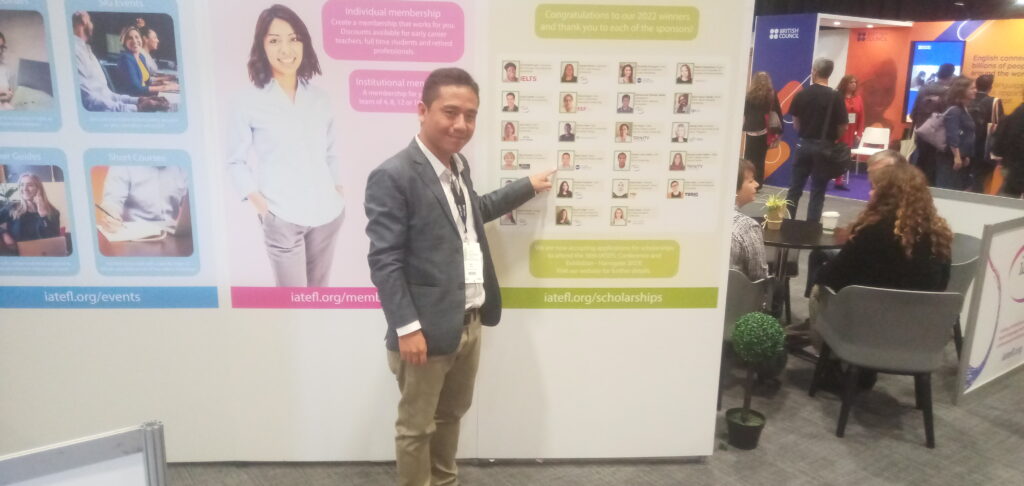
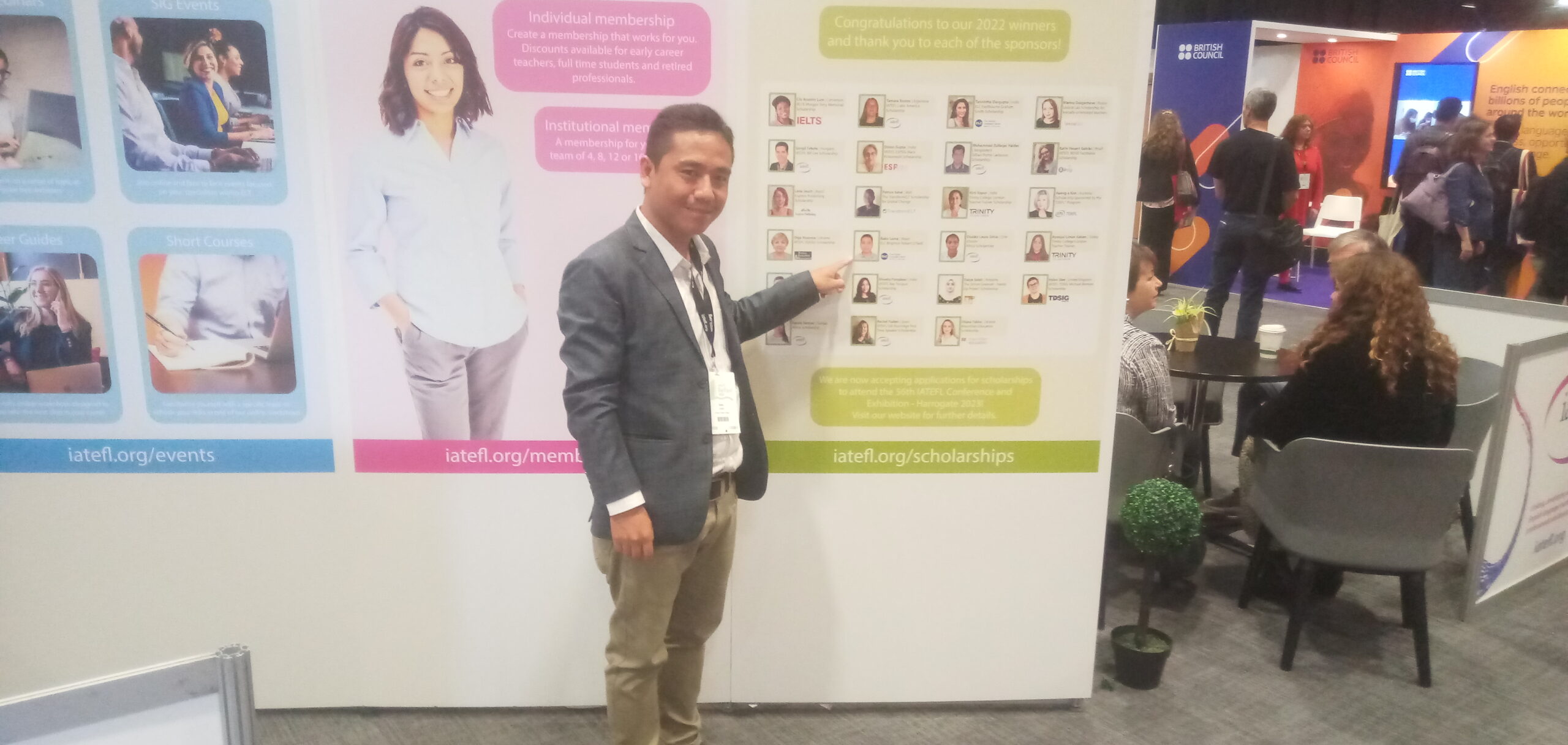
“If you don’t buy a raffle ticket, you won’t win a lottery.” This was what was written at the end of the email, with the link to the IATEFL Belfast conference scholarship application, sent by one of my professors, encouraging us to give it a shot. This prompted me to apply for the same without giving it a second thought. Provoked by his line, I ended up deciding to apply for the same. There were multiple application calls with different criteria. At the outset, therefore, I was bewildered as I could make multiple submissions. Nevertheless, after giving it a lot of thought, I made up my mind to make two separate applications so that I could land at least one scholarship. I made an application with utmost care and fortunately, I won it. My happiness knew no bounds when I received an email from the scholarship committee that I had won English Language Centre Brighton Robert O’Neill scholarship to attend the conference.

Based on my personal experience, if you want to win a scholarship, you  should first read the requirements of the application carefully and go for one that is the best suited for you. On top of this, you should apply for at least two different scholarships and this way make it more probable that you win at least one; however, you should make the strongest possible application with utmost care and a bit of research. The strongest suggestion I would give is: never submit your application until you are fully satisfied with it; if you aren’t , it can’t satisfy the reviewing committee either. It’s as simple as that.

Hurray! I won the scholarship. After a couple of months, after all the arrangements, finally, I was ready to fly. On 15th May 2022 I landed at Heathrow airport, London before I took a connecting flight to Belfast for there aren’t any flights that directly connect Belfast and my country, Nepal.  It was evening in Belfast when I landed there, and it was drizzling. Exhausted, I took a taxi to Premier Inn Belfast in Alfred Street, my pre-booked accommodation. Soon after dinner, I went to bed as I was completely exhausted after a long-haul flight.

The next morning, full of excitement and nervousness, I woke up to the sound of alarm, for it was the first day of the conference. After breakfast, to get to the conference venue, I had to struggle a bit to adjust to the British transportation system since I come from a country that has a different system. In the end, I got to the venue. It was already crowded with delegates from different parts of the globe. It was a foggy morning and it drizzled outside.

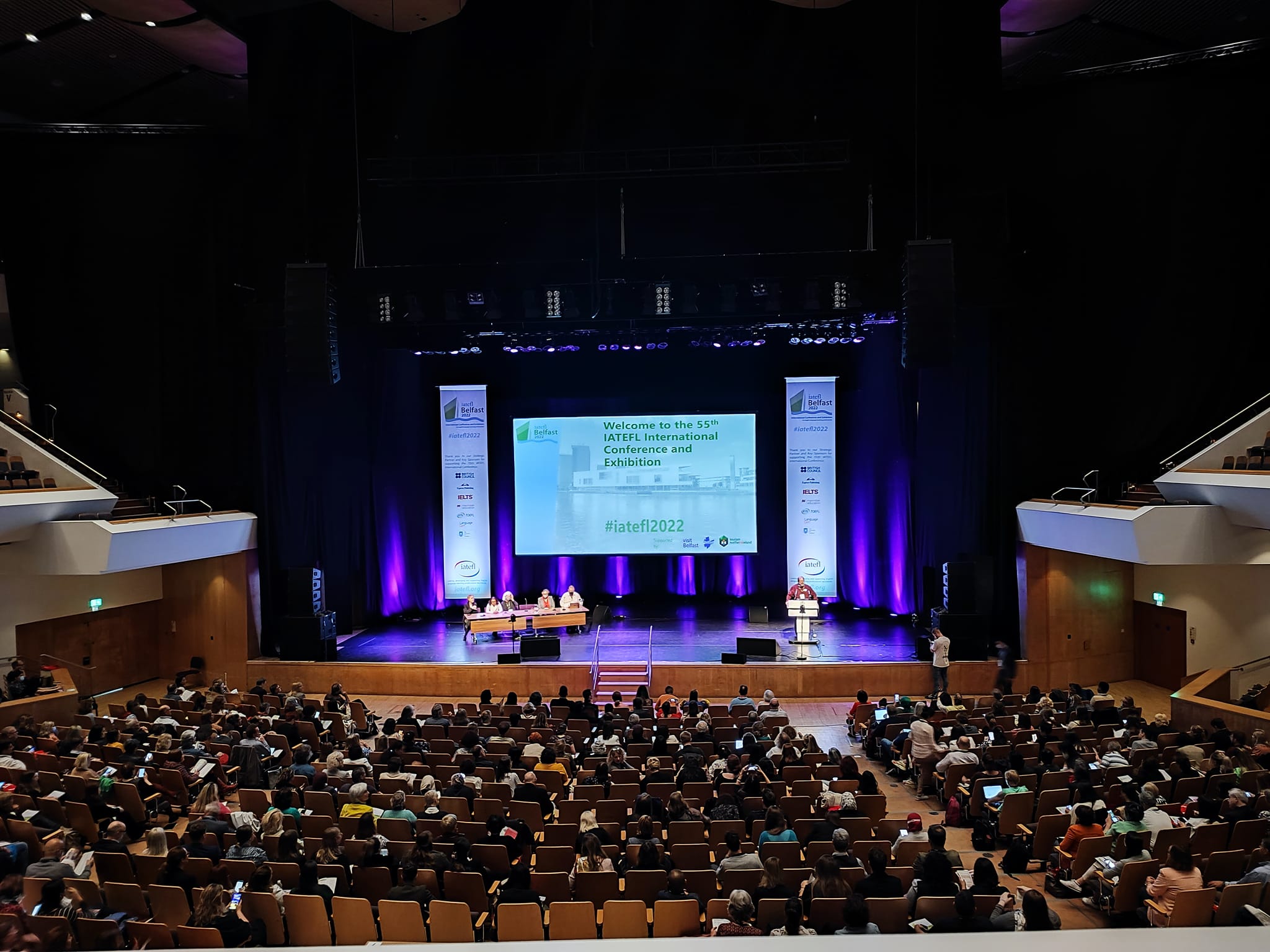
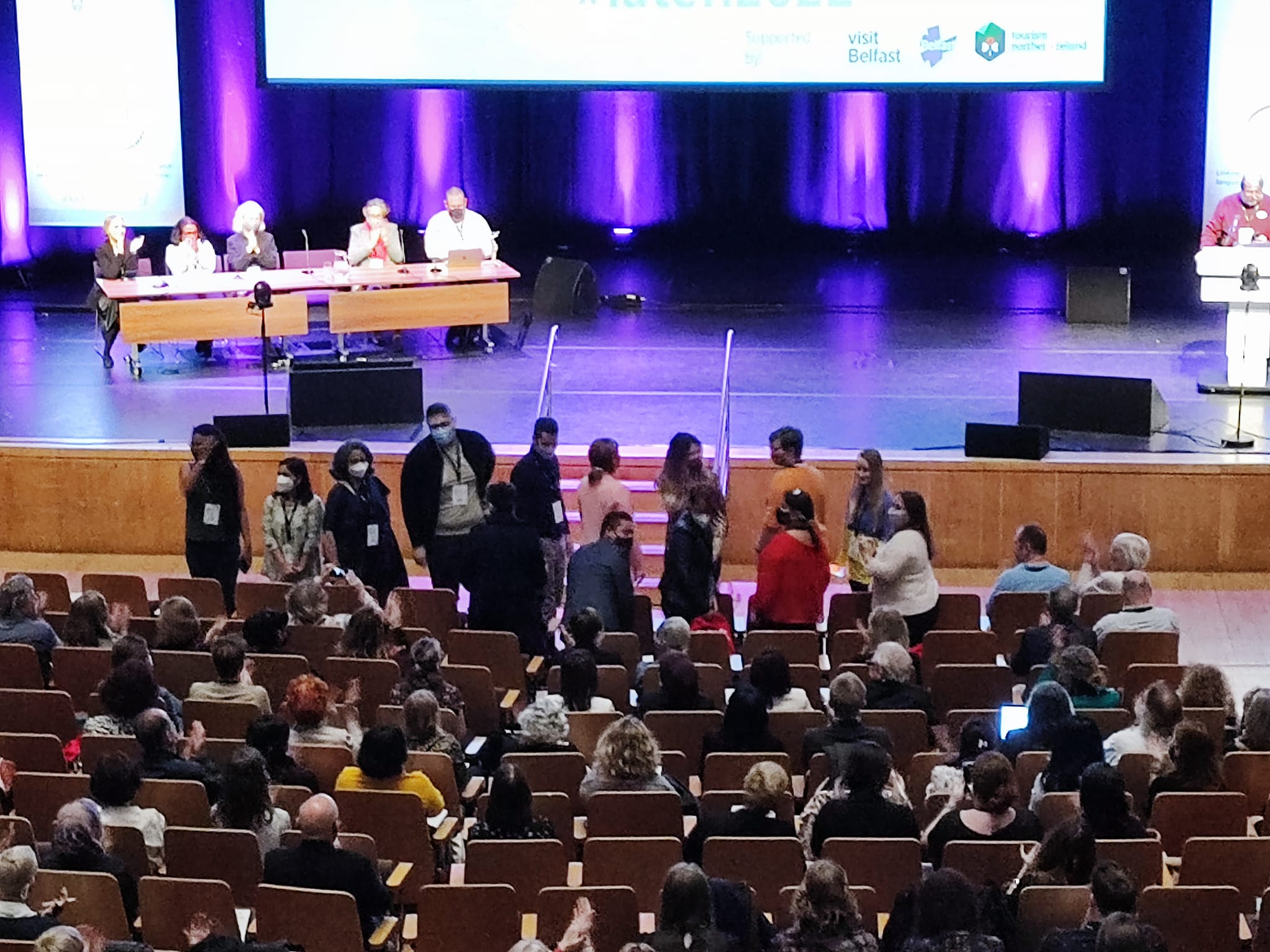
ICC Belfast, the conference venue, was very luxurious. The beautiful scenery around it fascinated me at the first glance. I could imagine from this what Belfast has to offer. The auditorium hall was packed with delegates from different countries. It vividly reflected the unity in diversity within the community of practice. Shortly after that  the conference started formally with educative, enlightening presentations and speeches. My best memory was of the time when the scholarship winners were put in the first row of the hall, on the reserved seats; there was loud applause in the hall when we were introduced by the organizing committee. Those beautiful moments still flash in my head.

The five-day (16-20 May 2022) stretched conference was exceptional in all aspects. It was  a perfect learning and networking opportunity. The conference gave me a wider perspective on education in general and teaching language in particular. I learned more about changing trends in research and teaching English as a foreign language. Most importantly, I learned the importance of considering the ‘context’ while teaching the English language in a non-native setting. Besides this, I made several international friends – teachers, teacher educators, publishers, professors, and so forth. Connecting with them  wouldn’t have been possible without the generous scholarship from IATEFL.

The conference fills your mind but adventures/explorations fill your soul! Who would return home without exploring a bit of British cities? After the conference, I went for a sightseeing tour on the Hop-on Hop-off bus, a bus that enables anyone to get on and off as one pleases. The bus offers panoramic views from the rooftop; it took me to the Titanic Quarter, St. George’s Market, Great Victoria Street Belfast, and many more, but I can hardly recall other names. The bus allows people to explore every area of Belfast.

With all fond memories from Belfast, I flew off to London. At first sight, London didn’t fail to fascinate me. During my short stay in London, I explored  London Bridge, Buckingham Palace, London Eye, and Centre London Aquarium. The memories from London are still fresh in my head. During each exploration, I thought of IATEFL. Without it, I would not have been where I was.

This entire narration has been feasible owing to IATEFL. It has helped me grow both professionally and personally: professionally by giving me a learning opportunity, exposing me to the world-class conference of English language teaching professionals, and personally by allowing me to connect with professionals from the same fraternity around the globe and to explore international (British) cultures, the way of life and the entire system. All in all, it has helped me grow as an educator.

If you want to learn and grow by attending the IATEFL conference but have financial constraints, I strongly suggest you apply for an IATEFL scholarship without a second thought. Where there is a will, there is a way. Bear in mind, if you don’t buy a raffle ticket, you won’t win a lottery. Nevertheless, once again, a gentle reminder—make sure to submit your application only when you are fully satisfied with it; if you are not , it cannot satisfy the reviewing committee either. And next time you should share a story about your being an IATEFL scholarship winner.  All the best! 

About Babu Lama

Babu Lama is an educator from Nepal. Besides, he also writes on topical educational issues for different national dailies, published in English and is also a scholar of MPhil in English Language Education at Kathmandu University School of Education. He was a  scholarship winner of the IATEFL Belfast Conference 2022.

Contribute to the blog

If you are a member of IATEFL and would like to contribute to the blog, we’d love to hear from you at [email protected]. We’re looking for stories from our members, news about projects you’ve been involved in, and anything else you think those connected to English language teaching would be interested in reading. We look forward to hearing from you! If you’re not a member, why not join us?
See blog guidelines and ideas

‘My First Experience in Teaching English Pronunciation to ELT Teachers in Nepal’ by Rajendra Man Singh

As part of my master’s degree programme at Kathmandu University School of Education, I was involved in developing a training programme for the professional development of English Language teachers in Nepal. Before that, I visited three secondary schools located in Kathmandu and Lalitpur cities in Nepal. When I talked to the English language teachers there, one of the common areas of concern or need was the lack of or subpar proficiency in English speaking and it motivated me to develop a training program in English Pronunciation. There are many reasons for the poor English pronunciation in Nepal. According to Sharma (2020), learning English pronunciation receives the least attention in the curriculum in the Nepali academic sphere. Furthermore, the overuse of the mother tongue including the dominance of the Nepalese language (Chand, 2021) along with the interlanguage differences between English and the native languages spoken in Nepal (Khati, 2011) because of the difficulty with both fluency and pronunciation. Although, in Nepal,  English has a high prestige in the academic and social contexts, and while a lot is invested in English language teaching (ELT), the result is far from satisfactory. Koirala (2015) states that there is a clear distinction between government and private school students in relation to their English language proficiency levels resulting in the former students demonstrating poor  English language skills in relation to private school students. However, even private schools, at times, appear to have  insufficient language resources as well as qualified or trained ELT teachers and these have resulted in poor English language proficiency in Nepalese students (Bista, 2011) .

I extensively researched English phonemes and suprasegmental language features like stress and intonation and made them relevant in the context of Nepal. I also used the website that I built to help Nepali EFL speakers learn English pronunciation. The culmination of the six months of field visits, research work, and training material development enabled me to offer training sessions to 22 teachers from four different schools in Nepal. These teachers taught primary and secondary-level students.

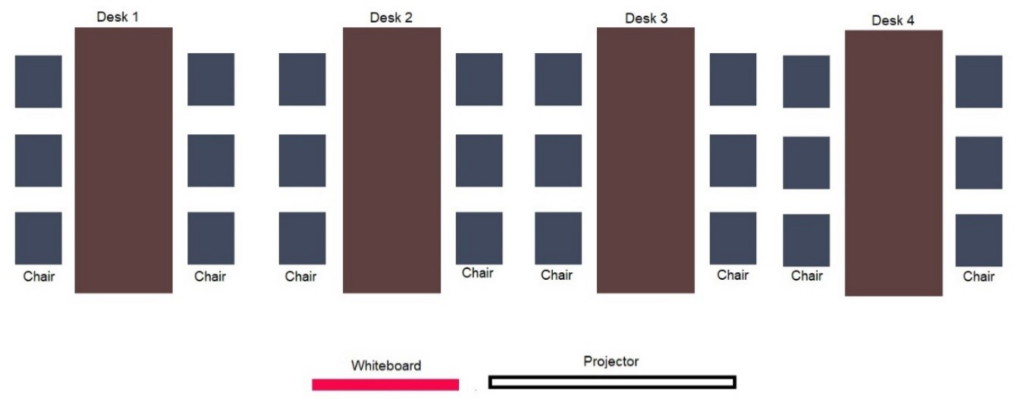
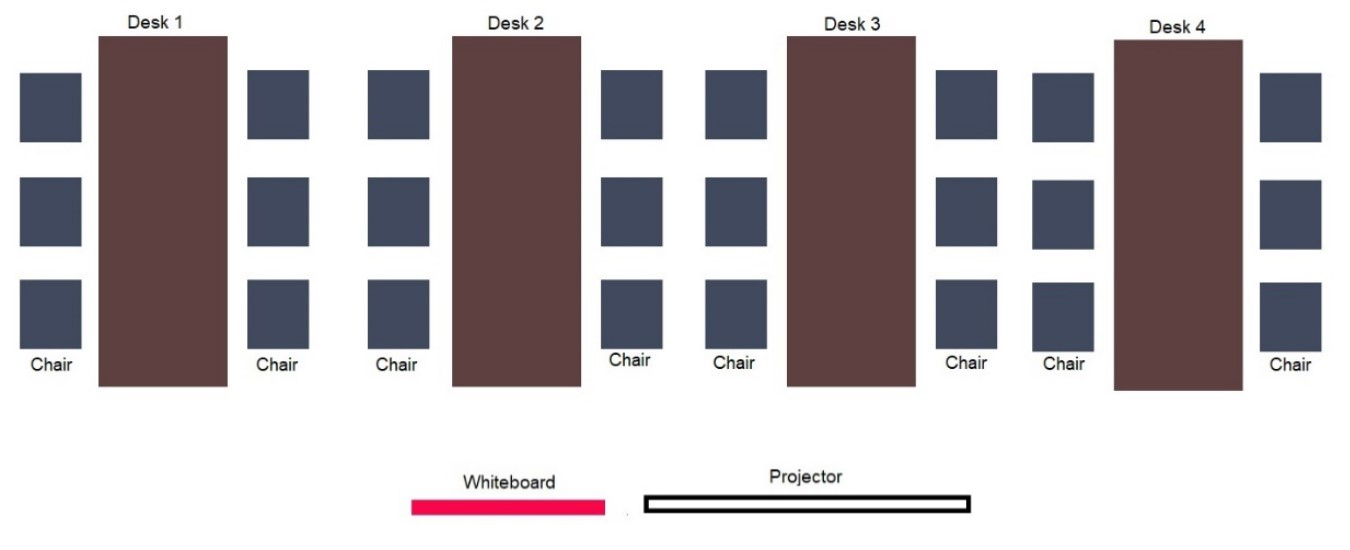
The participating teachers were busy professionals, and they had to take their leave of absence from their respective schools. Hence, after consulting with the hosting school officials and programme facilitators, the training programme was adjusted to a two-day event on the 11th and 12th of June, 2022. It covered ten different sessions on English pronunciation. Initially, the desks and benches were arranged in a traditional way facing the whiteboard. However, the seating arrangement was reorganized into a number of  U-shape groups facing the whiteboard to increase the training participant interactions (see figure 1). The first day focused on English phonemes, IPA, silent letters, vowel and consonant alphabet combination sounds, and rules on breaking words into syllables. Ice-breaking games were included in between the sessions to help integrate the class participants. I used PowerPoint slides as primary instructional material. While teaching the 44 English phonemes, I first went through the consonant sounds individually. I explained how the sounds are articulated along with the place of articulation. I used pictures of the human vocal apparatus with tongue placement and proper labelling to help them emulate the correct sound reproduction. English phonemes that are not present in the Nepali language were introduced along with their correct pronunciation. Some signs of the International Phonetic Alphabet (IPA) were easy and intuitive for the participants to learn as they looked similar to their English alphabet. This was followed by a session in which they practised pronouncing the combination of a consonant and a vowel, which was especially significant in showing how the letter ‘r’ did not follow the pronunciation convention followed by other consonant letters, or the vowel ‘g’ which could be pronounced as either /dʒ/ or /g/ depending on the adjacent vowel letter. Later, the training participants went over the rules for breaking words into syllables. This session was interactive and they received it enthusiastically.

On the second day, I intended on teaching word stress, sentence intonation, and commonly mispronounced English words in Nepal. Word stress and intonation were rather difficult for the training participants because of the lack of similar concepts in Nepali or other native languages in Nepal. Many of them had to repeat the examples several times to make sure that they were putting the stress on the right syllable or speaking with the right intonation tone depending on the sentence type. As a result, we spent about 30 minutes each for the practice session on word stress and sentence intonation. This was followed by a tutorial session on the English words that are commonly mispronounced in Nepal. Many English words are ‘Nepalicized’, meaning the words are pronounced distinctly which is peculiar to Nepali people. For example, the word ‘Film’ is pronounced as /fɪlɪm/, and the word ‘Tank’ is pronounced as /’tæŋkɪ/. The participants enjoyed going over the compilation of the English words that are pronounced differently in Nepal. Such variation in pronunciation can cause misunderstandings when speaking in English with foreigners.

Overall, the training programme on improving English pronunciation was well received by the participants and the school officials. I received a compliment from the hosting school principal that I was able to teach the course participants in two days what he learned in an entire semester as part of his bachelor’s degree in English. I feel that my objective in offering the training was achieved as I was able to help them understand or at least introduce different pronunciation aspects of the English language.   

References

  • Bista, K. (2011). Teaching English as a Foreign/Second Language in Nepal: Past and Present. Online Submission, 11(32), 1-9.
  • Chand, G. B. (2021). Challenges Faced by Bachelor-Level Students While Speaking English. Indonesian Journal of English Language Teaching and Applied Linguistics, 6(1), 45-60.
  • Khati, A. R. (2011). When and why of mother tongue use in English classrooms. Journal of NELTA, 16(1-2), 42-51.
  • Koirala, A. (2015). Debate on public and private schools in Nepal. International Journal of Social Sciences and Management, 2(1), 3-8.
  • Sharma, L. R. Discerning the Reasons for Difficulties in Teaching English Pronunciation to Nepalese Students. NELTA Bagmati Journal, 1.

About Rajendra Man Singh

Rajendra Man Singh is an ELT learner and practitioner from Nepal. He is about to complete his master’s degree in English Language Teaching from Kathmandu University School of Education. He teaches the English language to bachelor-level students at a college in Kathmandu. In addition to that, he is involved as an IELTS instructor to Nepali students. He has been in the ELT field in Nepal for the last four years. He is a published author and enjoys contributing as an editor to Nepali journals. Currently, he is writing short stories for a book publication. 

Contribute to the blog

If you are a member of IATEFL and would like to contribute to the blog, we’d love to hear from you at [email protected]. We’re looking for stories from our members, news about projects you’ve been involved in, and anything else you think those connected to English language teaching would be interested in reading. We look forward to hearing from you! If you’re not a member, why not join us?
See blog guidelines and ideas

‘Methodology in teaching – special needs education’ by Tamara Bradonjić

A teacher’s role in the classroom should not only be focused on teaching and passing knowledge on students. The more important roles are focused on motivating students and developing methods for fostering their critical thinking. Thus, a teacher is a motivator, facilitator, educator, psychologist, etc. Ours is a multifaceted role. If we observe our students in the classroom, we may identify four groups of students in heterogeneous classrooms. Somehow the majority of teachers first notice high achievers, the students who are usually leaders of the discussions, who know answers to all the questions and who do well in tests. On the other side, there are low achievers, students who are usually shy, they do listen in class but don’t raise their hands, perhaps being afraid of making mistakes. They are also low achievers in tests. Medium achievers are somewhere in between these two groups of students, seemingly passive in classes but doing well in tests. The fourth group of students is special needs students. They can belong to any of the previous three groups, and in the majority of cases they can be high achievers. Nevertheless, a lot depends on the role of the teacher in class.

Special needs education refers to the practice of educating students in order to accommodate  their individual differences, disabilities and special needs. When talking about disabilities, we refer to learning disabilities, emotional and behavioral disabilities, developmental and physical disabilities and many other disabilities. Today special needs education is integrated in the regular school system, but it used to be different. Thus, there are four periods of this kind of education. Initially, children with disabilities were excluded from schools and they attended specialized schools. Gradually, care for disabled children was established, but still they were segregated into homogeneous groups. After introducing the principle of normalization and integration, educational equality and equal educational services were established and inclusion became a part of the regular school system.

Speaking of disability, there are two definitions both relevant for special needs education. In medical terms, disability is regarded as the necessity of a person to adapt to the society and disabled people need to be made more normal. On the other hand, social definition emphasizes the necessity of the society to change the point of view and regard the disabled people almost as equal as the others. In social context, disability is mainly a consequence of discrimination, prejudice and exclusion. Inclusion is based on social definition. The right to a more inclusive education is covered in several significant international declarations:

  1. Universal Declaration of Human Rights (1948)
  2. UN Convention on the Rights of the Child (1989)
  3. World Declaration for Education for All (1990)
  4. Standard Rules on the Equalization of Opportunities for Persons with Disability (1993)
  5. UNESCO Salamanca Statement and Framework for Action (1994)
  6. Dakar Framework for Action (2000)
  7. UN Convention on the Rights of Persons with Disabilities (2006) 

Did you know that the 3 December is celebrated as the International Day of persons with disabilities? There are many famous people with various disabilities who prove the theory that disability does not need to hold you back. Frieda Kahlo, Stephen Hawking, Helen Keller, Stevie Wonder and Chris Brooke all had (have) various disabilities, but they achieved great success in their fields.

Special needs education requires a process of adaptation. The first step is identifying a child with special needs. In order for the inclusion program to be successfully integrated, the social environment in the classroom must be involved. Successful implementation of the inclusion is dependent upon the modifications that should be based on the individual needs. Modifications are part of the instructional techniques besides accommodations. Modifications are changes or adaptations of materials to make it easier to students’ needs. It affects the change of what is learned according to the difficulty of the material and the way students are assessed or what they are expected to learn. There are numerous examples of how teachers can modify their teaching materials like skipping subjects, simplifying the assignments or shortening them. They could offer extra aids or extend time in flexible settings for taking tests. Speaking of accommodations, we sensibly adjust to teaching practices so that the student is able to learn from the same material but in a more accessible way. It can be achieved with response accommodations (instead of writing homework the student can be tested verbally), presentation accommodations (audiobooks, text to speech software, talking calculator), setting accommodations (changing setting for assessment) or scheduling accommodation (giving rest breaks or extending time during tests)

Judging by the fact that special needs education is based on a student’s individual needs, a teacher is expected to design an individual learning plan . There is no specific form; still there are patterns to be followed. The patterns are based on first selecting the topic out of which the activities are further developed. Each activity in the plan should contain the expected change with the objectives from the topic. Implementers are the teachers, who might be helped by a parent or assistant (if a special needs student needs an assistant). The teacher decides on the time or duration of the selected topic and the number of activities). Finally, models of accommodations are applied with various activities and according to the individual needs. Having designed and applied the individual learning plan, the teacher needs to evaluate it in three- or six-months’ time. When evaluating it, teachers should emphasize the expected changes and explain whether they were partially or completely accomplished and how effectively the accommodations were implemented. It is significant to note that when writing comments about students, teachers should write initials only, avoiding the student’s full name ,and emphasizing the positive achievement with suggestions for further improvement.

Special needs education is highly beneficial both for students and teachers for numerous reasons. Introducing students with disabilities into the classroom improves diversity and the classroom becomes strengthened. Special needs students can help create a healthy climate in the classroom where other students can learn how to be human. Students with disabilities can make far better progress in a regular class than in “specialized” groups. Finally, teachers are challenged to work with all kinds of students and develop various ways of teaching.

About Tamara Bradonjić

Tamara Bradonjić was born in 1981 in Kragujevac. She graduated in English language and literature from the Faculty of Philology in Belgrade in 2005. Besides education as a teacher, she is also educated as a translator in the Association of Scientific and Technical Translators of Serbia. She has taught  for 16 years in a primary school “Milan Blagojević” in Natalinci. In her work she combines various techniques such as teaching with music and teaching with graphic novels. Translation is her hobby, especially translating legal and economic documents for university professors. Her other hobbies are listening to music, cooking, reading books and writing poetry.

Contribute to the blog

If you are a member of IATEFL and would like to contribute to the blog, we’d love to hear from you at [email protected]. We’re looking for stories from our members, news about projects you’ve been involved in, and anything else you think those connected to English language teaching would be interested in reading. We look forward to hearing from you! If you’re not a member, why not join us?
See VIEWS Guidelines and Ideas

Is it easy to make your students think?

 by Shoghig Keoshkerian  

It has been said that we cannot make our students learn but we can make them think. If you agree with this statement, therefore, it is worth shedding light on learning strategies.

Language learning strategies are self-directed specific actions, techniques that the learners intentionally use in order to improve their progress in developing L2 skills and retain the newly acquired knowledge or language. I have implemented some behavior-changing strategies in my classes, which were extremely helpful for my learners. The good news is that the strategies can be taught as they expand the role of educators, they are usually problem-oriented but flexible, and finally, they go beyond the cognitive aspect to stimulate metacognition in teaching and learning.

“Think aloud” strategy is one of the techniques that I have  used for my students to answer questions aloud to the class before, during, and after reading. I usually demonstrate the technique by answering the questions myself for example, “What do I know about this topic?”, “This reminds me of …”, “I got confused when …”, etc. Once the questions are introduced and demonstrated by the teacher, students read parts of the text and start answering aloud the questions about the text or their background knowledge of the topic. Needless to say, the teacher should facilitate the discussion based on students’ responses. Additionally, it is always a good idea to let students choose questions randomly from a basket or box.

Moreover, the task could be conducted differently for more fun and for the sake of giving students multiple opportunities to share as they can rotate partners in a circle for activities with multiple questions.  This socio-affective strategy, entitled  “Think-Pair-Share” enables students to respond to questions aloud to the class before, during, and after reading. In this case, teachers ask students to think about the given topic independently, after that, students are paired out, and share their thoughts and ideas about the topic with their partners. It is worth mentioning that teachers can group students creatively – students could be given the flexibility to choose which partner shares the information. Toward the end of the activity, it might be a good idea to expand the share into a whole class discussion and record students’ responses in a graph or mind map on the board. However, if the topic is sensitive, consider giving your students a chance to answer questions anonymously.

As you can see, the think aloud or self-reflect technique requires readers to just stop for a while and reflect on what they do or do not understand when they listen or read. Therefore, the teacher’s modelling of “think aloud technique” can definitely ease the process by making their own comprehension process visible. It is of high importance that students are taught to respond using some sentence starters or prompts such as “I got stuck on the …”, “I would like to learn more about …”, and “I wonder if …”, etc.

As for some practical ways to enhance metacognitive strategies, it is always crucial to incorporate them into daily lessons. Always make sure to highlight the usefulness of strategies so that your students take the ownership of their own learning process and see the strategies as an added value. Moreover, help students to monitor their own use of strategies by using checklists or exit tickets. Additionally, you can always follow some fundamental steps to ensure you cover all the components of metacognition, which are planning for learning, selecting appropriate learning strategies, monitoring strategy use, and the learning itself.

As long as you are eager to involve learners in taking an active role in their own learning process, you might consider using some of the following reading strategies such as relating the text to themselves and to the world, making inferences or predicting what happens next, creating mental images and visualizing of what was read to make their thinking process visible to themselves and others, summarizing and synthesizing texts, interacting with the text by thinking aloud and finally by making them aware of their mental processes and own learning strategies.

It is important to develop the 21st-century skills such as critical thinking and problem posing/solving skills by repeatedly exposing students to higher order thinking tasks and assessments, providing sufficient wait time for them to think and process both the ideas and the language. It is useful to practise self-reflection and employing metacognitive strategies at the higher levels of Bloom’s taxonomy such as analysis, synthesis, and evaluation rather than activating only the lower levels of cognition, understanding and remembering.

Be a successful teacher and enable your students to acquire effective learning strategies which will facilitate their learning, secure their success, understand the world around them, and make good and deep connections between theory and practice thus taking an active role in their own learning.

Reference:
Anderson, N.J. (2002). The role of metacognition in second language teaching and learning, Eric Digest, April.


About  Shoghig Keoshkerian  

Shoghig has been teaching English at different institutes for a long time. She holds a master’s degree MA in TEFL. Shoghig is an EFL instructor at the American University of Armenia.

She is also a trainer of trainers, mentorship support specialist and instructional designer. She has been awarded a certificate of Teaching Excellence and Achievement from Claremont Graduate University in California.


Contribute to the blog

If you are a member of IATEFL and would like to contribute to the blog, we’d love to hear from you at [email protected]. We’re looking for stories from our members, news about projects you’ve been involved in, and anything else you think those connected to English language teaching would be interested in reading. We look forward to hearing from you! If you’re not a member, why not join us?
See VIEWS Guidelines and Ideas