‘Mindfulness and Reflection in Exam Prep: 6 Practical Activities’ by Maria Theologidou

Over the last few years, the importance of emotional and mental well-being in education for teachers and learners has become more widely acknowledged (Sulis et al., 2023). As the emphasis on becoming more aware of our teaching practices and self-care has heightened, two concepts have been growing in interest: reflection and mindfulness. Although they belong to different schools of thought, they share an important similarity, namely to observe and thoughtfully act upon teaching and learning moments both while and after they take place. What distinguishes them lies in their focus and application. Reflection focuses on deliberately and systematically increasing teachers’ awareness, not only as professionals but also as individuals, throughout their teaching journey (Farrell, 2019; 2024). Mindfulness, particularly in its sociocognitive dimension, encourages us to critically engage with situations, explore them through different lenses and develop a flexible mindset (Langer, 2016).

Although activities to promote mindfulness and reflection are abundant, they are rarely applied in practice, particularly in demanding contexts such as exam preparation courses. Such courses are often marked by high stakes, tight schedules, and a strong focus on outcomes which often implies less emphasis on the different stages of students’ learning progress. This mounting pressure affects both teachers and learners with the former struggling to fulfil multiple roles and the latter often experiencing a lack of ownership over their learning journey (Burgess and Head, 2005).

Is there room for mindfulness and reflective tasks in such highly demanding contexts? As a teacher specialising in exam preparation, I have seen firsthand how challenging it is for my learners to reflect on their progress, celebrate achievements and embrace mistakes as part of learning. Still, by taking small, consistent steps to introduce mindfulness and reflective tasks in my lessons, I have noticed that my learners have gradually grown more conscious and in control of their learning progress.

Here are six practical activities I have used with my exam prep learners to help them become more aware of their progress in their learning journey:

1. Take Five and KWL (what a student knows (K), wants to know (W), and has learned (L) about a topic) charts – Moments of Reflection: Introducing extensive reflective activities to learners, such as reflective journals, can be intimidating, especially if students are unfamiliar with reflective practices. Instead of using journals, I have found that it is more practical to begin with a simple “Take Five” activity, where students spend the last five minutes of class reflecting on three prompts: one key takeaway, one challenge/point of confusion, and one question they still have. Once comfortable with this task, I introduce KWL charts adapted for reflection where I ask learners to identify threepoints for each of the following categories: what went well, what could be improved, and one small step they’ll take next. These are ideal after pair or group work as they encourage learners to reflect on their academic performance and progress in developing skills such as collaboration and problem-solving.

2. Short-term Goal Setting: Goal setting often feels daunting for my students as they find it hard to envision what they would like to have achieved by the end of the academic year. Instead of focusing on long-term goal setting, I ask my learners to write down two to three goals they’d like to achieve by the end of the term, along with action steps. We then revisit these goals and reset learning priorities. For younger learners, I use a “What’s in my backpack?” activity where students draw or write about an imaginary “backpack” they carry throughout their exam prep journey. They list what “items” they feel they already possess (e.g. knowledge, determination etc.) and which extra “items” they would like to add (e.g. confidence in speaking/writing, more listening practice etc.).

3. Achieving Goals and Self-kindness Walls: Most exam prep learners struggle to appreciate their progress and detach their self-worth from immediate outcomes. One way to build self-awareness and help learners acknowledge their worth is through paper or digital vision boards using tools such as Padlet or Wakelet. We usually create two boards with my learners. In the first one called “Achieving Our Goals” learners envision how they will feel after reaching their goals, strategies
they intend to use in the process and future steps for improvement. The second is a “Self-Kindness” wall featuring positive affirmations learners write about themselves, revisiting and adding to these throughout the year.

4. Mindful Mistakes 1: Taking Action: For most learners, errors represent learning blocks rather than learning opportunities. One way to shift this perspective and help learners embrace the importance of mistakes is to invite them to engage more actively in the assessment and feedback process. Apart from using student-led forms of assessment such as self and peer-questionnaires, I also like to integrate “Thinking Boxes” in learners’ feedback because they allow students to comment on which feedback points they found most useful and suggest 1-2 actionable steps for improvement. This process makes feedback a two-way conversation and helps students take ownership of their learning.

5. Mindful Mistakes 2- Things Within My Control: Overthinking is a major source of stress, especially in high-pressure environments such as exam prep courses. As part of the visualisation tasks I use with my learners, we also create Venn diagrams to group things they can control, things in a grey zone and things beyond their control. We then brainstorm practical ways to handle the situations in the grey zone (e.g. an unexpected test) focusing on what learners can actively influence.

6. My Stress Management Toolkit: Learners often find it difficult to process stressful situations, especially in social contexts where they prioritise positive emotions over managing challenges. To help my students manage the pressures of the exam course, we can create a “Stress Management” toolkit. Each student brainstorms techniques they find effective for managing stress, such as breathing exercises, positive affirmations, stretching, or even listening to calming music. We either keep the same checklist for their exam day or create separate ones to help them with their exams.

References:
Burgess, S. and Head, K., 2005. How to teach for exams. Malaysia: Longman.
Farrell, T. S. C., 2019. Reflective practice in ELT. Sheffield, South Yorkshire: Equinox Publishing Ltd.
Farrell, T. S. C., 2024. Reflective practice for language teachers. British Council.
Langer, E.J., 2016. The power of mindful learning. Boston, MA: Da Capo Lifelong Books.
Sulis, G. et al. 2023. ELT teachers’ Agency for Wellbeing, ELT Journal, 78(2), pp.198–206.
Available at: https://doi.org/10.1093/elt/ccad050 [Accessed 28 th December 2024]

About Maria Theologidou

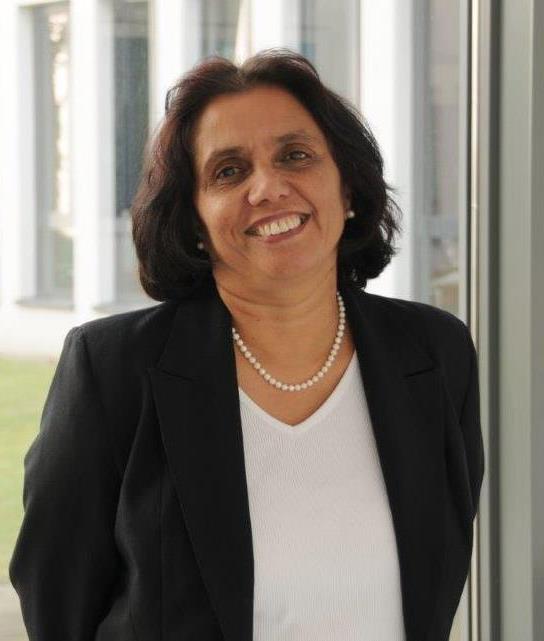
Maria Theologidou is an EFL teacher, teacher trainer, translator/subtitler and oral examiner. She has contributed to publications, written articles for ELT journals, presented workshops at local and minternational conventions and is currently running her teaching, teacher training and academic support services business at https://mariatheologidou.com/. She’s passionate about creating learning spaces in which her students can enhance their creativity and critical thinking skills. When not teaching, she can be found singing, cooking or blogging!
Interview with Rob Howard

Rob, it is nice to have you here. Can you tell us a little bit about yourself?

To give a little background, I grew up in the United States where I worked in different businesses. I spent many years in retail management and as an executive sales manager training people for better sales results through communication – part of what led me to teach and specialise in business English. Over 20 years ago, I moved to Brazil where I started my English teaching and quickly realised that there was not a lot of material available for business English. This is what initially attracted me to the IATEFL BESIG which I later got involved with. I was online years before COVID – teaching, presenting and putting on webinars with my EFLtalks.

What would you consider your greatest success so far?

In English teaching, I would have to say that my greatest success has been improving as a teaching professional, consistently providing my students and clients with exactly what they needed to reach their objectives and successes. For me, the greatest success for a teacher, a coach, a facilitator, or a mentor, is knowing that you have been able to make a difference in the lives of your students because of the dedication and work that you have put into yourself as a professional.

What is more important in teaching business English: acquiring a relevant teaching certification or experience?

Well on this question, I’m a little biased because although I minored in secondary education, I didn’t go through the traditional route of getting teacher certification first but was able to use my experience from business and from training my staff to build a clientele, materials quickly, and to develop my style and methodology for teaching business English. Since then, of course, I have continued to get more training and certification just to help fill in the gaps of what I might have missed and what is new. Relevant certification is good and can be important for your development as a business English professional, but there is nothing like having experience in a market, in doing business, and in teaching for multiple years. I have known many people with impeccable
credentials who, due to a lack of experience, have failed. On the other hand, I know many experienced professionals without a teaching background or understanding of the basics of methodologies and pedagogies who have failed because they couldn’t deliver on the experience they had. If I had to choose, I would say the experience and being able to relate and build a rapport with their students is much more important than some of the quote “teaching certifications” available on the market today.

What is the difference between a good trainer and a great trainer in business English?

For me the difference between a good trainer and a great trainer is huge. A good trainer is well-versed in general English and can teach all the basics of vocabulary, pronunciation, grammar, structure, etc. A good trainer possesses a basic idea of business English concepts and terminology. Most good trainers tend to use a one-size-fits-all approach to training, which isn’t necessarily what the client needs, but they achieve good results. A great trainer is someone who can do all that and also relate to the needs of
today’s business professionals and supply exactly what they need to help them succeed. This means understanding proper communication skills, such as negotiation, conflict resolution, presentation skills, etc. Great trainers have expertise in the business world and can work with real-life content in context, in their teaching. They stay up-to-date with the trends and integrate this content into their lessons and can adapt to the specific needs and learning objectives of their students and use case studies, simulations, and role-playing to augment the students’ learning. Great teachers also work hard to build autonomous learners because the business world is always changing, and part of our job is to give our clients the tools to grow and succeed outside of the classroom.

How should you adjust your training style to suit a group of executives, a group of factory workers, and a one-to-one client?

Adjusting your training style to suit different clients again comes from experience. For example, working with executives usually requires high-level vocabulary and skills such as negotiation and presentation. Making sure that the content is relevant to these executives is key and having a strong understanding of business practices is important. Remember these executives understand business already. It’s our job to help them take their existing skills and knowledge and translate that into English in a way that will help them communicate globally. Training factory workers requires more emphasis on practical language skills. This might entail a hands-on approach with skills which the student can relate directly to their daily tasks, such as using operations manuals, understanding oral instructions, etc. Here the need for simplified language and concentrating more on clear, straightforward terms that are easy for everyone to understand is important. Demand for business English is growing and is expected to grow more.
What would you advise future business English teachers? First, I recommend that you gain a thorough understanding of the marketplace and its needs. Depending on the sector or niche you choose to enter, it’s essential to recognize the different vocabularies, communication styles, and skills required. To achieve this, educators must develop their expertise, for example grasping the concepts behind business terminology and practices. You must learn to understand the nuances specific to your client’s business. You also need to stay informed about new methodologies, resources, and changes in the business environment. Ultimately, this requires a commitment to continuous professional development. Joining a professional network, such as IATEFL BESIG or ESPSIG, can provide valuable resources. Networking with other like-minded professionals and sharing support while keeping up with best practices will elevate your skills to the next level.

About Rob Howard

Rob Howard is the Online Language Center and Business Language Training Institute owner, EFLtalks founder, a teacher, trainer, coach, writer on business English, entrepreneurship, one-to-one, online teaching, tech, and CPD. He is IATEFL Poland President, past IATEFL BESIG Joint Coordinator, Gallery Teachers Masterclass presenter, iTDi TOEFL trainer, and Independent Authors & Publishers founder.

‘Another country: 10 things I’d like to tell my younger teaching self’ by Christopher Graham

1. Your students (usually) want you to succeed.

In my very first teaching job in Italy, I had a dreadful experience. Do you remember the ‘make a piece of paper into a ball, throw the ball and the beginner student catches it and says their name’ activity? I can see the young woman’s face now. She let the piece of paper hit the floor and looked at me with such chilling pity in her eyes. I had no idea what to do. But the rest of the students took over and made it very clear to her that she ought to pick up the ball, say her name and throw it back to me. And she did. They had my back, and they usually do.

2. Be ready to show some of your weaknesses and a pinch of human frailty. 

I think a lot of students think teachers come from another planet. But suppose you’re an EFL teacher who has learned English from scratch, or English is your native language and you’re learning another language, possibly your students’ home language. In that case, it can be tremendously reassuring for learners to understand that you too had problems either with learning English or with their language. They realise it’s not just them, but it’s also you. Be prepared to share little snippets of language learning difficulties with the students, but not of course to the extent that they see you as a bumbling failure with languages. 

3. Course books are not carved in stone.

The orthodoxy around advice to new teachers is not to deviate from the course books in your first year of teaching. I’m not sure that’s good advice. If you see something that in terms of topic, for example, will just not be of interest to them, change it, find something else and fiddle around with the tasks to suit it. It’s not difficult with the Internet or (holding my nose) AI. 

Of course, replacing a whole reading text is quite a big ask for a new teacher, but if the choice is an okayish comprehension activity around a text the learners really want to engage with, or a great activity around a text they find as exciting as watching paint dry, I know which I’d prefer. 

And if the school management don’t know about it, they don’t have to worry about it.

4. Never be afraid to ask. There are no stupid questions. Well, one or two maybe, but…. .

I was a very overconfident new teacher. I knew everything. As a result, a number of my classes were complete carnage, because I didn’t have the humility to ask the Director of Studies for help. If you aren’t sure about something, ask. You kind of owe it to your students.

5. Try to understand your students’ motivations as quickly as possible.

Sometimes it’s easy to assume that your learners are homogeneous, not just in terms of language level, but in terms of aspirations and hopes for English. Even in a school setting where English is perhaps a compulsory subject, everybody has different reasons, different attitudes towards English and different things that they might want to achieve in life and English. Try to find out about this – do it in the first language if you have to. It’s invaluable information.

6. Never underestimate how stressed or anxious students might be.

Particularly with adults, but also with teenagers, learning a language requiring as it generally does some degree of public performance, can be an extraordinarily stressful thing to do. Don’t ever forget that. And don’t forget the hidden relationships between learners, and that there is often a little voice in the back of students’ heads telling them they will be teased or laughed at in class. Group them well, be gentle, and jump on any bullies.

7. Dispel the idea of the ‘sound like a native’ goal.

The idea of a group of insert name of non-native English-speaking country students ever sounding as if they were born in LA, Glasgow or Sydney is unachievable nonsense. Undesirable, even. And anyway, what do native speakers sound like? Learning aspirations should perhaps better revolve around comprehensibility and comprehension. Getting things done in the language, that’s what matters. The first school I taught in had a life-sized cardboard Beefeater in one corner, and that’s scarred me forever. Hopefully, that kind of stuff doesn’t go on any more. It’s a global language, remember.

8. Most of your students will probably never speak English to a native speaker.

Whether or not the course book does it, do your best to expose your learners to as many different accents in English as possible. And that means accents from so-called non-native speakers too. Anyone that ever says to you that only native speakers should be used as a model, should be referred to point 7 above. 

9. Being able to construct a perfect third conditional in class has nothing whatsoever to do with your ability to communicate in English.

My early teaching jobs (a fair few years ago if I’m honest with you) seemed to revolve around endless written grammar manipulation exercises. Why students didn’t die of boredom is not clear to me. I used to be delighted when one of them got the form correct. I now realise this had zero positive impact on their ability to communicate in English on a day-to-day basis.

10. Reflection Reflection Reflection. 

Show your students how to reflect, and do it yourself. That moment of silence, looking back at a part of a lesson or a series of lessons, in my view, is where a lot of learning happens. Where things are pieced together. Where connections are made. Where things that might otherwise have been forgotten are filed away for future reference.

This piece is called ‘A Foreign Country’ after a quote from the 1953 L P Hartley novel ‘The Go-Between’. The opening line is “The past is a foreign country: they do things differently there”. A nice sentiment to have in mind as you look back at your own teaching perhaps.

About Christopher Graham

Christopher is the current Vice President of IATEFL. You can read an interview with him from earlier this year here.

An interview with Judith Mader

Tell us a little bit about yourself, Judith.

I am from the North of England and went to the University of Sussex in beautiful Brighton as well as later to Birmingham University where I did an MA in Applied Linguistics in the early 1980s (no Internet then!!). The defining factors in my personal life are, firstly, that my mother was from South India originally and my father from Wales and that I spent my childhood in Indonesia and Singapore as well as travelling the world with my parents. I later (in the late 1970s) went overland to India and probably all this travelling made me into something of a home lover. Secondly, my home and my workplace have been in Germany for the last 48 years and I am very happy here. I have been a teacher in adult education and universities as well as a teacher trainer and a language test developer. I retired from being Head of Languages at a university in Frankfurt a few years ago and still do freelance work in different areas of ELT. Thirdly, I have a multicultural family with German/English children and Spanish and Ethiopian children-in-law and grandchildren. And, of course, there is IATEFL, which has been my professional community for the last 44 years. I became a member in 1980 and a volunteer around 2005.

How was your experience as a trustee of IATEFL?

It was generally 100% positive but of course there are also sometimes downsides. Although I was a Trustee all the through the Covid-19 pandemic, the Board I worked with was a wonderful team, so this experience was absolutely positive as far as our teamwork and, in fact, continuing friendship was concerned, although it was of course very time-intensive, as we were meeting every week sometimes during the crisis! Of course, there are always disappointments in any work, but these were few and far between and usually concerned with individual members or other volunteers. They are all part of the job anyway, even if sometimes annoying or frustrating. The experience as a whole was wonderful though and I would definitely recommend it. I have only now, after three months, really got used to being on the outside.

What’s the role of SIGs for an organisation like IATEFL?

My role as a Trustee was SIG Representative. I did not have a committee as such but the group I worked most closely with was made up of SIG Coordinators and, to a lesser extent, SIG committees. I started as a volunteer for TEASIG and was discussion list moderator, newsletter Editor and SIG Coordinator (sometimes simultaneously). SIGs are vital to IATEFL, as they provide members with a smaller and manageable community and are definitely the place to go to start volunteering. IATEFL would definitely not be the same, and I doubt as successful, without its SIGs, but there are, nonetheless, some questions about SIGs which could be considered. These would include the number of SIGs, possible overlaps between the SIGs, the possible restrictions of joining or volunteering for more than one SIG as well as probably a few others I have not thought of. But, basically, IATEFL SIGs are vital and they rock!! For the SIG Rep on the Board of Trustees, it is not always easy working with all the SIG Coordinators. Not only are SIGs diverse in their interests, numbers, forms and levels of activities (all these are connected), but the Coordinators are all individuals with their own different personalities. In general all the Coordinators I worked with were great and definitely all doing their best for their own SIG as well as IATEFL. I would also like to give an enormous shout out to the team at Head Office, and especially the person responsible for supporting the SIGs. In my time this was Eleanor Baynham and Hazel Frost, both of whom were marvellous.

Would you like to share your plans for the future?

As far as my personal future is concerned, now that I am retired from full-time employment, I want to spend even more time with my family and friends as well as travel and do all the things I couldn’t do while I was working. That includes spending time on and for IATEFL but in a different way. I am looking forward to being an “ordinary” member at the Conference, spending time talking to people and doing things I didn’t have time for as a volunteer. I am also looking forward to representing my local Teachers’ Association at Associates Day, which I have never been able to attend.

About Judtih

Judith Mader has worked in number of academic positions, including as a full-time test developer and until recently, as Head of Languages at a German university. She is based in Frankfurt am Main, Germany. She has also published course material and tests and articles and books on teaching methodology and testing. Judith was a Trustee of IATEFL for 6 years, representing the sixteen IATEFL Special Interest Groups and was the Newsletter Editor and the TEASIG Coordinator of the Testing Evaluation and Assessment Special Interest Group (TEASIG).

An Interview with Beatrix Price

 Hello Beatrix and thank you so much for agreeing to this interview.  Can you tell us a bit about yourself? 

I work at the Department of Language Pedagogy at the Institute of English and American Studies, Faculty of Humanities, Eötvös Loránd University, Budapest. I am Hungarian but I “borrowed” my surname from my English husband for this lifetime. We live and work in Hungary and have raised four children who are bilingual and multicultural. All four of them live abroad and they are true global citizens. 
My professional interests include language teaching methodology, creativity in education, the use of art in English classes, child development, teacher associations, teacher leadership, and teacher professional development and well-being.
I have been a member of my national teacher association, IATEFL-Hungary, now TESOL Hungary, for about 15 years and became involved in it from the beginning, taking on different roles until later I became the president of the association. I quite enjoyed organising CPD events and I am especially proud of the monthly Creative Café events and the Silver Jubilee tree-planting project in 2015 that I initiated.
I have presented at numerous conferences, have given workshops and webinars in Europe, North and South America, in Asia and Africa and delivered plenary talks in Croatia (HUPE), Germany (ELTAS), Moldova (META), Israel (ETAI), Kuwait (TEFL Kuwait) and at the IATEFL Associates’ online conference. I have been attending IATEFL conferences since 2014 and participated at the TESOL convention in 2023, where I was also invited to talk at the Affiliates’ day on the findings of my PhD research which was the role of English language teacher associations in providing professional development to EFL teachers. 

How important for our growth as teachers is our wellbeing? How can we ensure we are on the right track?

If we think of the Latin proverb: ‘Mens sana in corpore sano’ (Healthy mind in a healthy body), we can see the interrelatedness of the two but taking a holistic approach, not only in learning and teaching but also in teacher professional development, harmony should be attained between body, soul and spirit. 
It is no surprise that the ancient philosophers devoted a large part of their ‘work’ to the topic of human flourishing. In one of my plenary talks I referred to some of the great ones (Socrates, Plato, etc.) and connected their thoughts to modern teacher wellbeing. We can make sure that we are on the right track by developing appropriate self-knowledge, cultivating inner harmony, fostering virtue through habit, pursuing and appreciating true relationships and recognising the power of our limits. 
We EFL teachers and ELT educators tend to work a lot. While intrinsically motivated, loving our profession and generally wanting to do better, it is good to identify the various slices of our lives (our work, CPD opportunities, financial area, family, friends and colleagues, free time activities, exercise and “me time”). We should be conscious that devoting too much time, attention or energy to one slice means that there is a deficit in other areas. Thus, harmony again assures that with self-management and social awareness, we balance the areas in our personal and professional lives. In this way, we can live a balanced personal life and that is how we create safe environments in education where we find acceptance, respect and appreciation. 

How can we create professional success? Why is it so important to do so?

EFL teachers are their own teacher leaders in their own classrooms. But eventually everyone runs out of ideas; and what is better than sharing resources with each other and trying out new things with our learners? All conference goers can affirm that returning back to their teaching contexts always guarantees renewed confidence and success. And the saying “success breeds success” is true. We do become better teachers by refreshing our teaching repertoire and our learners will appreciate that. 
Sharing our own expertise also means a boost in our self-confidence and getting familiar with new resources and trends results in more effective learning outcomes. There is nothing better than sharing our thoughts with like-minded colleagues in professional communities. Nonetheless we are all different and the principle “one size does not fit all” is relevant in this context as well. 

In what ways can we benefit from volunteering in teacher associations?

Learning through volunteering is one reward which we would need to pay for in a corporate environment. Apart from the most obvious benefits (professional development in ELTAs and working with exceptional colleagues) as the main motivating factors in volunteering in teacher associations, skills development should also be mentioned. 
Because most ELTAs are volunteer-driven learning communities, there are no paid positions to execute the jobs, therefore teachers who volunteer have to learn and do everything. In these volunteer positions we learn very quickly how to create a budget, how to run meetings, how to negotiate with others (often with external stakeholders), how to keep the books, how to edit journals,the list is endless. So apart from these, volunteers also benefit from developing academic skills, how to write, how to get published, depending upon the stage of one’s career. Soft skills are another crucial area, for instance, being responsible, being dependable, delegating, sharing work, overseeing, making sure that things are done and being tactful. People skills or interpersonal skills can be another facet, as well as networking, social connections and the career opportunities that come along. Also, the process of leadership development which  often comes supported by mentoring or coaching, or at turning points in educators’ trajectories, from learning to teaching, etc. Self-confidence should also be mentioned. 
If we look deep into ourselves and remember our very first attempts to present, to guide others, we recognise how much we have progressed over the years. This gives us confidence and enthusiasm to mentor or coach younger colleagues and help them become their best possible selves.

About Beatrix Price

Beatrix works as a teacher and a teacher trainer at the Language Pedagogy Department, School of English and American Studies, ELTE university, Budapest. She has extensive experience in teaching both children and adult learners. Her current PhD explored EFL teachers’ continuing professional development supported by teachers’ associations.

An interview with Christopher Graham, in-coming IATEFL Vice President

Vicky: First of all, I would like to thank you for agreeing to give this interview and I would also like to welcome you!

Christopher: So many thanks Vicky. I’m really looking forward to the role of Vice President (VP) and subsequently President, and to serving as a trustee and director of the company.

Vicky: Christopher, you are the new Vice President. Would you like to introduce yourself to the IATEFL members who do not know you?

Christopher: I live in rural Scotland, and I’ve worked in ELT for many years now, both in the UK and abroad. By fate, rather than by planning, I’ve worked in a number of different roles for different stakeholders, including teaching, as a director of studies, as a teacher educator, and in publishing and in assessment. I also owned and ran a small group of private language schools in three different countries.

For some years now, I’ve been working as a freelance consultant and author. Most of my current work is with teachers and school inspectors in their home contexts.  I engage both in the writing and delivery of bespoke CPD, and undertake monitoring and evaluation work to help providers to gain an understanding of the efficacy of their ELT projects.

My main professional interests include trainer training, ELT and climate change, and teaching and learning in fragile environments particularly in conflict and post-conflict zones.

Vicky: Please share your experience and positions so far regarding IATEFL.

Christopher: I went to my first IATEFL conference in, I think, 1989 at the University of Warwick, my alma mater as it happens. I drove there in my Fiat Panda accompanied by someone who is still a very prominent stakeholder in ELT and who smoked about 60 cigarettes between London and Coventry, filling the small ashtray in my car.

I’ve attended numerous conferences over the years and spoken at several of them. As a freelancer, IATEFL is a remarkable way to network with colleagues and clients. More importantly, it’s great to catch up with friends!

I’ve recently been serving on the IATEFL Conference Committee and having a direct role in the selection of plenary speakers has been absolutely fascinating and an opportunity to help guide the direction, not just of the conference, but hopefully of the broader ELT community.

I also volunteer with EVE (around equity in ELT) and Green Action ELT (around climate change), and am a judge for the British Council ELTons awards.

Vicky: Would you like to share something about working on projects such as  ELT Footprint? Why climate action, for example?

Christopher: My work on ELT and climate change has moved in several directions, including working with the British Council on writing, research, and dissemination projects, and writing a book about climate change education. I think I can say, with all modesty, that ELT Footprint has played a significant role in creating an awareness of both the responsibility that ELT has to reduce its carbon footprint, and also of the opportunity we have to engage with climate topics in classrooms. I think we need to ensure learners have at least some of the tools they need to drive the debate forward in both English and in other languages. There’s a long way to go, but I think we are beginning to understand the potential that we have to really make change happen.

Vicky: If I am not mistaken, you also have an interest in sustainability in ELT. Please share your thoughts with our readers.

Christopher: Yes, sustainability, and in some ways that’s part of the climate change piece. But for me, sustainability goes beyond the interaction between climate and ELT. It’s about capacity building, about self-sustaining and organic communities of teachers, it’s about the native speaker (and I hate the term) debate, it’s about CPD being provided locally by local teacher educators, and it’s about multilingualism. A lot of things fit under the sustainability banner.

Vicky: What are your vision and philosophy? What do you aim to achieve in your new position?

Christopher: I’m increasingly understanding the potential of a global community like ours to be a real force for good and for positive social change, especially in areas such as DEI, interculturalism and global issues including climate change. What I hope to achieve is to continue to develop IATEFL’s position as a thought leader in these fields as they interact with language education. And as part of this vision, I want to maintain and enhance IATEFL’s status as an organisation that respects and caters for a diverse range of opinions, contexts, and concerns. This does sometimes risk controversy and disagreement, and I see part of my role as determining how we can get the very best out of all these opinions and positions, ultimately for the benefit of students worldwide.

Vicky: What skills are needed to lead a big organisation like IATEFL? How can you ensure making a positive impact?

Christopher: I think there are a number of skill sets involved, one of them I think is the ability to create empathy with the various stakeholders so as to see things from their point of view and to understand their priorities. I also think some intercultural understanding is important with an organisation like ours, too. Equally, I think being in a leadership role does require you to, well, lead, albeit in a consultative way, but sometimes being prepared to step up and explain why certain things, in the context of IATEFL’s organisational status, need to be as they are.

Above all, and this is something immodestly I would say I’m quite good at, is listening. All member voices are equal, and I intend, and in fact have already started to listen to members. I may not agree with all of them, but that’s not relevant. I need to try to see these ideas are listened to and where appropriate, acted upon.

With that in mind, my email address is: [email protected].

About Christopher

Christopher Graham is a freelance ELT consultant and author based in the UK. He has worked in the field since 1981 in over 30 countries for the British Council, ministries of education and international publishers. He is incoming Vice President of IATEFL, and was one of the founders of ELT Footprint, a 2020 British Council ELTons winner.

Follow-up to webinar “So…let’s debate!” with Tanya Livarda

On January 6th, I had the opportunity and pleasure to present the webinar ‘So…let’s debate’ as a part of the IATEFL monthly webinars. It was a fruitful experience as I got in touch with many colleagues around the world. In case you have missed it, there is the recording of this webinar available only for IATEFL members by logging in using your account.

This report aims to give a brief overview of the main ideas discussed during the webinar as well as to add some more ideas regarding how a debate class can be used in the EFL/ESL classrooms. At the end of this article, you will find a list of reading materials that might be found useful to you, should you decide to organize such classes.

Debate is mostly connected with two politicians talking about their ideology during the pre-election period and they are trying to convince their voters to vote for them. However, it is not often as simple as it might seem to be. And for sure, debating is not only about politics or politicians. Debating is everywhere in every aspect of our lives, from two people deciding what to have for lunch to two people deciding on the most effective way to combat racism.

If we have to define what debate is, we would say that it is the art of Persuasion as Aristotle pointed out in his Rhetoric (dating from the 4th century), or a way to argue productively as Julia Dhar stated in her insightful TED talk. You can watch it here. In her talk, Dhar introduced the idea of debating effectively. To do that, one needs to get rid of or reduce their biases and misconceptions and be open to the other viewpoint. Therefore, to find a common ground we need to minimize the strength of our thoughts and be genuinely open to the other person’s thoughts and ideas; a key skill for this century’s citizens but a difficult one to acquire. In this sense, debating connects what we are saying with what we are not saying (Mehrabian, 1969) as well as with our emotions (Nobrega et al., 2018, as cited in Hasan, 2020).

Going back to the politicians, debating is not what it looks like when two politicians are debating, at least in the place where I live. It is not screaming or shouting at each other, interrupting constantly, or imposing your opinion because you ‘know better’. These are better avoided and do not constitute productive and effective debating.

How can these be implemented in an EFL/ESL classroom? There are some steps to be taken in order to do it.

1st step: set a goal (think about the reasons why you need such a class, e.g. to boost students’ confidence, to help students develop collaboration skills, critical thinking skills, etc.), set the time-frame, how you will get some feedback, any logistics, the management.

2nd step: after having clarified all or most of the above, it is time to structure the class by identifying what topics to use, the tools (videos/materials), how you will group your students

3rd step: structure your class by setting a time-frame and organizing the materials and the activities that need to be used or created

4th step: organize a debate contest with other classes either from the same school or not

Some fruitful activities that can be used during the class are:

  1. You can use any controversial topics that are age and level-appropriate that you can find in your coursebooks, online papers and magazines, but you can also use Ted talks, videos from YouTube or visit Oxplore: www.oxplore.org
  2. Through persuasion techniques/exercises (these appeal to logic/emotions, images, videos and research findings) the students will be more confident to build a strong argumentation.
  3. Apart from the linguistic features (use of opinion language), it is a good idea for them to use their voice effectively. You can try warm-up your voice activities a. take some deep breaths for 2 minutes, b. begin by taking a deep inhale and expelling while making a hissing sound (S). Hold this hissing sound for 5 seconds and then repeat.
  4. Use of intonation and speech rhythm to make the other person listen to you.
  5. Activities on how to politely interrupt someone and most importantly to actively listen to someone.

I am sure that you have already thought of some reasons why creating a debate class but it is worth referring to some more here. Debating is all about respecting the other person, it builds empathy and negotiation skills and it fosters collaboration and motivation. It is also a great opportunity to address current issues and learn how to resolve conflicts effectively. Finally, it can be used with any age and level group regardless of where they come from.

So…it’s ok if we disagree but in a constructive way!

About Tanya Livarda

Tanya Livarda (BA/ MA in TESOL, DELTA) is an EFL teacher, a teacher trainer, a content writer, and an oral examiner. She has completed several courses and has attended a plethora of workshops. She has also presented at several conferences in Greece and abroad. She is a board member of TESOL Macedonia Thrace Northern Greece, a member of TESOL Greece and of IATEFL, and a committee member of LAMSIG.

An interview with ELT author and trainer Katherine Bilsborough

Katherine was interviewed by Vicky Papageorgiou from the IATEFL Publications Committee

Hello Katherine and thank you so much for agreeing to this interview.

Hi Vicky. Thank you for inviting me.

Tell us a little bit about yourself, Katherine.

Well, I have been around for a while. I’m originally from Wales but I moved to Spain when I started working as an English teacher in 1987. I’ve lived here ever since. These days I live in a rural area in the north of the country. There are only nine inhabitants in our village so it’s very quiet and peaceful.

In terms of my professional life, I started out teaching private classes. Later, I got a teaching job in a school. After a few years I started teacher training, then writing professionally. These days I mainly work as a writer, but I continue to do teacher training and teaching now and then.

Could you describe your typical week ?

The good thing about being a freelance writer is that I can decide how to organize my time. That means there’s no such thing as a typical week. Right now, I’m in the middle of running a ‘Writing ELT materials’ course with my business partner, John Hughes, so I have to build in time for that.

Most weeks are a combination of two kinds of work: actual writing and the peripheral work that goes with it, such as meetings or reading through briefs from publishers. I’m usually doing other things too. This week I’m writing an article for a teaching journal and I’m planning a workshop for a convention in March.

It isn’t all work though. I’m increasingly aware of the importance of self-care. I start every day with a walk and I swim every day. I take plenty of breaks away, short ones where I pop outdoors for a breath of fresh air or longer ones when I might read, do some chores or watch TV.

How do you progress from a teacher to a materials writer?

There isn’t just one pathway. I was given the opportunity to write a primary coursebook when a commissioning editor attended a workshop I gave at a TESOL Spain convention. This first writing experience was very positive and I decided I’d like to move into writing full time, so I approached another publisher. The coursebooks became a kind of CV. If you’ve written something for a publisher, you’ve proven you can do the essentials – not only write, but follow a brief, keep to a schedule, work with an editor and respond well to feedback.

Anyone wishing to become a materials writer needs to get their work seen. Presenting at a conference, giving a webinar, sharing ideas through a blog are all good ways for publishers to find you. It also helps to show what your specialism is. If you know a lot about phonics, for example, make sure everyone knows.

What are the essential skills needed to get into materials writing?

I think we can divide skills into different areas.

First, there are the skills you gain through teaching, for example, knowing how long an activity might take.

Then there are skills related to the writing process and the principles of writing. These include things like knowing how to design a sequence of exercises that flow well and achieve the key objectives.

There are also skills which are specific to different contexts, such as self-study resources for Business English students or materials delivered via an app.

Finally, if you want to work for a publisher, you’ll need to consider skills of teamworking and collaboration, as well as  time management and responding well to feedback.

Please comment on the following “Designing appropriate materials is not a science: it is a strange mixture of imagination, insight and analytical reasoning.”

Oh! I wondered who said that. It’s lovely. I see that it was written by Graham Low, University of York. It’s cited quite frequently. I’m not surprised as it’s spot on. I would maybe adapt it and say, “Designing appropriate materials is not a science: it is a mixture of creativity, insight, analytical reasoning and hard work.” Creativity is key. We can all make materials that are mediocre but what the best ones have in common is a spark of imagination, something that engages the learners and perhaps prompts an emotional response.

What are your golden rules about materials writing you would like to share with new colleagues?

I’ll try and keep it to three.

(1) Keep things as simple as possible, from the wording of an instruction to the design of a page, and everything in between. Simplicity is everything.

(2) Always keep the end-users in mind while writing. This means the students as a group and as individuals, and also the teachers who might be using the materials.

(3) Respect copyright laws. We should behave impeccably in this respect so that students have good models to follow.

Would you like to share your plans for the future?

I love my work but ultimately, I’d like to work less and relax more. One of the downsides of being a freelance writer is that it isn’t easy to plan big chunks of time off. But that’s something I’m working on, especially longer term. Ideally, I’d like to work three months on and three months off. That would be perfect.

In this line of work, you never quite know what’s around the corner. I’ve just signed a contract to write a series of graded readers so that’s quite exciting and will keep me busy for the near future. There will be other projects too, but I have no idea what.

John and I have lots of plans bubbling away too – courses to run, talks and workshops at conferences, and books to self-publish. No peace for the wicked, as they say.

About Katherine

Katherine Bilsborough is a freelance ELT author and trainer. She is passionate about training teachers how to develop the skills they need to write their own classroom materials and has recently set up Writing ELT Materials Ltd. with her business partner and colleague, John Hughes.

 http://www.writingeltmaterials.com/

Contribute to the blog

If you are a member of IATEFL and would like to contribute to the blog, we’d love to hear from you at [email protected]. We’re looking for stories from our members, news about projects you’ve been involved in, and anything else you think those connected to English language teaching would be interested in reading. We look forward to hearing from you! If you’re not a member, why not join us?

See blog guidelines and ideas

Ten tips for writing materials by Katherine Bilsborough

All teachers write materials for their learners at some point. Sometimes, we are prompted by an interesting article we come across in the newspaper which makes us think: ‘That would be useful for my Business English class’. Other times, we realise a class needs more practice with some specific language and none of the resources to hand seems quite right. Whatever the reason and whatever the materials, it’s a good idea to keep a few things in mind so that the results can be optimum. Below are ten tips for writing materials:

1. Have a clear idea of why you are writing the materials

Are they to replace something you aren’t happy with? Are they to supplement something in the course book? Re-inventing the wheel is pointless but tailoring materials to suit your very specific context and needs is very useful.

2. Copy the things you like in published materials – not the actual content but the way they do things

Look at things like how much text is on a page, how an instruction is phrased or how one activity leads seamlessly into the next. Then do something similar. After all, the publisher is doing it this way for a reason, probably after a lot of input from teachers and other specialists.

3. Start at the end and work backwards. Ask yourself what you’d like your learners to be able to do because of using the materials.

Consider your aims and objectives. Then think about the stages that might be useful to reach that point.

4. Keep the end-users in mind at every stage of the process.

Think about your learners as a whole group, their interests, likes and dislikes. But also, think about them as individual learners with their differences and their unique needs. Keep asking yourself questions like Will they find this engaging? Is there anything in this (text) which might upset someone?

5. Always ask someone else to proofread what you’ve written.

No matter how good you are at writing materials, you’ll inevitably make errors. Typos are common and sometimes we think we know how to spell a word but in fact, we don’t. A second pair of eyes is invaluable.

6. If possible, pilot the materials and ask for feedback.

You can provide a checklist of things you’d like comments on, in the same way a teacher gets feedback after a classroom observation. If you can’t pilot the materials yourself, reach out to another teacher who might be happy to do the task.

7. When you finish writing your materials, look through them and think about the variety of activities.

Have you given learners opportunities for sharing information and ideas, for practising what they’ve learnt, for recycling language, for personalising a topic? Have you included different interaction types? You won’t be able to do everything every time, but variety is good for several reasons.

8. Make sure you have permission to use any content you include in your materials.

This might be a text, an image, an audio, or a video. Check who owns the copyright and what the Creative Commons license means. Always cite the source or attribute the artist, photographer, etc. There are obvious reasons for this but ultimately, as a teacher, you are a model for your learners. If they see you using anything from the internet without thinking, they might think it’s OK for them to do the same.

9. Keep things as simple as possible.

This is true for every aspect of the materials, the content, the page design, the instructions. It’s a good idea to show your materials to another teacher or even someone who isn’t a teacher, perhaps a student. If they can’t fully understand what needs to be done, you’ve probably made something unnecessarily complicated.

10. Enjoy the process!

Writing materials is an opportunity to be creative and can be very enjoyable. It’s also a great way to develop as a teacher. As we craft materials for our learners, we focus on their needs, we think about teaching methodologies and what supports or hinders learning.

About Katherine


Katherine Bilsborough is a freelance ELT author and trainer. She is passionate about training teachers how to develop the skills they need to write their own classroom materials and has recently set up Writing ELT Materials Ltd. with her business partner and colleague, John Hughes.

Contribute to the blog

If you are a member of IATEFL and would like to contribute to the blog, we’d love to hear from you at [email protected]. We’re looking for stories from our members, news about projects you’ve been involved in, and anything else you think those connected to English language teaching would be interested in reading. We look forward to hearing from you! If you’re not a member, why not join us?

See blog guidelines and ideas

An Interview With ESPSIG Coordinator Caroline Hyde-Simon

An interview with Caroline Hyde-Simon by Vicky Papageorgiou

First of all, I would like to thank you for agreeing to give this interview and I would also like to welcome you! For people who might not know you, you are the coordinator of IATEFL’s ESPSIG. Can you please share some details about your professional background?

I work as Lecturer in English at the Zurich University of Applied Sciences in Zurich, Switzerland, a position I have held since 2012. My main work is in the School of Life Sciences and Facility Management, where I teach with a specific focus on EAP and ESP.

EAP has developed significantly as a field over the past few years and now it seems it will change even more. How do you feel AI will affect EAP overall?

I think the question of AI is one that is at the forefront of everyone’s minds at the moment working in the field of education. The question really should be considered from two perspectives: positive impacts, and challenges and ethical concerns. Many aspects of the more positive perspective have the potential to affect all areas of the learning process, e.g. personalised learning, assessment, language resources, accessibility, and even content creation. The one area I feel is more specific to EAP is that of Academic writing assistance, particularly the availability of feedback on cohesion, clarity and coherence, three absolutely crucial elements of
the academic writing process. On the other hand, students often now will rely on AI to produce an academic piece of work, and then will be uncertain, or not bother to check, on the quality of the content produced. As we all know, the writer needs a deep awareness of what the output should look like, and the danger of over-reliance on AI is that this step will become lost. The danger of a lack of critical thinking skills is thus a very real one, and I therefore believe that EAP/ESP courses should henceforth focus more on the process of producing a piece of academic work, rather than assessing the final output.

Regarding the SIG, what are the challenges you have faced since you were appointed to this position? How did you manage to overcome them?

One of the main challenges I have come across is being in a position of having to manage both a group of people and a great many tasks without being seen in a superior position, which of course is not the case as coordinator of a SIG. I think it is often the case that committee members look to you as the person having all the answers, which again is not (always) true, and, at least for me, I have found the need to turn to head office for advice often. Another challenge is having to be involved in, and try to resolve, conflict, particularly when your own background is not one which includes a managerial role.

How do you see the SIG in the future? What are your short-/long-term goals?

We now have a new position on our committee, that of Outreach Officer. Our goal in this regard is to access the four corners of the Earth, in particular those in which we have not had, to date, as many contacts and members as we could have. Additionally, following the pandemic, we are starting to arrange face-to-face conferences once again, as we feel our members benefit greatly from the networking and professional exchange opportunities these afford. In fact, we are in the process of working on 2 upcoming face-to-face events, so watch this space… On a more short-term basis, we are always looking to gain more members for
our SIG, as well as committed committee members, so please do get in touch if you would like to join us!

If you could start as IATEFL ESPSIG’s coordinator over again, what would you do differently?

I would assert myself to a greater extent, albeit gently, right from the beginning, and trust that I am acting in the best interests of the SIG and the committee members as well as, of course, our members. Further, time allowing of course: I would try and invest more time in team building activities and developing strategies for conflict resolution as a group. Finally, particularly important when working with people with different cultural backgrounds, I believe, is the necessity to establish a culture of regular feedback, providing constructive feedback to team members and being open to receiving feedback as well. Continuous improvement is essential.

Thank you so much for your time, Caroline!

About Caroline

Caroline has been teaching EAP/ESP at the Zurich University of Applied Sciences in Zurich, Switzerland, since completing her PhD in Applied Linguistics Research Methodology in 2012. She started in the School of Engineering and has since moved to the School of Life Sciences and Facility Management where she teaches primarily students studying for their bachelor’s degree. Her current research interests include blended learning in ESP/EAP, and the development of critical thinking in the context of AI in the academic arena.

Contribute to the blog

If you are a member of IATEFL and would like to contribute to the blog, we’d love to hear from you at [email protected]. We’re looking for stories from our members, news about projects you’ve been involved in, and anything else you think those connected to English language teaching would be interested in reading. We look forward to hearing from you! If you’re not a member, why not join us?

See blog guidelines and ideas