‘IATEFL Associates’ Day 2019: a true example of synergy’ by Darío Luis Banegas

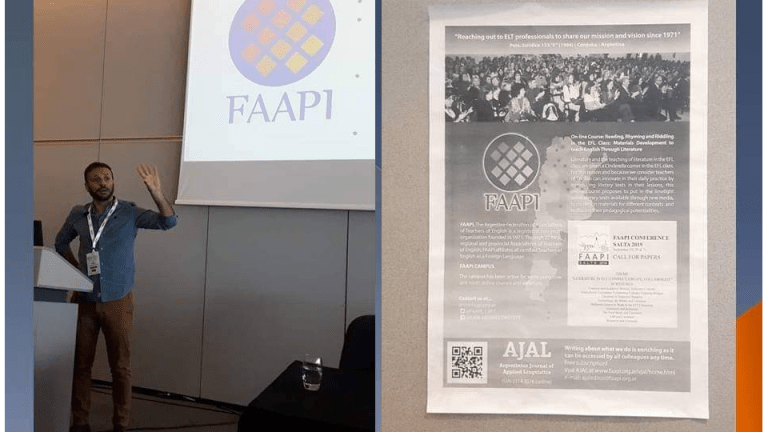
Every year teacher associations from around the world get together to share experiences, discuss common interests and challenges, and collectively plan different initiatives to take back home and implement considering our varied contexts, as it is an established tradition at the annual IATEFL Conference. In this brief entry, I share my reflections as a FAAPI representative (Argentina) who participated in the IATEFL Associates’ Day in stunning Liverpool.

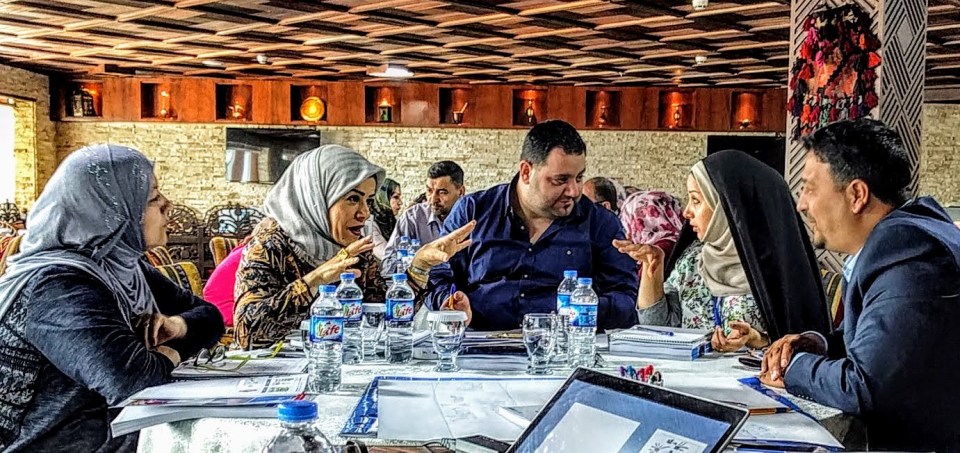
After a warm and inspiring welcome by IATEFL President Dr Harry Kuchah Kuchah, who particularly welcomed representatives from Cameroon, Ivory Coast and China, we all worked in groups to share experiences and projects around five topics: (1) how to attract new members, (2) sustaining membership numbers, (3) inter-institutional relations, (4) budget management, and (5) how to carry out actions which are inherent to the associations’ missions.

As a FAAPI representative, I worked with colleagues from China, Germany, the Netherlands, Poland, and Ivory Coast.
As we worked in groups, I could sense a healthy and empowering sense of collegiality and grassroots forward-thinking. It was refreshing and enlightening to hear stories from so many different contexts and realities and yet make connections and find common threads and ways in which joint projects could be set up. The group work activity was an excellent opportunity to reflect on the value, benefits, and challenges of voluntary work for the common good and for the strengthening of the learning professional communities we help create. It was a moment of reflection on the need to incorporate new members and let other colleagues take on more leading roles.

The meeting included associates’ presentations through which we learnt about other teacher associations’ undertakings, plans, and policies. As I was sitting there listening to my colleagues talk about their associations so passionately, I thought about this meeting as a powerhouse.

The Associate’s Day housed so much energy, so many stories, and such enriching voices that I could not avoid thinking about how collaboration can lead to synergy, which in turn, can be translated into sustainable actions for knowledge democracy and flow across associations.

Darío Luis Banegas
[email protected]
FAAPI


Darío Luis Banegas is a teacher educator and curriculum developer with the Ministerio de Educación del Chubut (Argentina), an associate fellow with the University of Warwick, and an active member of FAAPI and APIZALS in Argentina. He is also co-editor of the ELT Research newsletter published by the IATEFL Research SIG.

‘Group cohesiveness and engagement in mobile learning environments’ by Raquel Ribeiro dos Santos

A Virtual Learning Environment (VLE) is a system for delivering learning materials to students via the web or apps. My main focus here includes student collaboration and communication by using their mobile phones. VLEs can support students’ learning during lessons and outside the classroom.

The vast majority of our students currently are from the Generation C. Words that define this generation are:
Computer > Cell
Connected > Communicating > Collaboration
Culture > Challenge > Customizing > Coolness factor
Creating > Content
Gen C is a term to describe people who care deeply about creation, curation, connection and community.

The VLE apps can provide them with the opportunity of being themselves within an education context.

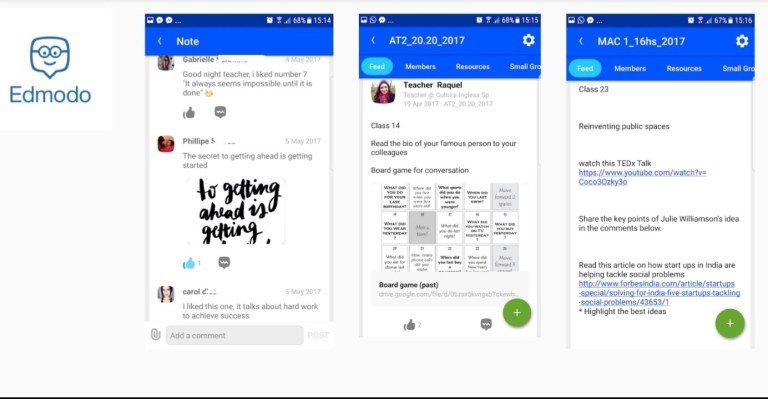
Why should teachers consider using the apps Edmodo and Google Classroom with students.?

Both apps, Edmodo and Google Classroom have similar principles that enable group work:
Sharing posts, commenting threads, replying, attaching media, scheduling activities, notification to the group members, profile photo customization , teacher control over all students’ actions by direct notification, full integration with Google Drive and the possibility of editing or erasing content.

Individual characteristics

Edmodo has the ‘like’ feature and allows students to send the direct messages to the teacher only.
Google Classroom brings more customization possibilities of themes and a unique time-saving feature called ‘reuse post’ where teacher can very easily track a past message or assignment and tailor that to be used with other groups.
The first thing to do to get started is to create a group in either app and share the class code with the group so the students can join in.

During my classes I share the following content and activities with my students:

  • Guidance for discussion
  • Sites for research
  • We first research and talk about the findings in small groups and then I encourage students to share key points and new words they have learned in the comments of the message (very useful warm up and a good way to keep late comers of absentees in the loop of what is happening)
  • Digital material such as PDFs or Photos (Group A, Group B prompts) I have totally gone green because I simply don’t print handouts anymore
  • Students can share their collaboration to class (e.g.: film posters for conversation) instead of teacher preparing time-consuming slides all the time
  • Board game for conversation
  • Infographics

I encourage the steady use of VLE, what I mean is that it must be made on a regular basis so that the students trust it and understand this is part of their course. I teach my groups twice a week and that’s how often I post. I also see a possibility to engage with students beyond the classroom themes, when there’s a pressing matter or to share some motivation or interesting piece of news so that they get informed about current affairs in English

Advantages that generate engagement

I have noticed that absentees (for whatever reason) understand they can follow and take part of the classes even when far away.
This approach enables teacher along with students to co-create an accurate register that can greatly help the group catch up and revise for tests. Also, students feel proud of their registered contribution.They can see the evolution of what they have learnt throughout the course, and this perception leads to a perceived sense of progress
As a teacher, this helps me keep track of each group in a very practical way, using different devices, especially via mobile phone.
I no longer carry students’ papers around, as they hand over their writing tasks using the app.
VLEs have enabled me to improve my organization as a teacher and therefore maximize the productivity of my working time.
I am closer to my students even when it’s not a class day (if I want to) and using a VLE preserves my personal data such as phone number and e-mail and it’s a professional but friendly environment.
The videos and infographics used in my talks can be accessed here by typing the code: goo.gl/xUqDDj in your browser.

[email protected]

‘Reference’
Thinkwithgoogle _ Meet Generation C: The YouTube generation
https://www.thinkwithgoogle.com/consumer-insights/meet-gen-c-youtube-generation-in-own-words/


Raquel Ribeiro 

 is passionate about the potential technology has to enhance the learning and to promote inclusion of blind and visually impaired students. She’s an EFL teacher and e-learning contributor at Cultura Inglesa Sao Paulo, Brazil.She’s a Google Innovator, EdTech blogger and lecturer and the current Manager of social media,IATEFL Learning Technologies SIG.

Follow her work at the Instagram account

Informed_Teachers_blog

‘Every student is different! Every day is different! That is what makes it fantastic…’ – Featured member interview with Emma Sarah Muse

Where do you currently work and what is your job role?

I currently work for Centro Servizi Interculturali, a private language school in Italy. I am a young, resourceful and energetic English teacher.

What specific area does your teaching focus on?

My teaching areas are Young Learners, Teens and Adults. I teach both General English and Business English, including in-company lessons and English Language Exams. Sometimes it can be in a public school with a class of 30, or groups of 5 or even an individual lesson. I meet new and interesting people every day. Every student is different. Every day is different. That is what makes it fantastic.

How long have you been working in English language teaching?

I have been working as an English teacher for nearly four years.

What challenges have you faced as a new teacher?

I have faced many challenges as a new teacher. I have had many challenges, such as engaging students in Speaking, helping students with ADHD and dyslexia, organizing the classroom, giving the students realistic materials to use outside the classroom and optimizing classroom time. Every so often, I stop and reflect about my teaching journey, I think about all the struggles and worries I have had and how I dealt with them thanks to all the support  I received.

How have you overcome these challenges?

The first thing I started to do was to search for help and support online. I started to watch webinars, read teaching magazines like Voices, look for books online, like ‘ELT Journal: Year of the young learner’, attend local conferences and training sessions, speak to experienced teachers, and take many teaching courses to be more prepared. I started looking for support from English language teaching professionals so I could really educate myself. I also wanted my students to leave my lessons feeling happy, interested and feeling as if they had accomplished something.

Have your expectations of being a teacher changed since becoming qualified and if so how?

My expectations have completely changed. I had never imagined it to feel so amazing. The satisfaction that you have in some way, big or small, helping students to achieve or overcome a problem is just awesome. The constant support, day after day, encouraging them to continue and to reach for that goal is fantastic. My students push me to develop my teaching methods. That is the feeling that makes me want to continue to grow as a teacher.

What professional development have you got coming up?

I currently have my TEYL & TEFL qualification and other certificates for different courses, but I would like to continue to push myself further. I would like to aim for higher qualifications in the future.

Why did you decide to join IATEFL?

I decided to become an IATEFL member because I was a new teacher and I needed support, understanding lesson planning, creating realistic and engaging active learning. All these things I have learnt with experience and support from IATEFL.

How has IATEFL help shape your career?

IATEFL has given me support in many different ways, from the community of professional ELT teachers and the materials. Confidence is also another important aspect. Now I can manage anything. As a new teacher, I would definitely recommend the webinars, the magazines and the books, as they are all extremely resourceful for any new teacher.

What does being an IATEFL member mean to you?

Being an IATEFL member, I have found a professional family. It means going back to previous webinars or rereading an article that you think may be useful in class. It means feeling relieved that there are other teachers with the same challenges as you. It means asking for help and receiving the best support. It means a great deal to me as I am still learning; knowing there are other new teachers like me with the same support system is fantastic. I am very grateful.

What would be your top three tips for a teacher starting their career?

My first tip would be to join IATEFL; it is a community of ELT teachers all over the world. Being a new teacher can be overwhelming, but with the right support group it is a lot easier.
Second, I would say to be interested. Keep yourself informed, attend local conferences and training sessions, be hungry for information and keep pushing yourself.
My last tip would be to keep calm. You are going to make mistakes, it will be hard but you are going to learn and, in the end, you will be an amazing teacher. It just takes a little bit of time, support and knowledge.

What are your future career goals and how do you think IATEFL can help in achieving this?

My future career goal in the future would be to open my very own English Language School. I am extremely grateful for all the support, advice, and kindness. Thanks to IATEFL, it is possible. Obviously, I am still a new teacher, I am still learning and I will continue to push myself and absorb all the knowledge and information I can to ensure that I am prepared.


Emma Sarah Muse has been teaching since 2016 in a private language school in Italy. She teaches in primary and secondary public schools. She has experience in TEYL. She also teaches Speaking Preparation Courses for students at a local secondary school. For the past 2 years, she has been teaching Business English in companies. She has also started to experience Teacher Training. In her free time, she continues her professional development.

‘A few reflections on working with traumatised teachers’ by Christopher Graham

In the ELT community, we’ve created a reasonably effective teacher training structure. The CELTA and Trinity certificates are good introductions and set people on the right track for their first years in the classroom, while the DELTA and Trinity Diploma develop this and provide the tools, techniques and confidence to move forwards. Those who, like me, partly or completely leave the classroom to become involved in teacher development, writing or consultancy gain another collection of skills sets. I used to think that after far too many years in ELT, there were not many challenges that I couldn’t somehow cope with. In my teacher development work, I’m used to people resisting: “I can’t have students working in groups; it’s too noisy; we can’t move the desks; I just need to teach them grammar; what about the exams?” I have answers to many of these concerns. My ideas don’t always work, but I hope I can help teachers think their way around the issues.

I was of course completely wrong in thinking that there were not many things I couldn’t cope with, and this came home to me with considerable force when I started working both in teachers’ home countries and elsewhere on projects with teachers from conflict and post-conflict zones, notably Iraq and Libya. I realise how totally unprepared I was to work with people who had experienced the most appalling traumas.

There are many anecdotes and stories that I could tell, but one that sticks in my mind was from a teacher from Anbar province in Iraq. He was clearly a very sensitive guy and came up to me in a coffee break with a copy of his coursebook. It was a standard western-style coursebook, I can’t remember which one it was. It doesn’t matter. He handed me the book and said, “Have a look at my coursebook”. I took it rather arrogantly, thinking, “Yeah, yeah, I know this book” and handed it back to him. I can see his face now, he looked back at me with strong eye contact, though his eyes were somehow dead, somewhere else, “No, really look at it, please”. I looked at it again and noticed how thin it was; something was missing. He took the book back and his eyes locked on mine again as he said, “We have ISIS – I have to tear out all the pages with colour photographs, we had to send all the female students home and all my female colleagues had to leave”. I didn’t know what to say, a visceral moment, a kick in the stomach. It was only a book, but … you’re teachers, you get it. He subsequently went on to tell me other things that had happened to his community that I won’t share in this forum. This incident and several others I’ve experienced recently have made me research and think about working with traumatised teachers.
So let’s think a little about some of the behaviours that I’ve witnessed.

  1. A short attention span and a tendency to find it hard to concentrate.
  2. A desire to focus on content in a very detailed manner. For example, to worry about where stress falls on a particular word and constantly refer back to the issue.
  3. What is best described as a lack of respect towards colleagues.

This is particularly a challenge in train-the-trainer courses where feedback skills are discussed. It’s not uncommon to see one teacher totally demolish a lesson that they’ve just observed from one of their colleagues. In short, aggression. This may be amplified by the undertones of sectarianism that are common in conflict zones.
Time for some definitions, and there are lots of definitions of trauma. This one particularly caught my eye because, while it may not be completely scientific and the English is a little bit ‘off’, it seems to tell it like it is:
‘An overwhelming, life-threatening, terrible and frightening experience which is way out from any other “ordinary” human experience.’ (Source: Refugee Trauma Help).

There is a significant body of research on traumatized children and students, but very little on traumatised teachers so my first port of call was MIND (a UK mental health charity) and this is their definition of post traumatic stress disorder:
‘Post-traumatic stress disorder (PTSD) is a type of anxiety disorder which you may develop after being involved in, or witnessing, traumatic events. The condition was first recognised in war veterans and has been known by a variety of names, such as ‘shell shock’. But it’s not only diagnosed in soldiers – a wide range of traumatic experiences can cause PTSD.’

Interestingly, the list of PTSD symptoms that MIND list is very similar to my list of behaviours above, with the addition of susceptibility to physical symptoms such as stomach pains or dizziness. Something I’ve seen very often.

So what techniques or approaches can I, a simple teacher educator and not a psychiatrist or psychologist, do in these circumstances? One option, of course, is nothing – just try to carry on regardless – but that goes against the grain of my approach to my work, which I hope is at least a little bit empathetic.

My suggestions:

  • Don’t be judgemental – take a breath and move on, even if you are shocked or wrong-footed by what you see or hear;
  • Respect personal time and space. If people are late, drift off topic or seem to lack focus, adjust and adapt your approach;
  • Create empathy. I do this by discussing my late father’s stories about the Second World war. War happens to us all at some time;
  • Look out for clues that issues may be pending, such as changes in mood, changes in performance or timekeeping or changes in energy levels and concentration spans.
  • Sparse advice perhaps, but these are challenging issues.
  • I’ll finish with this quote from Talib Al Darraji, an English supervisor in Iraq:

“The ongoing stress and anxiety distracted an enormous number of teachers and made them unable to cope with their daily life as teachers in addition to the fact that some schools were turned into military barracks by armed groups or by terrorists.”

This article is dedicated to those colleagues who have been lost or have lost.


Christopher Graham is Director – Academic and Training at Garnet Publishing but wrote this in a personal capacity. He has many years of experience as a teacher educator, author and consultant and has a special interest in working with teachers in and from fragile environments such as Libya, Iraq and Algeria. 

‘Reserved seats and lonely coffee breaks’ by Mojca Belak

For most members connecting to like-minded professionals and being part of an English teaching community are the two main reasons to join IATEFL. All this is great, and works in a lot of cases. However, meeting new people doesn’t seem to be as easy as it sounds, and many experience problems at professional gatherings because they are lonely and don’t know how to make the first step, because they attend the conference with a colleague and friend and feel safe around them only, or because they are simply a bit clumsy when it comes to social contacts.

The nightmare scenario

It happened again during a conference I’ve been to earlier this year – the room took about thirty people, and five minutes before the start of the next workshop it was half full. I tried to sit on the nearest seat, but the teacher next to it said that she was keeping it for her colleague. Three empty seats in front of it had a cardigan, a jacket and a folder on them, clearly showing that they, too, were occupied. And so it went on and on, until somebody smiled and said, “All right, why don’t you sit here?”, and removed her bag from the seat right next to her. She wasn’t waiting for anybody, but just like an average passenger on a bus or train she wanted to have a bit more space while travelling to new horizons regarding teaching English pronunciation.

Coffee breaks

We are weird creatures, people, and even though teachers claim to like new faces, when it comes to unfamiliar environments, sticking to what is known still seems more reassuring. This is why coffee breaks can be a challenge too, particularly at smaller conferences organised by national teachers’ associations where a newcomer doesn’t know anybody, and all other participants seem to know each other. I remember a conference where I was standing on my own, a cup of coffee in my hand, for the whole break, unable to find a soul to talk to. My name on the badge was foreign all right, but not foreign in the right way to promise a chat with a native speaker of English, a quick refreshing practice in the language we teach. Sadly, it was still too foreign for the teachers of that country to use their mother tongue to talk to me. As a result, they kept their heads together and chatted in their lingo while I beamed smiles all around and drank my coffee alone.

My responsibility

But I can’t blame it all on colleagues who wanted to have a good natter in their mother tongue that I don’t share. The core of the problem was and has always been in me. When I attended my very first IATEFL conference as a young teacher with one-year experience, I didn’t see myself as some kind of a treasure, a source of information about some potentially exotic teaching situation for the predominantly British IATEFL membership who then attended it. I never thought anybody would be interested to hear about my experience. No, I was shy, and almost felt guilty because I was not a native speaker of English. I knew a few teachers from IH Hastings there, because it was through them that I learnt of IATEFL and became a member, but I was aware that I couldn’t cling to them all through the conference, so I was often on my own. Learning like a sponge during sessions, I didn’t want to admit even to myself how very lonely I felt otherwise.

I came back to more conferences and little by little I started getting to know my IATEFL flock, but it was only after I started volunteering that I waved goodbye to conference loneliness. It wasn’t IATEFL that was responsible for it, the change happened in me. I opened up, and could then approach others.

Shyness and low self-esteem may be the reasons why teachers attend conferences in pairs or groups – deep down they may be afraid of feeling lonely and rejected. Attending big conferences like ours, with 3,000 or more delegates from all around the world, could be rather daunting even though help is everywhere, for example in the form of How to sessions and various evening events. Smaller conferences held locally, on the other hand, should be easier to cope with and organisers and particularly delegates from the host country should not leave anybody feel lonely.

Old and new friends

It is true that one of the joys of attending conferences is the prospect of (again) seeing colleagues that may have become friends over the years, or who even met as students. Conferences may offer the only opportunity in the year to meet and catch up. Of course, this pleasant part of our gatherings needs to remain strong and grow, but maybe a little time could also be spent on new faces.

I try to meet at least five new people at every conference. I just start chatting to people who seem lonely during breaks or who sit on their own before the beginning of talks or workshops. “You seem a bit lost,” I said to a young colleague at the Staff Volunteers and Associates’ event in Liverpool earlier this year, and then learned a lot about the situation of English teachers in Iceland and his school. From then we went on and talked about Iceland’s film production, and then to Eyjafjallajökul, the volcano that stopped air traffic back in 2010 by erupting ash. I remember it because it happened right after our Harrogate conference and many delegates couldn’t fly home.

And it was precisely in Harrogate in 2010 that chatting to the colleague sitting next to me at the opening plenary brought me a friend I regularly meet at our conferences and who is not only a lovely person, but also a very good dancer. Without a conscious decision to meet new people, I would not have heard what it is like to teach blind children through story-telling, how it feels to be out of your country and continent for the first time in your life, or how frightening it can be to pass a few bushes on the way to the conference venue if you come from a country where bushes are full of snakes. If I hadn’t started a conversation with an unknown delegate, I would never even think about what it is like to live next door to your school and be constantly observed by your students even during your free time, and I would not have heard the same spring day in Britain described as very nice and warm and as cold and miserable just because the delegates came from Finland and Greece respectively.

Next time

Just like EFL teachers often tend to forget what it is like to learn English and only remember how frustrating it is to be limited to 500 words or less when we ourselves make first steps in another foreign language, regular conference-goers have forgotten what it is like not to meet old friends wherever there’s an ELT event. Similarly, first-time attendees often wrongly think they have little to share and only later learn that everybody is equally important in the tapestry we call IATEFL. And yes, it is true that when approached at a conference or a seminar, some people shy away, refuse to talk or politely move away, but more often than not they do engage in conversation that can lead to new and surprising discoveries.


Mojca Belak is Chair of IATEFL Membership and Marketing Committee and a longstanding IATEFL member. She teaches English at the University of Ljubljana in Slovenia, and likes running, trees, the cliffs on the south coast of England and a small tourist resort called Whitstable.
‘My scholarship story – waiting means more!’ by Sergio Durand

Winning and postponing

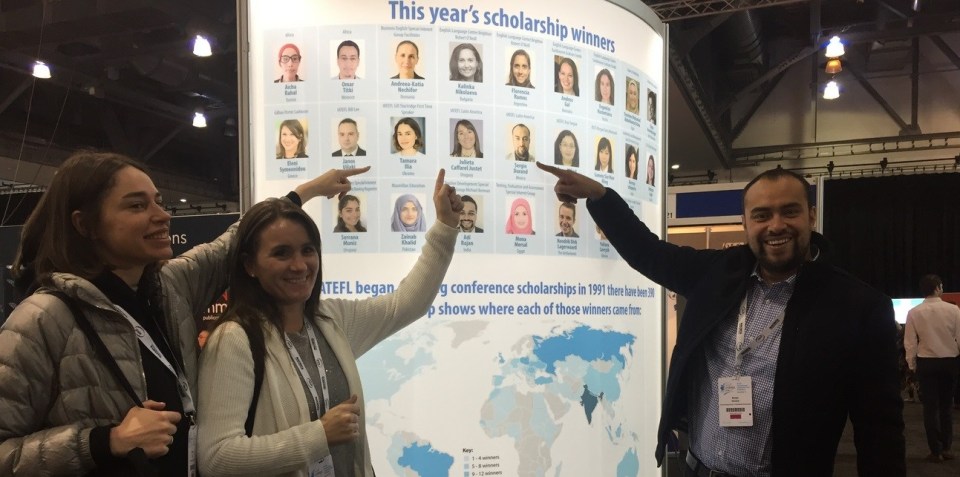
“Good things happen sometimes”, people say. They happen when you try, but they also happen when you have to wait. Let me explain this. I was extremely delighted when I learnt I had won the 2018 Latin America Scholarship to attend the Brighton conference. I had submitted my proposal thinking that it was really hard to win because of the kind of scholarship it was – it is open to every English teacher working in Latin America – but I also thought it was a good try. At the same time, it made me reflect on my teaching practice and its impact on learners. So when I realised I had won, it was pure happiness. I made all my arrangements, IATEFL Head Office was helpful and everything was running smoothly. So good things happen. And sometimes two good things can happen at the same time. During the last months of 2017 and the first of 2018 I went through a recruitment process to get a job in the Mexican National Educational System.

Believe it or not, two weeks before going to Brighton I learnt I was offered the job. It meant a lot to me in terms of opportunities and growth. The bad news, my first day at work should be the same day that the conference in Brighton started. I talked to a couple of people in the Ministry of Education in Mexico but it was bureaucratically impossible to get a permission to skip my first day at work. But good things happen when you try, so I called IATEFL Head Office and explained everything.They were amazing;they told me I could come the year after. “It means we are going to have two Latin American winners for Liverpool,” Maureen – head of the scholarship committee – told me.

Why it was good to wait

Mixed feelings. I was happy for getting an amazing job, frustrated for not going to Brighton and at the same time excited to go to Liverpool. Getting and keeping the scholarship had been hard work so I knew that I had to make the most of it after having so much trouble. So I decided to send a speaker proposal for Liverpool – I hadn’t had to send one to win the scholarship.

I was planning to send my proposal when my SIG – Global Issues – posted a call for speakers for their PCE in Liverpool. It meant getting another shot to get to speak at the conference so I decided to send a proposal as well. I sent two proposals to speak in Liverpool, getting only one spot would have been great. Fortunately enough, I got picked to speak at both, the PCE and the main conference, which is highly unusual. It was then, when I understood why I had to wait and that waiting sometimes means more. If I had been to Brighton, I wouldn’t have had the chance to speak at the conference. I realised that, even if just attending was a fantastic opportunity, getting the chance to have a voice in what is happening in ELT today was even better.

Liverpool 2019

Getting to the conference venue felt as if it was not my first conference as everybody was so friendly. The PCE was thought-provoking and warm at the same time, I felt that I belonged from the very beginning. The insights I got from the other speakers were incredibly helpful, everybody had something remarkable to say. The audience responded well to my talk and I got to chat to very interesting people about it. The mood was both serious and entertaining at the same time. It felt as if a group of friends were talking about serious issues, with a couple of jokes at some points. It definitely differed from the solemnity of other conferences I had attended.
After the PCE, I felt a lot more confident about my talk at the main conference. Again, the audience gave me good feedback and I met amazing people in the ELT community. Teachers and writers from very diverse countries approached me to discuss my talk,and I enjoyed talking about it during the breaks .
I also met colleagues with similar interests. We exchanged emails and have been in touch for future collaborations. I found IATEFL a great place to network and get to know like-minded people .

Conclusions

I definitely think that applying for scholarships is a good idea. It is astounding how this scheme helps passionate teachers from all over the world to attend a fantastic conference and live an unforgettable experience. If you win a scholarship, not only do you get up-to-date with the current trends in ELT, but you also become part of a vibrant community that inspires you to go back home and keep doing your best. I also believe that unsuccessful applicants should not give up . Good things do happen, sometimes and waiting for them means more.


Sergio Durand, 2018 IATEFL Latin America scholarship winner, holds an MA in Humanistic Studies and undergraduate degrees in English and French. He’s been a materials writer, teacher trainer, speaking examiner and exam trainer for more than 10 years. He teaches English at Escuela Normal Veracruzana and lectures English Literature at Universidad Veracruzana.
‘Why your next professional journey should be an action research project?’ by Padmini Bhuyan Boruah

Over the years, I have stumbled upon a professional practice that is like an irresistible pack of chocolates. When you unwrap it, you find yourself with a range of delectable fare, each item more fulfilling than the other. Unlike chocolates, however, this professional practice does not leave you with extra calories. And yes, I’m talking about taking up an action research project.

What is it about action research that motivates me so much and may have the effect on other ELT professionals ? One thing I like about action research is that it is not an add-on activity; you do not need to stress your eyes reading up on an impressive list of serious academic articles, nor do you need time out to go and do ‘field work’ outside your comfort zone. Action research involves investigating your own practice, in your own classroom, with your own students. Together with colleagues, students and mentors, you begin a systematic exploration, a journey in which the route is as exciting as the destination.

There are added benefits. When you systematically investigate your practice, you teach yourself to notice more and notice deeper, you develop a greater sense of purpose, and you can’t wait to share what you have discovered. And this is not all. You can publish your findings in standard journals that are always looking for fresh voices. But if you choose not to, you do not need to write about your findings in a very academic language. You do not need to generalize your results and you do not need to propose/confirm/refute a theory. There are other ways of sharing your research– you can present at a conference or a meeting, you can make a poster and talk about it, you can give an oral account of your journey, or you can publish it over the internet.

If you are the kind that is really interested in being published in academic journals, you will want to go beyond the basic purpose of action research, which is understanding and improving your practice. Even though I have mentioned above that you do not need to generalize your findings or theorise them, nothing stops you from taking that extra step. Since action research is more than an intuitive activity, and it is conducted using a systematic series of steps and tools, the intervention may well be replicable in other contexts, and theorization can begin from there.
Some of the most respected journals carry articles on action research journeys that traverse a wide spectrum of experiences. I have, for example, read interesting articles on developing a course module (Burmeister. &Eilks, 2013), implementing or analysing a new programme (Burns & Westmacott, 2018), reporting on your own or your participant’s perspective (Gilliland, 2018; Kasula, 2015), implications of action research on pedagogy (Price, 2001), mentoring the action research process (Spencer & Molina, 2018), conducting action research (Walker, 1995), and collaborative potentials of action research (Yuan & Lee, 2015)

In short, action research paves the way for professionals to find meaning in their work. It allows us to pause and take stock of ideas we have held sacrosanct, beliefs we have nurtured, cultural cues we may have overlooked, or theories that may have run their course. Action research can be an intensely personal journey, or it may take place in a more collaborative space. The journey never fails to stimulate and excite; the engagement never disappoints. For professionals constantly looking for meaning in the work we do, action research offers endless possibilities.
So the next time you are confronted with a problem in your pedagogical context, you have seen success at a new experiment or have found yourself excitedly trying out a new idea or theory, you know what to do. Turn your experience into an action research project. I guarantee you – you will never regret taking this new route to discovery and self-discovery!

References
Burmeister, M. &Eilks, I. (2013) Using Participatory Action Research to Develop a Course Module on Education for Sustainable Development in Pre-Service Chemistry Teacher Education. CEPS Journal, 3 (1), 59-78.
Burns, A. & Westmacott, A. (2018) Teacher to Researcher: Reflections on a New Action Research Program for University EFL Teachers. Profile: Issues in Teachers’ Professional Development, 20 (1), 15-23.
Gilliland, B. (2018) Teacher research during an international practicum., ELT Journal, 72 (3),260–273ccx054. https://doi.org/10.1093/elt/ccx054
Kasula, A. (2015) Conducting action research in a practicum: a student-teacher’s perspective. The CATESOL Journal, 27 (2), 229-237.
Price, J. N. (2001) Action research, pedagogy and change: The transformative potential of action research in pre-service teacher education. Journal of Curriculum Studies, 33 (1), 43-74., DOI: 10.1080/00220270118039
Spencer, J.A. & Molina, S.R. (2018) Mentoring graduate students through the action research journey using guiding principles. Educational Action Research, 26 (1), 144-165.https://doi.org/10.1080/09650792.2017.1284013
Walker, M. (1995) Context, Critique and Change: doing action research in South Africa. Educational Action Research, 3 (1), 9-27. DOI: 10.1080/0965079950030102
Yuan, R. & Lee, I. (2015) Action research facilitated by university–school collaboration. ELT Journal, 69 (1), DOI:10.1093/elt/ccu031.. http://eltj.oxfordjournals.org  Accessed on 10 May, 2018


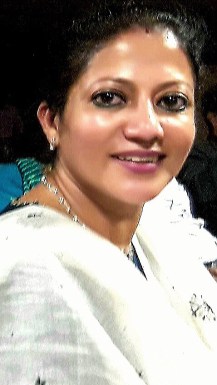
Padmini Bhuyan Boruah is presently Professor and Head of the Department of English Language Teaching at Gauhati University, India, where she teaches Masters and Ph D programs in ELT and Applied Linguistics. Her research interests include action research for teacher professional development, language pedagogy in multilingual contexts and materials development. She is also a Fulbright-Nehru Academic and Professional Excellence (FNAPE) fellow for 2019-20 affiliated to the University of San Diego, California, where she will be investigating and teaching courses relating to action research in practicum in pre-service teacher education (PSTE).

‘My choices at the World Teachers’ day Web Conference 2019’ by Minka Paraskevova

I think that making the choice to spend five hours in front of the computer on that gloomy Saturday afternoon was one of the best decisions I have made lately.

Critical thinking has never been easy to teach. John Hughes refers to it as ‘high order thinking’. Statistically, teachers usually introduce activities that require basic, or low order thinking. For instance, the popular ‘fill in the gaps’ task. However, the ones that require the critical and creative abilities of our students are more challenging and often time consuming. Critical thinking in the taxonomy suggested by Hughes is the pathway to more qualitative creative thinking skills. You can see more details of his presentations at Gdansk and Budapest conferences at www.johnhugheselt.com.

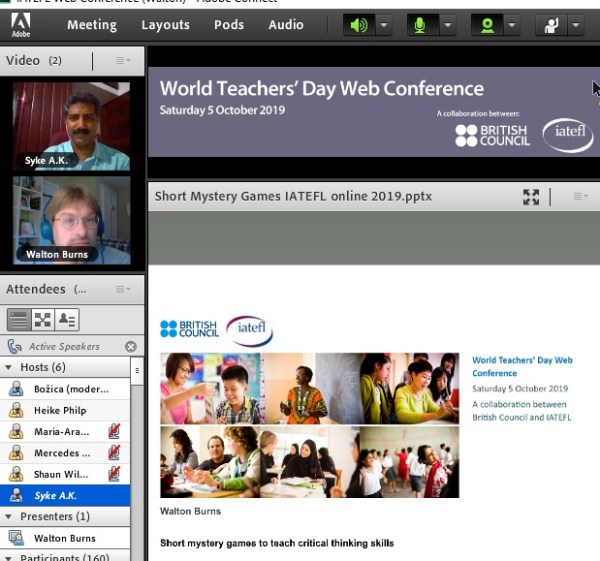
Walton Burns’ session on Mystery games as a tool for developing learners critical thinking was insightful and aspiring. Apart from the fact that it gives students something to talk about, from my personal experience, mystery stories are the most liked and likable if stripped from their literary attire. Yes, that is right – the simple, straightforward crime stories are the best! Walton gives a pretty transparent explanation – a. some genre conventions are not easy to grasp; b. stories are full of literary features which could also bring more challenges to the readers; c. some mysteries have not been written to be solved – a true fact, indeed. So, what can we do to have such stories? – Design them ourselves. Walton Burns approach consists of three easy steps:

  • Think of a brief story (The Puzzle)
  • Prepare a list of clues (follow a plan that exclude all alternative routes);
  • Give clue by clue, not the whole list of clues, to the students and let them argue, discuss, have fun and solve the puzzle each time you add a new clue to the story.

Despite the fact that such games could be helpful towards pair/group discussion and development of speaking skills, the simplicity of the idea and its adaptability to specific class contexts is fascinating. Moreover, each game once designed could be recycled over and over again. It could also be used as a starting point for guiding students towards learners’ autonomy and setting the stage for more creative work. Why not ask students to design their own group mystery game and test the rest of the class? For more details about the author and his projects, you can browse www.waltonburns.com.

Vicky Saumell’s presentation on digital projects as a means to stir learners’ creativity in class revealed for me, personally, a whole new space for exploration. Again, certain topics presented in their usual format, such as seeking literary responses, teaching poetry and asking students to produce a poem themselves, and sometimes even making a journal entry could make students reluctant and passive in class. But if we present the same tasks into the format of a digital project, somehow, we come to terms with the digital perkiness of our students, or not? It is worth tipping a toe into this new world of creating sound books, a day in the life of a popular person journal entry, hidden digital poetry and much more. If the subject caught your attention, please visit www.vickysaumell.com  for a gallery of wonderful digital projects.


Dr Minka Paraskevova is currently an Assistant Professor of English at Prof Dr Assen Zlatarov University of Bourgas in Bulgaria. She is a long term TESOL teacher of English in her own country, the Czech Republic, Ireland, and the UK. In 2017 she completed a TESOL teacher trainer course at Oxford English in Barcelona, Spain. Later, in 2018, Dr Paraskevova joined the IB examiner team on the English and Literature Diploma course. Her doctoral interests lay in the fields of English, Drama and Performance and culture and communication. Her publications range from Scottish drama and culture in Germany, Bulgaria and India to English language learning for young learners (co-authored the Bulgarian adaptation of Super Minds by CUP), online teaching techniques in Humanizing Language Teaching journal, language identity and creative methodologies in tertiary education (a future publication with Cambridge Scholars Publishing). Dr Paraskevova is a member of the Bulgarian Society for the study of English (affiliate of ESSE), the Bulgarian English Teachers’ Association, an affiliate of IATEFL in Bulgaria, and IATEFL.

If you missed the British Council and IATEFL World Teachers’ Day 2019 web conference on 5 October, click here to watch recordings of all the talks from the day.