‘A freelancer’s perspective on IATEFL’ By Julie Moore

A freelancer in the gig economy

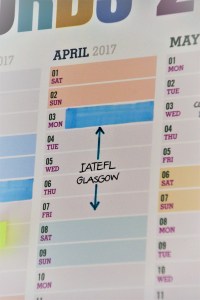
I started my career some 25 years ago as an EFL teacher, working in private language schools in Greece, the Czech Republic and the UK, but for the past 17 years or so, I’ve been a self-employed, freelance writer. I started out as primarily a lexicographer, working on learner’s dictionaries, then I branched out into writing different kinds of materials, from workbooks to coursebooks, General English to EAP. I work from home as part of what’s now known as the gig economy, picking up writing projects from different ELT publishers. Sometimes a project might be just a few days’ work, sometimes it can go on for six months or more. I’ve generally got at least a couple of things on the go at the same time, often one larger project with shorter jobs fitted in around it. It’s a constant juggling act, especially as work often appears at short notice making it difficult to plan very far ahead. One constant amidst the uncertainty of the freelance lifestyle though has always been IATEFL, and especially the annual conference. It’s one of the few things I can write on my wall-planner and look forward to at the start of every year.

IATEFL opportunities

My first IATEFL conference was in Edinburgh back in 1999. That year, I got chatting to Mario Rinvolucri on a shuttle bus and he asked me to write an article, my first to be published, in Humanising Language Teaching. The following year in Dublin, I gave my first IATEFL presentation. I’ve only missed a handful since, presenting at many of them on behalf of different publishers. As a self-employed freelancer, any kind of professional development or career advancement is down to you; there’s no in-house training or promotion to apply for. When I started out, in a pre-social-media era, opportunities to interact with other ELT folks, both publishers and other freelancers, were largely restricted to the IATEFL conference. It was the one time in the year you could get away from your desk to network, find out what was new and who was doing what. I’ve lost track of how many projects have come either directly or indirectly as a result of encounters at IATEFL. Several times, I’ve found myself sitting next to someone from a publisher during a session, got chatting as part of a ‘talk to your neighbour’ prompt, gone off topic and ended up going for a coffee and discussing potential work.

Finding my IATEFL tribe

Until recently, I’d never really got involved with the SIGs [Special Interest Groups]. Because I don’t work exclusively in one area, there wasn’t a particular SIG that I gravitated towards and as someone not regularly involved in classroom teaching, I didn’t always feel like I fitted in. Then a few years ago, the Materials Writing SIG (MaWSIG) started and brought together lots of the people I already knew and introduced me to lots of new people too. MaWSIG changed my relationship with IATEFL from being a general way to keep up with the ELT world to something much more focused around my specific needs and interests. I still love the variety of the main conference, but the MaWSIG Pre-Conference Events (PCEs) and other events scratch itches I never even knew I had.

Learning never stops

Despite a quarter of a century now in the ELT industry, I still pick up new ideas from almost every event. Here are just three examples that have stuck in my mind:

  • Whenever I write a multiple choice activity, I mentally go through the checklist that Sue Kay gave in her great MaWSIG PCE session in 2015. My biggest weakness … having one option that’s much longer than the others – I find myself editing for length almost every time.
  • Since Ben Goldstein and Ceri Jones’ session, at the same PCE, on the role of images in materials, I’ve started writing longer, more detailed artwork briefs to better explain to the picture researcher just what it is I want to capture or sometimes, what I want to avoid. Interestingly, several editors have actually noticed and made a point of giving me positive feedback.
  • On a slightly different tack, Graham Allcott’s ‘Productivity Ninja’ session at another MaWSIG event made me introduce a two-minute rule into my working day, especially around dealing with email; if something crops up that’s going to take less than 2 minutes to deal with, do it right away rather than leaving it to deal with later. Not sure if it makes me more productive, but it certainly feels more efficient.

So, I’m already booked for this year’s conference in Glasgow. I’ll be looking forward to catching up with old pals, meeting new people and continuing to develop myself professionally as I move into my second quarter-century in ELT.


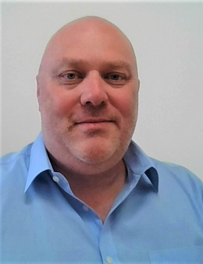
Julie is a freelance ELT writer based in Bristol in the UK. As well as writing, she gives regular talks and workshops at conferences and teacher training events. She tweets as @lexicojules and blogs about all things ELT as well about her working life as a freelancer.
‘Why me?’ by David Crystal

A question I’m often asked is how I became patron of IATEFL. The short answer is that Catherine Walter, who had the presidential role in 1993, asked me. And I asked her: Why me? For I am in no way a teacher, in the sense that most of the IATEFL membership understands that word. Although I have spent a fair amount of time observing classroom practice around the world, and done a great deal of teacher-training, I have never done the difficult hands-on job, day by day, myself. Frankly, I don’t think I would ever have had the energy. Or the multi-faceted expertise.

And that, I think, is why IATEFL approached me: to add another facet to that expertise. My special field, within linguistics, has always been the English language – its structure and uses, its past, present and future, its varied usage among individuals and societies. It’s a full-time job studying it and writing about it, let alone teaching it. And I suspect that what was in mind was the thought that a linguist’s perspective could add a dimension to the teaching task that would be appreciated by those who never had a systematic introduction to English or who felt that their knowledge needed updating, especially in the light of such major developments as the growth of English as a global language and the emergence of electronic communication. It was also the case that some of my books were being quite widely read around the ELT world, and it is just human nature that people like to have as a patron somebody they may have actually heard of.

That is how it has worked out, anyway. As I look back over the plenary sessions I have given over the past twenty or so years, the emphasis has always been on the facts: what is actually happening to this thing that IATEFLers have to teach? And what is the best way of presenting the research findings of linguists who work on English so that they become understandable and useful in the context of language teaching? This is all part of the field of applied linguistics, which is where I most like to be working. Everyone wants to be useful, and it is in the various domains of applied linguistics that I’ve always found it most possible to see ways of ‘making a difference’.

But how do you know you’ve been successful (or not)? Only if people tell you. The one thing authors need to keep themselves on track is feedback. And this is where IATEFL, for me, has been of greatest value. Whether it is at the annual conference, or at one of the local branches in various parts of the world, or (most recently) in online webinars, the organization presents innumerable opportunities to discuss the way linguistic theories, methods, and findings relate to teaching practice – opportunities to talk informally to the people who do the job – and opportunities to discover how far my own writing and thinking about language has helped – or not. The introduction of ‘Meet the Patron’ sessions at the annual conference, a couple of years ago, was another way of fostering interaction. I think it’s an important function of the patron’s role, especially as attendance has grown.

It’s the acknowledged intimacy of IATEFL meetings that provides so many positive outcomes. People often talk about the IATEFL ‘family’, and it certainly seems like that – for actually I meet up with IATEFL colleagues from around the world far more often than I do some of my relatives! And the family metaphor has a second application: it suggests friendship and fun. My role as patron hasn’t been an entirely academic experience. Thanks to a background in literature and drama, it proved possible for me to add a social dimension to conferences, ably abetted by my wife, Hilary, and often by our actor son, Ben. Evening events have ranged from serious play readings to light-hearted linguistic extravaganzas, with Shakespeare playing an increasingly prominent part in recent years. They have provided us – and I hope the audiences – with some of our most enjoyable and memorable moments.

When I started as patron, Hilary and I would turn up at the annual conference for a day, perhaps two, then leave to get on with the million other things that have to be done, like writing the next book. But gradually, as we got to know everyone, we stayed for longer – and today, we find ourselves staying for virtually the whole time, with the Associates dinner, the SIG meetings, the invariably fascinating array of plenaries, and a plethora of evening events providing the motivation. I don’t usually go to individual sessions, because – as I said above – ELT is not my professional world, so I wouldn’t get much out of a brilliant presentation on how to teach the present perfect to reluctant teenagers in wherever. I like just to hang around, to be nobbled, to be available to answer questions about the language or (if I don’t know the answer) to point people in the direction of someone or somewhere else – an important feature of professionalism is to know what you do not know (the ‘known unknowns’, as US secretary of state Donald Rumsfeld once said). And I almost always come away with a new set of research challenges, arising from questions about some aspect of the English language that I’d not thought about before. To illuminate and to be illuminated. That is why I like being patron of IATEFL.


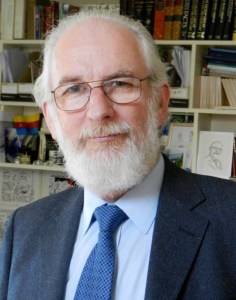
David Crystal works from his home in Holyhead, North Wales, as a writer, editor, lecturer, and broadcaster. He read English at University College London, worked for a year on the Survey of English Usage under Randolph Quirk, then taught at the universities of Bangor and Reading, where he became professor of linguistic science. He is now honorary professor of linguistics at Bangor University. He lives online at www.davidcrystal.com, where there is a complete listing of his publications.

David will be holding an English language weekend in the Ucheldre Centre, Holyhead, Anglesey, North Wales on 19th-20th August 2017, which you may be interested in attending. You can find out more information on his blog.

‘How IATEFL scholarships work’ by Maureen McGarvey

It’s that time of year again! April 2018 may seem a long way off, but applications for scholarships for the 2018 annual IATEFL Conference in Brighton have been open for a couple of weeks. The closing date for applications is 4.00 pm UK time on Tuesday, July 18th – so you still have time to apply.

The very first scholarship ever awarded by IATEFL was the Ray Tongue scholarship, which was first awarded in 1991. This scholarship was set up in memory of Ray Tongue, who spent a large part of his life in Hong Kong, Indonesia, India, Malaysia, Singapore, Sri Lanka and Thailand. This award is one which restricts application to those from those particular countries. In 1996, the First-time Speaker Scholarship was added, later re-named the Gill Strurtridge First-time Speaker Scholarship, in honour of Gill Sturtridge, a prolific author of ELT resource books. This is the award won by Katy Muench, who shared her scholarship winner’s journey with us in this series of blog entries. Subsequently, scholarships were established in the name of Bill Lee and Gillian Porter Ladousse.

In 2004, the Learning Technologies Special Interest Group became the first SIG to offer a travel grant to conference, and the tradition of SIGS offering scholarships was born. Since then, institutions, publishers, private individuals and IATEFL itself have added to the list of scholarships you can now apply for. The range and scope of available awards means that whatever your area of interest, there is bound to be a scholarship you can apply for!

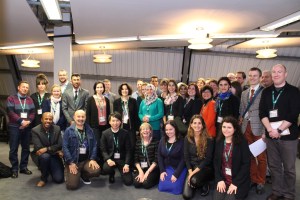
Glasgow 2017 scholarship winners

Applications are read by panels of readers, sometimes from the sponsor, sometimes readers with knowledge in the specialist field. Reading your applications is an exciting, inspiring and wonderful experience for the reading panels. We learn so much from your applications, which open a window for us onto your teaching and training contexts and challenges. Once the winners are decided, the Scholarship Committee will contact you to let you know the good news. This will happen between Monday 28th August and Thursday 7th September 2017, so be sure to check your emails during that period. If you win, you need to confirm acceptance as soon as possible. Head Office and the Scholarship Committee will then get in touch with you to talk you through the next steps, and are always here to support you between your confirmation of acceptance and your arrival in Brighton. We can help you with visa applications and with accommodation, and we have a Scholarship Winners’ Gathering on the first evening of conference. This means you can meet the other winners and the sponsors, and share your conference experience with them over the coming days.

Applying for a scholarship may seem like a big step, but as they say, ‘you have to be in it, to win it’! So please have a look at the scholarship page on the website and apply. We look forward to reading your applications, and to seeing our winners in Brighton in 2018.


Maureen has worked in ELT for longer than she cares to remember, and has taught in the UK, Spain and Hungary as well as on short training contracts in other locations. She has been a committee member on the Leadership and Management Special Interest Group for IATEFL, and is Co-ordinator for the IATEFL Scholarship Committee (formerly the Scholarship Working Party), responsible for managing the IATEFL scholarship scheme. Maureen currently line manages academic staff in IH London and also manages a team of online tutors working remotely in a variety of locations. She is a frequent conference speaker on topics related to academic management and online training. She lives in North London with her daughter and their dog. She has a guilty addiction to reality TV programmes. Her email is Maureen (dot) mcgarvey (at) ihlondon (dot) com.


‘The IATEFL Presidency and Vice Presidency’ by Marjorie Rosenberg

IATEFL Board of Trustees 2015

Now that I am a Past President of IATEFL and finishing my term as a Trustee as Vice President, it seemed like a good time for a blogpost on how all this works.

There are eight members on the Board of Trustees and our job is the governance of IATEFL. We work together with Head Office in a number of ways. For example, they prepare the budgets which we go through and approve, they prepare other documents for us to give feedback on and have also set up training sessions for the Trustees on social media and governance in the last few years. The Trustees have three meetings a year in November, February and June and one of standing items on our agenda includes reviewing our public benefit which is defining what we do to meet our charitable aims. These include the running of IATEFL Projects, small grants given to Teacher Associations for teacher training; the WMS, or Wider Membership Scheme, which offers memberships to those who belong to our Associates in particular countries; and the WMIS, or Wider Membership Individual Scheme, which allows us to grant free memberships to teachers who do not have a Teacher Association in their countries. Other parts of our charitable mission include our free online events such as webinars and the web conference. We are also very grateful to the British Council for livestreaming our annual conference giving the chance to thousands of educators around the world to watch selected talks and interviews from the comfort of their homes or work places.

Marjorie Rosenberg taking over the IATEFL presidency from Carol Read in 2015

The way the system works is that a call for the VP/P position is sent out from Head Office to all members. Any member can be nominated and write a personal statement and short resume in order to stand for the VP/P position. They are encouraged to get in touch with the current president for a chat in order to gain some knowledge of what the position entails.

Once a member has been elected by the membership and then ratified at the AGM at conference, they become Vice President and Chair of the Publications Committee for their first two years as a Trustee (in the first year they are the Vice President and in the second year they hold the role of President). The Publications Committee is responsible for the IATEFL eBulletin and works with the editor of Voices to give input, answers questions from the SIG newsletter editors, and if necessary works on issues such as publishing policies and guidelines for the association. The Pubs Com Chair can also lead on special publishing initiatives and projects. In this year, the VP attends all the Trustee meetings and shadows the current President, who is Chair of the Conference Committee. This committee works closely with Head Office to organise the annual conference, the volunteers being responsible for specific aspects such as the evening programme, ‘How to … sessions’ and help with Signature Events. The Chair of the Conference Committee also suggests the plenary speakers for the upcoming conference and the final list is approved by the Board of Trustees.

The gavel of the IATEFL President

At the AGM the next year (year 2), the VP becomes the President and the current President returns to the position of VP but remains Chair of the Conference Committee. The new President, currently Margit Szesztay, continues to chair the Publications Committee as mentioned earlier and takes on the job of chairing the Trustee and Advisory Council meetings as well as the AGM. The President also keeps the other Trustees up-to-date on activities and initiatives within the organisation through the President’s report. This is submitted for the three Trustee meetings held throughout the year along with the other reports written by Trustees who chair Executive Committees. The ‘new’ VP (or outgoing president) is still a Trustee in year 2 and is there to support the new President. Several months before the outgoing President’s term is up, a call for a new VP/P goes out to members and the cycle begins again.

Each president generally takes on particular projects to work on, although this is not something that has been fixed by IATEFL. In my case, I took over the ‘History of IATEFL’ which Carol Read had begun during her presidency. I was also on a committee of Trustees to recruit a new Chief Executive when Glenda Smart decided to leave for new challenges after serving the association as its Chief Executive for fourteen years. We had a number of applications and were very lucky to be able to offer the post to Jon Burton who began in August 2016. In addition, I have worked on a handbook for the IATEFL Executive Committees (Conference Committee, Publications Committee, Electronics Committee, Membership and Marketing Committee, Finance Committee and Associates Committee) and have begun the work on a handbook for the other IATEFL Committees (Proposals, Scholarships and Conference Selections). These guidelines are based on the SIG Handbook and when they are complete they will be available for all members to provide transparency at this level of the organization. Throughout our four years as VP and P, many other issues and projects arise which we take part in depending on our own strengths, interests and time. One very special event for me was being able (by video) to accept the TESOL President’s Award 2016 on behalf of IATEFL for our work in developing, linking and supporting teachers around the world, as well as getting the chance to attend the TESOL Summit on the Future of the ELT Profession in February 2017 through the kind sponsorship of the British Council.

The job itself is fulfilling and personally enriching. I am sure I speak for all past and current presidents when I say that we all learn a great deal from leading the association and taking on various projects and missions. Speaking for myself, I feel that I have grown professionally since taking on the job and have learned certain management and leadership skills which I would not have been able to learn as a classroom teacher. For me, however, the most important part of the job has been the people I have had the chance to meet and to work with. It is truly a privilege and an honour to work within the community of professionals that makes up IATEFL.


About Marjorie

In 1981, I moved from New York City to Graz, Austria and have been teaching English to adults and university students since then. Several years after arriving in Austria I expanded into teacher training, conference presentations and writing along with getting involved with my local teacher association as well as with IATEFL. In 2003 I became Chair of TEA, Teachers of English in Austria, and in 2008 joined the IATEFL BESIG committee as an Events Coordinator, becoming SIG Coordinator in 2009. This job continued until 2015 when I became IATEFL Acting Vice President and soon after IATEFL President. My writing has included several books on learning styles as well as a wide range of materials for business English. At the moment my teaching load has decreased but my writing and travel have increased so I am as busy as ever which helps me to continue on the path of being a life-long learner. I have very happy that I have had the chance to work with so many teachers and learners throughout my career and will continue to do so as long as I can.

‘Helping to ensure a safe and positive community’ by Jon Burton

One of the greatest strengths of IATEFL has always been its nature as ‘a big family’ with members supporting each other, sharing ideas and discussing the topics of the day. But how do we support and protect this in the 21st century?

Clearly a major development of recent years has been the growth of online communication and collaboration. This has brought with it huge benefits to an international association such as IATEFL, and has made possible the webinars, online meetings, online conference, email interactions and social media platforms that many of us take for granted these days.

On the other hand, just as we recognise the dangers and pitfalls for our students, we must be aware of online threats such as viruses, spamming and identity fraud, as well as abuse and bullying that can raise their ugly heads in this new world. There is also the never-ending battle of trying to keep our inboxes from getting out of control!

So how is IATEFL working to reduce and eliminate these dangers? Well, in terms of internet security and protecting your personal data, we have recently upgraded all areas of our website to the same ‘secure socket’ encryption that the members’ area has used for quite some time. In addition we make sure our website is backed up on a daily basis and that our payment processing is fully compliant with security standards.

We’ve had a long hard look at the ‘inbox issue’ and developed some simple advice in our document IATEFL and emails which we hope you will find useful, not only for your emails with the IATEFL community, but perhaps also to help take back control of your inbox in general.

IATEFL’s social media platforms on FacebookTwitterLinkedIn and YouTube are growing fast in their popularity with nearly 10,000 followers of our Facebook page, over 15,000 members of our closed IATEFL discussion group and over 13,000 followers on Twitter. Such exciting growth and interest, from members and non-members alike, means we must be very careful to continue to offer users what they want: a vibrant global EFL community, a safe and respectful place to share ideas and opinions, and platforms free from self-promotion and unrestricted advertising. We hope that members feel our recently developed social media policy will help to ensure this continues to be the case long into the future, helping to ensure your online safety, and a positive community spirit, in the digital age. Information on all of IATEFL’s guidelines can be found at www.www.iatefl.org/about-iatefl/key-documents

There is no doubt that the internet is a wonderful tool to help us achieve our aim of ‘linking, developing and supporting ELT professionals worldwide’ and we invite you, if you haven’t already done so, to join our online community, join in the debate, and join in the fun!


I started teaching English during breaks from university in the early nineties  and have been involved in English language teaching ever since. My journey has taken me from teaching in Spain, France and the UK to teacher training, materials writing, testing, marketing, quality inspections, academic management, and then senior management as principal of a language school and then a further education college. In 2016 I was delighted to be selected as the new Chief Executive of IATEFL and to join the fantastic team here at Head Office. Since then I have been busy getting to know many of the wonderful volunteers and members who have made, and continue to make, this association such an exciting, relevant, international and innovative community of ELT professionals.

‘Presenting tips’ by IATEFL members

The annual IATEFL conference will soon be upon us. Of the 600 or so talks that will be delivered throughout the event, more than a few will be given by first-time presenters. IATEFL readily tries to encourage and provide support for first-time speakers. For example, there is the chance to be mentored by a more experienced presenter. In addition, in January 2018, we held a webinar in which some of the first-time presenters from IATEFL Glasgow 2017 gave their tips and advice. During that webinar, a lot of interesting questions came up, so afterwards we asked the IATEFL Facebook discussion group for their thoughts. Thank you to Shaun Wilden for putting the post together, by collating answers from the discussions in the hope that it provides some useful tips for those of you presenting in Brighton.

In week one of the discussion the questions centred on getting started:

  1. Can I use icebreakers in my presentation?
  2. Could you give some useful tips on a good start to a talk?
  3. Should a presentation be interactive i.e. have polls, use things like padlet etc?

One of the key points that came out was about how long presenters should spend introducing themselves at the start of a talk. The consensus seemed to be that, especially bearing in mind the limited time available, intros shouldn’t be too long. An introduction should briefly say who you are and what you are going to talk about i.e. a little bit of rationale – How/Why/When did you start thinking about this topic?

When it comes to icebreakers there is probably not enough time for this within the 30 minutes of an IATEFL talk. However, asking the audience a question early in the talk is a good way of letting you catch your breath. One way to do this is to ask people to discuss what they know about the topic to get an idea of their level of understanding. This could be, as one of our contributors put it, ‘a beehive moment’ where the room is buzzing with the audience discussion. A second suggestion was to have a ‘pre-presentation slide’ on display before your session begins. This gives the audience something to think about while waiting to start.

While we’re on the topic of slides, one no-no that came out of the discussion was reading your own slides aloud all the time. While it might be pertinent for you to occasionally read something aloud, it is better to paraphrase. Other advice for slides was the rule of 5 x 5. That is to have no more than 5 lines of text with five words in each line. For those of you presenting your research, the hive mind of the Facebook group suggested that you concentrate on the key points. The audience don’t want a blow-by-blow account of your research like your supervisor. They want to know: Why did you choose this topic? What did you learn from it? What questions does it raise? What more is there to learn?

In terms of the third question about how interactive presentations should be, perhaps the best bit of advice was that though interactive might be fun, don’t assume everyone is connected enough for you to use the technology. Something like padlet could end up being divisive rather than inclusive. Depending on the size of the room and whether you need the tech for some kind of output, e.g. a pie chart showing breakdown of answers, then show of hands is really as connected as you need your presentation to be.

In week two, the questions centred on the speaker and their audience.

  1. How does a presenter stop themselves from speaking too fast once they get nervous?
  2. How does a presenter stop themselves from forgetting what they are going to say?
  3. What should a presenter do if an audience asks questions which the presenter does not know the answer to?
  4. What techniques do you use to attract a bored audience?
  5. How would you deal with participants who are very outspoken and possibly negative?

Many contributors to the discussions said they created note cards, index cards or even scripts as a way to help them remember what they are going to say. Others noted that often the act of writing things out was enough to help the details of the talk stick in the memory. A more techie solution is to make sure that ‘presenter view’ is used in PowerPoint, Keynote or Google Slides as this will allow you to have presenter notes on your computer screen. A final useful piece of advice here was the idea of practising. Not only does this help with nerves but also gives you an idea of how much time things are going to take.

Preparation helps when handling nervousness. However, you’ll always feel some nerves and the group felt that this was a good idea, as your body doesn’t know the difference between nervousness and excitement. Use that energy to your advantage and if the nerves do rise, manage your breathing and deep breathe before your first line.

We will now move on to questions from the audience. As someone noted, even with the best will in the world, we can’t really be expected to know the answer to ALL the questions which might be asked. Acknowledge the question, say you don’t know the answer or “I haven’t thought about that” but give an opinion, and then invite the audience to help. Perhaps, though the hardest questions are not actually questions, but people who try to show off their expertise by making a statement disguised as a question that very often has little to do with the talk presented. The trick is then how to get them to be quiet. You need to do this as quickly as possible, perhaps by saying ‘Thank you. Does anyone else have a question?’

Finally, let’s address boredom. Worrying too much about whether the audience is bored or not seems to be a slippery slope. How can you tell anyway?! Passive audiences don’t necessarily mean bored ones. Many are quite happy just listening. That said, the audience feeds off you and your energy, and then you feed off theirs. If you’re hiding behind a podium, reading your notes, not making eye contact, and speaking in a monotone, you can’t expect the audience to be engaged. It’s a circle that starts with YOU.

Our final week of discussions included slightly more eclectic questions. For example: “Is it a good idea to use quotes from well-known professionals?” The group replied that if they serve a purpose then why not, but do not rely only on other people’s quotes. Participants want to hear something from you, too.

Another was whether humour should be used during a presentation. Answerers felt it can be a bit risky, but it also adds a nice touch. Maybe test it with a few people from different backgrounds if possible to see how it goes over, or at least ask a colleague.

So, there you have it. Well some of it! There were so many tips and pieces of advice given over the three weeks that it is impossible to include them all here. Do have a look at the facebook group if you want to see them all for yourself.

Many thanks to all of you that contributed to the discussions. Good luck to everyone presenting in Brighton, be it your first time or not. Let’s end with one final piece of advice:

Relax and be yourself!

See you in Brighton.

‘The IATEFL Membership Officer’ by Natalie Chambers

When I started out, I was immediately thrown in at the deep end as the 2017 Annual Conference in Glasgow was only four weeks away! Not only was I getting to grips with a new role but I was then put in front of over 3000 delegates, trustees and volunteers really trying to make a good impression. I was trying to remember who everyone was, how the conference worked and what I was meant to be doing…. it was exhausting!!! Having said that it was great, as I learnt so much and a year on I can safely say I have taken ownership of my role as IATEFL Membership Officer and can’t wait to get stuck in at Brighton (as this time I am definitely more prepared).

So what does the Membership Officer do?

No two days are the same in the life of the Membership Officer. Even though there are specific tasks carried out throughout the month, depending on the time of the year, there is a lot of variety. My general responsibilities include processing memberships, producing monthly reports, sending renewal reminders, submitting periodical reports to publishers and preparing the monthly webinars, to name a few. I am also one of the five members on the Membership and Marketing Committee. As well as all this I like to try and keep you up to date with all things IATEFL via our social media platforms, so don’t forget to look out for our posts on Facebook and Twitter.

As the conference is fast approaching, it is a busy time and it’s all systems go. I have been sending out the invitations for the IATEFL Associates’ Day, which is held on the same day as the PCE’s [Pre-Conference Events]. It gives the nominated representatives the opportunity to network with other IATEFL Associates from all corners of the globe.

One of the final preparations for the conference will be the delegate badges. Once the online registration closes on 22nd March 2018, I will gather all the information and begin producing them ready to take with us in April. Don’t worry if you missed the deadline, you can still book your place onsite in Brighton!

One of the best things about my job is the opportunity to meet and talk to so many different people from all over the world and from all walks of life. Of course it wouldn’t be the same without working with everyone at Head Office on a daily basis. There are only nine of us but I think we make a pretty great team.

If you have any questions about membership feel free to send me an email [email protected] or come and see me in Brighton. Even if you just want to say ‘Hi’, it’s always great to put a face to a name. You will see me behind the registration desk or on the IATEFL Stand in the exhibition. If not, I won’t be far away!


I started my role as IATEFL Membership Officer in March 2017, having had previous experience in administration, database and systems analysis and customer service. I love to travel and one of my biggest passions is dance, having started my working life as a performer, choreographer and dance teacher.

‘IATEFL and its environmental impact: how are we doing?’ by Jon Burton

The impact that we make on the environment has become, rightly, an increasingly important topic of discussion for us all. Whilst we all clearly have a personal responsibility to make a difference in what some are calling this ‘climate emergency’, so do organisations. Here is IATEFL’s school report!

Perhaps a good starting point when reviewing how IATEFL can have less of an impact on the environment is our own Head Office. From here we can move on to how we function as a year-round membership association of 4,000 members, and finally take a look at our big flagship event, the annual international conference. In doing this we can hopefully share ideas with other organisations in the same way that we ourselves should, and do, learn from others.

Head Office initiatives

IATEFL has been addressing its environmental impact in a whole range of ways for many years. At Head Office this includes simple things such as using one communal printer/photocopier for the limited printing we do (rather than individual printers), and old computer equipment is donated to relevant charities. Recycling of paper, boxes, containers and food waste is also undertaken, with our shredded organisational paperwork ending up being used locally as beddings for animals. Our heating is set on timers to ensure it is not wasting energy overnight, at weekends, and in areas of the building and times of the year when heating is not required. Some of our staff members car share into work each day, and this follows through to our expenses policy for staff and volunteers which encourages the use of public transport whenever possible, rather than car usage, when travelling to IATEFL events and meetings. Week to week, and for our committee meetings held at Head Office, we use tea towels, Tupperware pots and plates, cups, glasses and cutlery to avoid disposable and throw-away alternatives. All of these small initiatives, we believe, add up to a larger combined impact.

Association-wide initiatives

As an association we have significantly reduced the amount of paperwork, forms and letters we print and post to members, and have introduced digital versions of most of our publications for those who prefer that format. This also extends to the percentage of members who now join and renew online, without the need for the printing and sending of paper forms. The printing we still do is on forestry commission assured sustainable paper and using natural (as opposed to synthetic) inks.

Two current initiatives we are actively investigating are the use of potato starch or sugar cane based wrappers for the postage of membership publications rather than plastic wrap or bonded paper envelopes, and also the use of biodegradable membership cards for those members wishing to continue to receive one. Members not requiring a card will soon be able to opt out and have all their membership information sent only by email. Both of these alternative products are quite new and we are currently testing whether they provide a reliable alternative.

The annual international conference

Clearly one of the biggest opportunities for us to make a positive impact, but also one of the most challenging, is the annual international conference. Organising an event over five days, with over 3,000 participants, and with a large exhibition and careers fair brings both opportunities and challenges when it comes to our environmental impact. For us, just looking for opportunities to make a difference as they present themselves doesn’t work; environmental impacts need to be an integral consideration throughout each stage of the planning process and in all our dealings with the venue, with suppliers, with exhibitors and of course with our delegates. Here are some of the most significant ways we have been making the conference more environmentally responsible:

  • Recycle bins for delegate badges and programmes, as well as around the venue for all other waste
  • The use of recycled cardboard signage for delegate information where appropriate / possible
  • Reusable cups for delegates, replacing the previous reusable bottles so that they can be used for both hot and cold drinks
  • Water stations at the venue for delegates to refill their own cup or container
  • IATEFL pens made from recycled cardboard
  • Delegate badges without needing clear plastic badge holders
  • The introduction of a shorter ‘App Supplement’ programme, using far less paper, for those who prefer one
  • A PDF version of the conference programme, and a conference app, for those who would rather not have a programme
  • A book swap for delegates
  • Encouraging speakers to share their handouts and PowerPoints online, rather than printing out lots of copies in order to give to delegates
  • Encouraging exhibitors to think and be more environmentally aware, and sharing our environmental objectives with them
  • Having an ‘Eco Sponsor’ to champion delegate engagement on how, they too, can make a difference
  • Delegate bags made of cloth, rather than plastic, which can then be folded up and reused as shopping bags
  • Delegates can print an attendance certificate whilst at the conference, rather than us printing one for each delegate or sending them out afterwards by post

Venues too are making significant changes to how they function in order to be more sustainable. For instance the Liverpool ACC, venue of the 2019 conference, has its own Environmental Task Force dedicated to minimising the venue’s effects on the environment. This includes having a ‘zero to landfill’ status, being partially powered by five wind turbines, about 40% of the water used to flush toilets being rainwater collected on the roof, and high efficiency and motion controlled lighting throughout the venue. These initiatives have enabled the venue to be awarded the ISO14000 international environmental standard in recognition of the sustainability of its events. The venue for next year’s conference, Manchester Central, has also been awarded this standard. Having said all this, there is clearly still an awful lot to do, and there are also some areas which are far more challenging to address. For example,

  • some members continue to prefer or require printed publications, conference programmes and membership cards;
  • the conference continues to be (and to work best as) a face-to-face event which delegates travel to (although we now also have an annual web conference each year too);
  • conference programmes and delegate bags continue to be expected and appreciated by many delegates, and delegate badges are required for the management of the conference. These also provide important opportunities for sponsorship and advertising, which helps pay for the conference and to subsidise the delegate fee;
  • whilst many committee meetings happen online, IATEFL still has a small number of its meetings face-to-face in order to allow greater personal collaboration between key volunteers, and provide important networking opportunities;
  • not everything can become virtual and digital as some members struggle to have a reliable and cost-effective connection to the internet and adequate IT equipment;
  • the provision of online resources and services has its own impact on the environment with the demands of computers and web servers in terms of their power requirements, the natural resources they require, and the heat they generate;
  • there are not currently always ‘eco-friendly’ alternatives to everything we use, and where there are these can sometimes be simply too expensive to be a viable alternative currently.

IATEFL’s trustees have recently made the decision to add an environmental strand to the association’s current strategy in recognition of its significance, and in order to encourage us to continue to investigate, reflect upon, and seek new ways we can reduce our impact on our planet. This ensures such considerations stay at the heart of everything IATEFL does. Along with this is the importance of us continuing to examine and learn from how others are addressing such issues, as well as sharing our own initiatives with others. Finally, as IATEFL is a membership association of English language teaching professionals, we should also encourage members to share how they too are making a difference inside and outside the classroom.

In concluding, our school report should probably say that we are working hard, progressing well, but there is still a lot of room for improvement. Such improvement will require commitment and a need to work together.

If you can think of something else we might do, please email your idea to: [email protected] with a subject of ‘Green Idea’. Whilst we won’t be able to respond to each person individually, every suggestion will be recorded and carefully reviewed. Thanks for your help!


Jon Burton, IATEFL Chief Executive has been working for IATEFL as Chief Executive for nearly three years, before which he had been a teacher, teacher trainer, quality auditor, director of studies, language school principal and finally the principal of a state further education college. He has lived and worked in Spain, France and the UK, and visited many others on various projects.