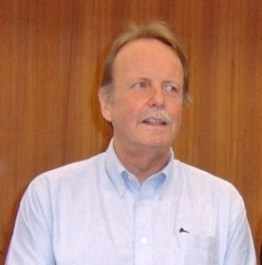
Simon Greenall is a long-time member and past president of IATEFL. He very kindly agreed to be the first individual member featured on the blog.
Tell us a bit about you and your teaching career
I left university and went to work as a lecteur in the Université de Lyon 2, France, where I taught for six years. I belonged to the Faculty of English and the Continuing Education Department, and worked with undergraduates as well as mature students with specialized needs, such as learning English to be better equipped for the job markets, business English, legal English and even English for petro-chemical engineers and Galenic Pharmacists. For some of these courses, as the director of studies, I had to write specialized material, although it often transpired that many of these students already knew the specific lexis of their specialism but just wanted to be a member of an international linguistic community.
What inspired you to join IATEFL initially?
I returned to the UK in 1982 with a couple of book commissions and began work as a textbook writer. But I was very conscious that even after six years teaching, I still had an enormous amount to learn. IATEFL was and still is the highest profile and most accessible association for teachers this side of the Atlantic.
So for me, IATEFL was the fast track to developing my very limited knowledge of language teaching and to learn about teaching contexts beyond my own country-specific experience. This was essential not just for my own work but for my awareness of the international dimensions and requirements of ELT.
How long have you been a member? How has the organization changed over that time?
I suppose I must have joined in 1983 or 84. The first IATEFL conference I attended was at Strawberry Hill in London. It was small but very active and busy, and most notably with the same welcome as the vastly larger IATEFL conference offer today.
IATEFL came into existence at a time when ELT had yet to develop into the extensive industry it is today. At the time, English still wasn’t the international language it is today, but the professionalism showed by those early volunteers for the association was very apparent.
Over the years IATEFL has grown bigger and better in so many ways. In the same way that teachers are now professionalized by qualifications and students by the need for standardized assessment, IATEFL kept pace with the process of professionalization. It couldn’t have survived otherwise. But what I like especially about IATEFL is that its spirit of commitment to quality education and its friendly, relaxed support for its members and associates is the same as it was on a much smaller scale all those years ago. That’s an incredible achievement for such a large association with such an international and culturally varied outreach.
How would you summarise your experience of IATEFL?
As a rank-and-file member I saw IATEFL as essential to my professional development. As a young textbook writer, I gave presentations at the annual conference almost as a rite-of-passage and on one occasion attended by as many as four people.
As president of IATEFL from 1997–99 I achieved an overview of international ELT which would never otherwise have been possible. I met so many different people from teachers to publishers to other textbook writers to ministry officials and exam specialists. It also directly led to my work in China which has absorbed most of my time since I stepped down as president. No one in China knew my name or my books at that time, but they did know about IATEFL and my work as president. When my publishers suggested I might be suitable to join a team preparing a course for Junior High, Senior High and universities, my Chinese colleagues approved my appointment with enthusiasm. Thanks to IATEFL!
Are you a(n active) member of a SIG? What made you choose it? What do you get out of it?
I’m no longer an active member, but nevertheless I belong to the recently formed MAWSIG, the Materials Writing SIG, which despite a slow start, has become very active and, I believe, extremely helpful to people at any stage of their writing career.
Do you work with any other teaching associations or organisations? What makes IATEFL different?
No, I don’t belong to any other teaching associations, although I’ve attended conferences and done training in about fifty countries around the world.
In the 1990s, the British Council conference in Italy was the biggest event apart from the IATEFL annual conference. It was superbly organized and made a huge contribution to ELT in Italy and in the region. It was the first time I spoke to audiences of over 1000. TESOL was and remains an essential date in the ELT/ESOL calendar, although for my taste, it’s too big and impersonal now. TESOL Greece was a conference I attended regularly, and the friendliness of the organizers and participants was something I appreciated greatly. Conferences all over the world are motivated by the teachers’ pleasure in meeting professional colleagues and learning from them.
IATEFL has been fortunate to benefit from all the positive aspects of these and many other conferences I and other volunteers have attended, and I hope has avoided some of the negative aspects as well.
Can you share one activity, tip or resource that you’ve learnt about thanks to IATEFL? Why did you choose it?
Not really a tip or a resource, but I learned that what makes you suitable to be elected president of IATEFL was nothing to do with the skills you had used in the job. I discovered managerial skills which I didn’t know I had, and developed a great deal of self-confidence, but it’s easy to get overwhelmed by the daily issues of management and lose sight of the big picture. This was invaluable for everything I’ve ever done since.
Do you have any interesting stories to tell related to IATEFL? For example, from an event you’ve attended, a person you’ve met, or an idea you’ve used in the classroom.
I wish I could think of something funny, because I have the impression that alongside the hard work, there was a great deal of laughter and great fun to be had with people who were at the top of our profession.
One idea which disappeared: while I was president, we decided to carry out a makeover of the IATEFL brand, introducing its logo and its mission Linking, developing and supporting English Language Teaching professionals worldwide, both of which are still in use today. We also started to take a stand to our associates’ conference in the hope of raising membership. Jill Stajduhar, the Executive Officer at the time, asked for some publicity material for the back of the stand. We negotiated and developed a map of the world, not the usual Mercator Atlantic-centred one, but a Peters projection, Pacific-centred one, with the strapline: Join IATEFL and look at the world in a different way. I thought it was great, but we could only afford to print a hundred, which got sent to our associates, and then the whole idea got forgotten.
Why would you recommend joining IATEFL?
Friendly, efficient, committed, professional, highly organized – these are both the qualities of IATEFL’s teachers and volunteers and of the association itself. Long may it continue to perform its essential function in ELT!
Simon Greenall is a long-time member and past president of IATEFL. He very kindly agreed to be the first individual member featured on the blog.
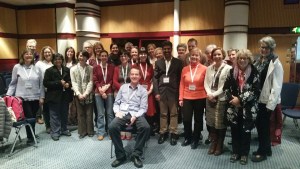


 We welcome you to attend our events (both live and virtual), follow us on social media and subscribe to our SIG journal, SpeakOut!.
 Heather Hansen is Director of the corporate training firm
 Arifa Rahman, Ph.D, Professor of English Language & Teacher Education, University of Dhaka, Bangladesh, and Immediate Past President, BELTA, is an English language teacher-educator and researcher. She is also an editor, reviewer and educational consultant. With numerous international publications, she has presented widely at national and international conferences. She is passionately involved with BELTA activities. You can contact her on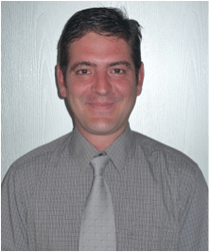
 Managers, however, typically don’t have that convenient network, that community of practice. In a large organisation it’s possible you do have peers at your level, but in many cases you are working on your own, and while you hopefully have a good working relationship with the teachers, you are now working in a different area of focus and you can’t share the same stories and bounce ideas off people in the same way.
 While there are dedicated training courses for managers in language teaching organisations, like the
  LAMSIG runs 3 webinars a year which are open to all and completely free. Past webinars can be watched as recordings for those who are not able to attend live, and are available to everyone. Among the webinars that have so far been held (and which are still available for viewing) are “How to do ELT management research”, “Coaching and mentoring in ELT”, “Appraisals”, “Revitalising coasting teachers” and “Encouraging teachers to take charge of their own CPD”. All those recordings can be accessed from the LAMSIG webinar page.
 LAMSIG partners in a number of conferences – either one-offs or with partners in annual events. In recent years we have held or been involved in events in Barcelona, Brighton, Abu Dhabi, London, Dublin, and most recently Warsaw. In February 2017 we will be partnering for the third consecutive year with International House Barcelona in their annual conference.
 LAMSIG members receive two print newsletters and one online e-bulletin per year, with articles and advice written by managers all over the world. This is a great resource for those managing in ELT and the only one of its kind.
 Andy Hockley is the co-ordinator of LAMSIG and is a freelance educational management consultant and trainer based in deepest Transylvania. He has been training (both teachers and managers) for 20 years and has been coordinating and training on the IDLTM (International Diploma in Language Teaching Management) since its inception in 2001. He is co-author of ‘From Teacher to Manager’ (CUP, 2008), ‘Managing Education in the Digital Age’ (The Round, 2014) and author of ‘Educational Management’ (Polirom, 2007).
 As our future sustainable plans, we are aiming at establishing a plan that connects our activities with the
 Nicola is an EFL teacher, teacher trainer and materials writer, working on projects all over the world and currently in Mauritania. She has an MA in Applied Linguistics and TESOL. One of her research interests is in developing learner independence and encouraging teachers to become aware of how their own beliefs about education affect what they do in the classroom. She is on the IATEFL Membership Committee and the ReSiG committee.
 We hold our annual conferences regularly and they are international too. They are attended by not less than 600 teachers every year.
 A former British Council scholar, an alumnus of the London University Institute of Education and former Professor and Dean, Annamalai University in South India. Patron, ELTAI. He can be reached at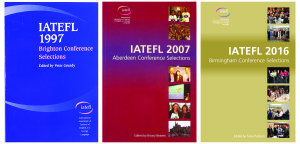
 Tania Pattison has been editor of Conference Selections since 2010. She is also Deputy Publications Coordinator of MaWSIG. She is a freelance writer and editor specialising in EAP and academic materials. Her website is
 Our mission is to lead, drive change and set standards in teaching English to children and teenagers (2 – 17 years old) for training and development, classroom practice and assessment. We aim to provide practical advice regarding different models of YL ELT (e.g.
  We have provided members a variety of exciting commemorative events and publications to mark the SIG’s Pearl Jubilee (30th anniversary) during the past year. This started with the YLTSIG-Garnet Education book
  YLTSIG Publications Editor / current Joint Coordinator, David Valente, also edited the Special Pearl Jubilee Edition of the SIG newsletter, launched alongside the SIG-Garnet book at the 50th IATEFL Conference in Birmingham in 2016. This fascinating collection charts 30 years of developments in our field. It provides both recognition and a celebration of YLT and is a must-read for members old and new.
 In October 2016, we launched our new SIG website along with a commemorative 30th anniversary logo.
 Our Pearl Jubilee celebrations will culminate with what’s promised to be the biggest YLT online event of the year – the SIG’s inaugural web conference, ‘30 Pearls of YLT Wisdom’. Featuring 30 speakers, each giving a 30-minute talk on a different area of YL ELT, the event will include talks for teachers of all YL age ranges. The web conference has been spearheaded by Joint Coordinator, Christina Giannikas and all SIG committee members will be hosting during the 3 days. You can meet them all here.
 David Valente has 20 years’ ELT experience which has included authoring teachers’ handbooks and courses for primary and secondary curriculum development as well as methodology training in Asia, Europe, the Middle East and Australasia. He is also an online tutor for Bell Delta Modules 2 and 3 courses, specialising in training candidates who teach children and teenagers. David has a MAppLing in YL Programme Management and currently works as Director – Professional and Pedagogical Development for Laureate International Universities, Thailand. He is also an online & face to face tutor for the new CELT-P and CELT-S qualifications for mainstream teachers of English.
 Christina Nicole Giannikas holds a Ph.D in Applied Linguistics, specifically in the area of early language learning, and works for the Language Centre of Cyprus University of Technology. She is an Instructor for an MA in CALL and a Language Instructor for English for Specific Academic Purposes. She is also a teacher trainer, and a freelance materials writer and editor. Her research interests include Computer Assisted Language Learning, Young Learners and new technologies, interactive language learning and teaching through the use of technology, online learning and teaching, early language learning and the use of games in the language classroom in any shape or form.